

Starting a flower business isn’t just about loving blooms — it’s about turning that passion into a structured, profitable, and scalable enterprise. Whether you dream of owning a boutique retail shop, a booming online delivery service, or a creative floral design studio, this guide breaks everything down in clear, step‑by‑step terms.
Let’s walk through how to start a flower business the smart way — with strategy, real numbers, and actionable insights.
Why Now Is a Great Time to Start a Flower Business
Flowers aren’t just pretty — they’re big business. The U.S. floral industry generates billions of dollars each year and continues growing as consumers increasingly buy flowers for gifts, events, and home décor.
Modern consumers increasingly shop for flowers online, and local subscription models (weekly or monthly bouquets) continue surging in popularity. This shift presents major opportunities for both brick‑and‑mortar florists and online delivery businesses alike.
How to Start a Flower Business: 9 Essential Steps
1. Pick Your Floral Business Model (Niche & Focus)
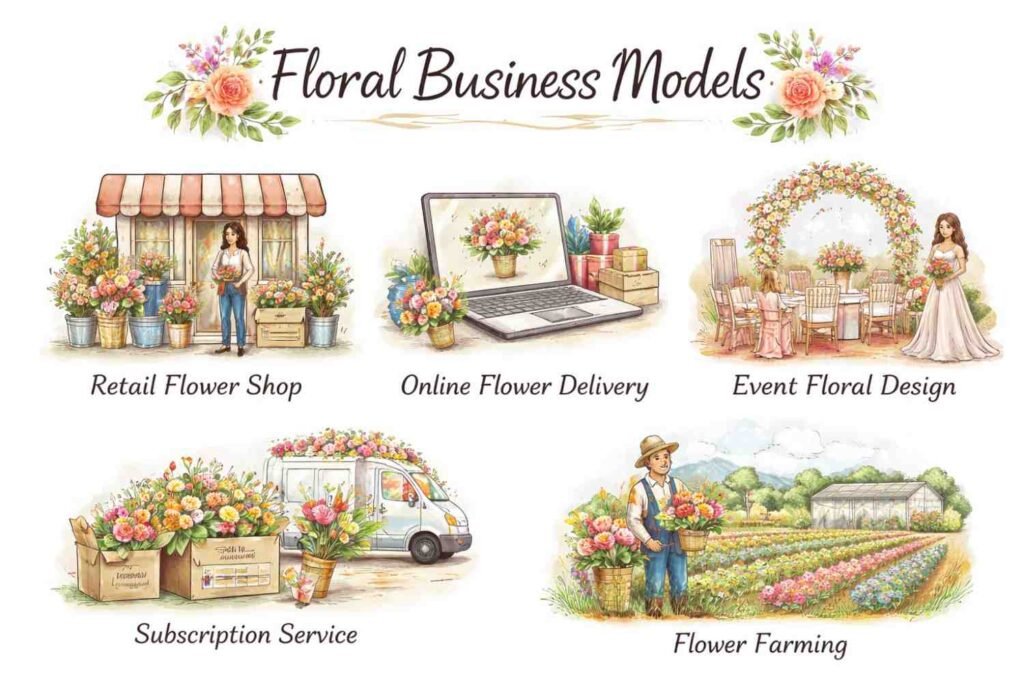
The first and most important decision is choosing what type of flower business you want to run.
Common models include:
- Retail flower shop – walk‑in customers, arrangements, bouquets.
- Online flower delivery – digital ordering with same‑day or next‑day delivery.
- Event floral design – weddings, corporate events, special occasions.
- Subscription floral service – recurring bouquets to homes or offices.
- Flower farming/CSA – growing your own blooms and selling direct or wholesale.
Pro Tip: Many successful businesses combine models — e.g., a brick‑and‑mortar shop plus an online delivery channel.
Ask yourself:
Am I focused on walk‑in customers or shipping nationwide?
Do I want to manage inventory or work by order only?
Your answer drives your branding, pricing, and operations.
2. Conduct Market Research and Competitive Analysis
Before spending a dollar, understand your market.
Research local competitors, pricing, and common customer needs:
- Which arrangements sell best in your area?
- Do local florists have strong online ordering?
- Are customers willing to pay extra for delivery or special packaging?
Competitive analysis helps you position your brand with a unique selling proposition (USP) — whether that’s premium event design, eco‑friendly blooms, or affordable everyday bouquets.
3. Create a Detailed Business Plan
Your business plan is your roadmap for both strategy and funding.
Include:
- Executive summary — your vision and business concept.
- Market analysis — your research and competitor insights.
- Operations plan — where you’ll work, equipment needs, staffing.
- Marketing strategy — how customers will find you.
- Financial projections — startup cost, revenue expectations, breakeven timeline.
This document is crucial if you pursue small business loans, investors, or grants.
4. Legal Setup, Licensing & Permits
Even home‑based flower businesses need legal foundations:
- Choose a Business Entity
Most US florists register as an LLC to protect personal assets and benefit from tax flexibility.
- Register with State & IRS
Get an EIN (Employer Identification Number) for taxes, vendors, and banking.
- Sales Tax Permit
Required in most states to collect sales tax on flowers and services.
- Business License
Local city or county requirements vary — check with your Small Business Administration office.
- Home‑Based Permit (if applicable)
If you’re operating from home, you may need a “home occupation permit.”
- Insurance
General liability and product liability insurance protect your business from claims.
Legal Tip: Consult a local business attorney or accountant to make sure nothing is overlooked.
5. Calculate Startup Costs and Funding

Startup costs vary widely based on your model:
Typical costs include:
- Business registration & licenses: $100–$1,000
- Refrigeration/storage: $1,000–$5,000
- Tools & supplies (vases, ribbons, clippers): $500–$2,000
- Initial flower inventory: $1,000–$3,000
- Website/eCommerce setup: $300–$600+
- Marketing & branding: $500–$5,000
- Delivery/logistics: $0–$5,000
Home studio setups can start for as little as $2,000–$10,000, while physical stores often require $20,000–$75,000+ depending on rent and build‑out.
Funding sources include personal savings, small business loans, SBA grants, crowdfunding, or investor partners.
6. Build Your Brand: Name, Logo, and Online Presence
Branding matters — especially online.
- Choose a memorable business name that reflects style (e.g., Bloom & Co., Petal Pusher Florals).
- Create a professional logo and cohesive brand colors.
- Build a website with online ordering / contact.
- Showcase a portfolio of arrangements to inspire customers.
SEO Tip: Use keywords like “local flower delivery,” “florist in [city],” and “wedding florist” on your site to attract search traffic.
7. Source Flowers & Supplies (Reliable Supply Chain)
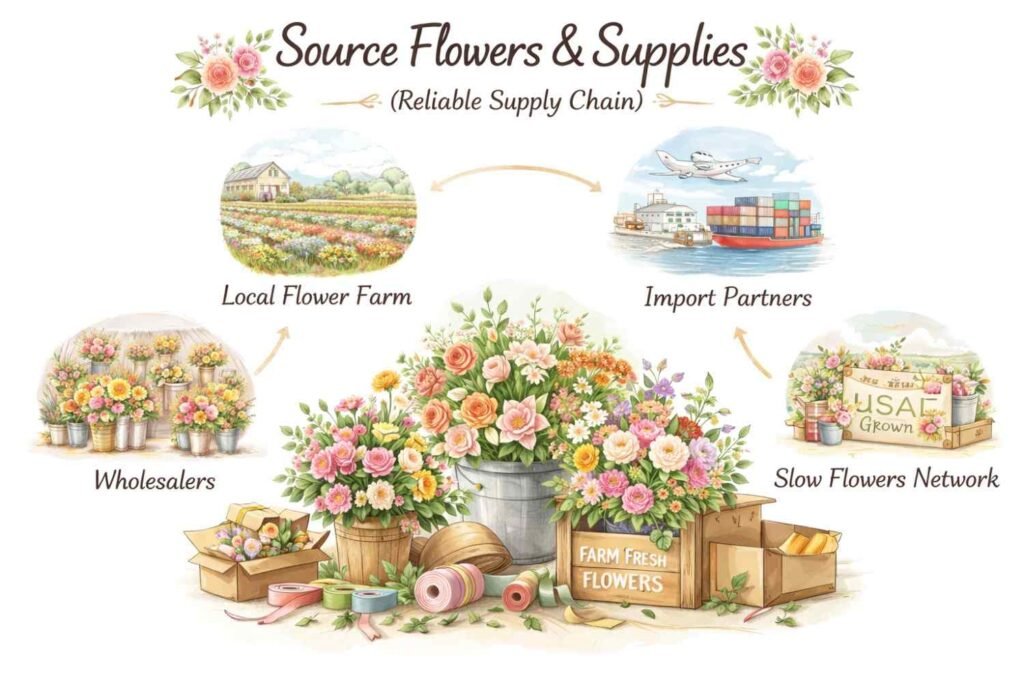
Flower sourcing is a major success factor. Options include:
- Local flower farms (support sustainability and freshness).
- Wholesalers for bulk pricing.
- Import partners (for exotic blooms year‑round).
- Slow Flowers network for US‑grown blooms (a movement supporting local growers).
Make sure you have standing orders for staple blooms (roses, eucalyptus, lilies) and a plan for seasonal peaks like Valentine’s and Mother’s Day.
8. Pricing Strategy That Works
Price your products by calculating:
Cost of goods + labor + overhead + profit margin.
Use tiered pricing (small, medium, large bouquets) and bundled services (e.g., vase included, delivery add‑ons). Consider subscription models for recurring revenue.
9. Marketing That Drives Real Customers
Great flowers deserve great marketing.
Effective channels include:
- Google Business Listing — gets you found locally.
- Social Media (Instagram, Pinterest, TikTok) — showcase designs and behind‑the‑scenes creativity.
- Local SEO & Reviews — ask satisfied customers to leave Google or Yelp reviews.
- Collaborations — partner with wedding planners, event venues, and photographers.
Pro Tip: Email marketing with seasonal promotions (Mother’s Day, graduations) can boost repeat business.
Frequently Asked Questions
1. How much can you make running a flower business?
Profit margins often range from 40% to 60%, and successful shops can exceed that with strong branding and premium service.
2. Can I start from home?
Yes — a home‑based flower business can cut costs and work well with online orders and local delivery. Just check local permits.
3. Do I need floristry training?
Formal training helps, but many entrepreneurs learn through practice, online courses, or apprenticeships with established florists.
Blooming Into Your Future
Starting a flower business is equal parts creativity and business strategy. With clear planning, smart marketing, and operational discipline, you can turn your passion for blooms into a thriving business that lights up moments and brings beauty into people’s lives.
Ready to plant your first seed? Your customers are waiting.