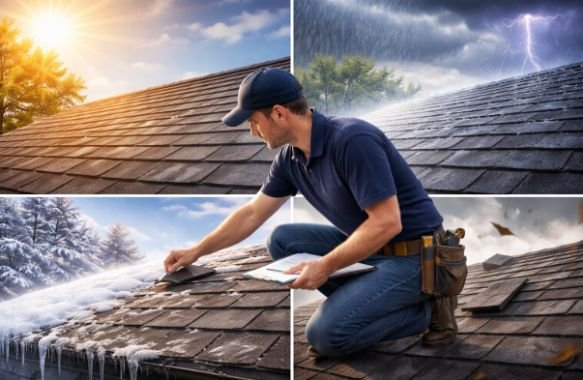
Sudden heat waves, cold snaps, heavy rain, and shifting seasons all play a quiet but powerful role in how long a roof lasts. Asphalt shingles respond to temperature and moisture more than most homeowners realize.
The climate around a home determines how the material ages, how well it holds its shape, and how soon repairs become necessary. A roof that performs well in one region may struggle in another with different weather patterns.
Many homeowners look into 25 year vs 30 year shingles when comparing durability, yet the rated lifespan only tells part of the story. Climate conditions can shorten or extend that timeline depending on heat exposure, humidity levels, and storm activity.
This article explores how weather shapes shingle performance, why some roofs wear down faster than expected due to common mistakes during roof replacement and what maintenance habits help protect long-term value.
Heat Exposure And Temperature Swings
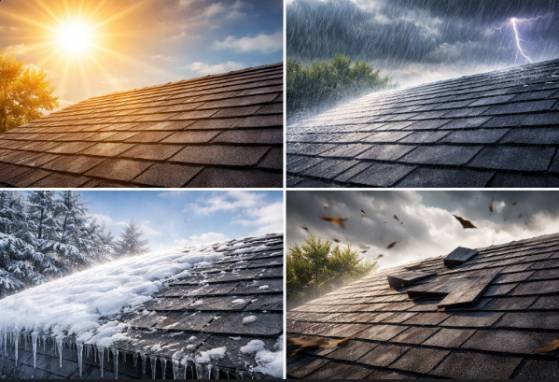
High heat softens asphalt, which allows shingles to expand and settle. Long summers or regions with strong sun exposure accelerate this process. When temperatures drop again at night, the material contracts. Constant movement creates stress fractures that grow gradually.
In climates with sharp temperature swings, shingles lose flexibility sooner. Their granular surface may loosen, which leads to faster surface wear. The roof does not fail all at once, but signs of fatigue appear earlier than the rated lifespan suggests.
Moisture Cycles And Humidity Levels
Moisture plays a major role in shingle aging. Humid climates expose the roof to slow, persistent dampness. Constant moisture affects the base material and encourages algae streaking. Over time, the shingles may lose structural rigidity. Heavy rainfall adds pressure as water flows between rows and beneath edges.
When the underlayment becomes saturated, shingles shift more easily, which affects weather resistance. In colder regions, trapped moisture freezes and expands. That widening effect creates small separations that spread through the roof system.
Wind Load And Storm Activity
Strong winds test the adhesive bond on every shingle. High wind regions place steady pressure on exposed edges, and repeated gusts loosen the tabs. Once a few pieces lift, the rest become vulnerable. Storm-heavy climates cause roofs to age faster because shingles face both wind pressure and flying debris.
The difference between 25 year vs 30 year shingles becomes more noticeable in these areas. Thicker designs and stronger adhesives hold up better during severe weather cycles, yet even premium shingles rely on stable climate conditions for the full rated lifespan.
UV Exposure And Granule Wear
Sunlight affects shingles directly through ultraviolet radiation. UV rays dry out the asphalt binder, which reduces flexibility and increases brittleness. Granules protect the surface from this exposure. As they fall away, the underlying asphalt absorbs more heat and UV energy.
Dry climates with minimal cloud cover see this process unfold faster. Shingles in these environments lose coloration sooner and become more prone to cracking. The roof may still appear intact from a distance, yet the material strength decreases steadily.
Why Professional Insight Helps Extend Lifespan
Climate does not affect every home the same way. Roof slope, orientation, tree coverage, and ventilation all influence how shingles respond to weather. Professional roof evaluators understand how regional conditions interact with different shingle types.
Their inspections identify early stress signs and confirm if ventilation supports stable attic temperatures. They can also recommend specific maintenance schedules that match the climate’s demands. Expert insight helps homeowners choose shingles that align with local weather and reduces premature wear through timely adjustments.
Shingle durability depends on far more than a printed lifespan label. Heat, moisture, wind, and UV exposure all shape how quickly a roof ages. Homes in varied climates experience different forms of stress that change the expected timeline of 25 year vs 30 year shingles.
By pairing the right material with consistent evaluations, homeowners can keep their roofs strong and dependable even in challenging weather conditions.