A beautiful outdoor space adds charm and worth to a house. Poor maintenance or outdated materials can turn a potential asset into a liability. Buyers notice cracks, stains, and uneven surfaces the moment they step outside. These visible defects suggest neglect and create doubt about the overall quality of the residence. This article explores specific indicators that a deck or terrace reduces the market price of a home.
Visible Structural Damage and Cracks
Large fractures in concrete or masonry signal serious underlying issues to observant buyers. Water seeps through these gaps and weakens the foundation over time. A professional stone patio installer can evaluate if the base remains stable or requires a full replacement. Small hairline cracks might seem minor.
But they grow into expensive repairs during the next winter freeze. Most homeowners prefer a pristine surface that requires zero immediate work after a purchase. Solid materials like natural stone provide a durable finish that resists such wear for decades. Strong foundations help guarantee resale value.
Uneven Surfaces and Trip Hazards
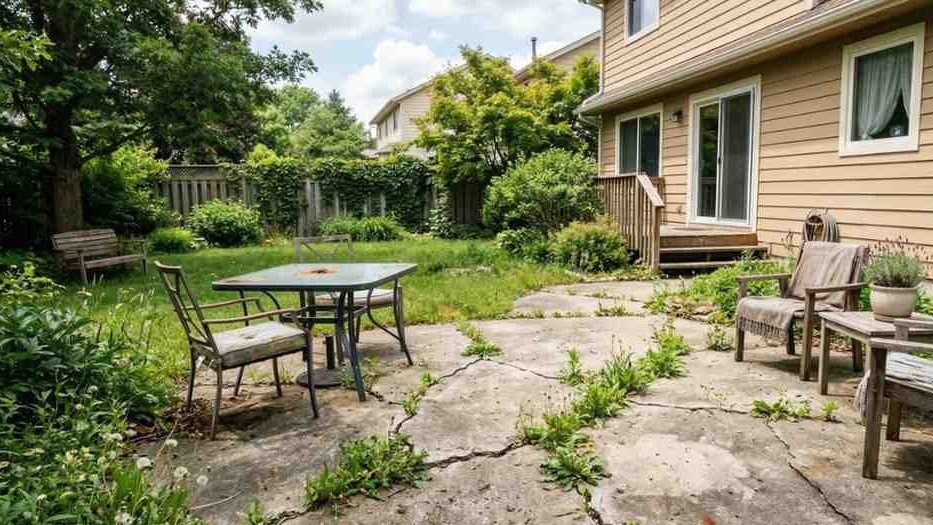
Sunken pavers and shifted slabs create dangerous areas for guests and family members. Soil erosion or improper drainage usually causes these hazardous shifts in the ground level. Any area that collects puddles after a light rain indicates a failure in the original slope. Buyers often see these issues as immediate safety risks that demand a total overhaul.
Fixed stones and level ground ensure a smooth transition from the back door to the yard. Proper installation prevents the earth from moving beneath the heavy masonry blocks.
Permanent Stains and Surface Decay
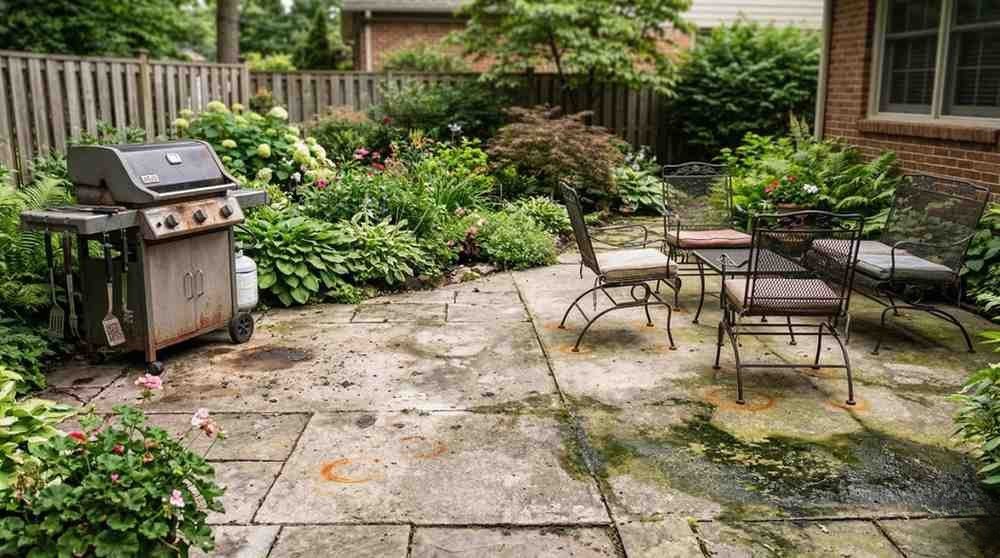
Years of exposure to grease, rust, and oil leave deep marks that standard cleaning cannot remove. Discoloration makes the entire backyard look dingy and poorly kept. Below are a few more signs of stain and surface decay:
- Deep oil spots from grills penetrate porous materials and remain visible forever.
- Rust marks from metal furniture create orange streaks across the floor.
- Algae growth on damp sections creates a slippery and unattractive green film.
- Efflorescence leaves a white powdery residue that signals moisture trapped inside the masonry.
- Sun bleach fades the original color of cheap bricks and lowers the visual appeal. Natural stone typically maintains its hue much better than dyed concrete alternatives.
Outdated Materials and Poor Design
Old-fashioned patterns and cheap materials make a modern home feel stuck in a previous decade. Small, cramped layouts restrict the ability to host gatherings or place furniture comfortably. Narrow pathways lead to a cluttered feel that reduces the perceived size of the lot. A stone patio installer transforms these cramped areas into expansive and luxurious retreats. Wide open designs invite people to relax and enjoy the fresh air.
Poor Integration with the Home Style
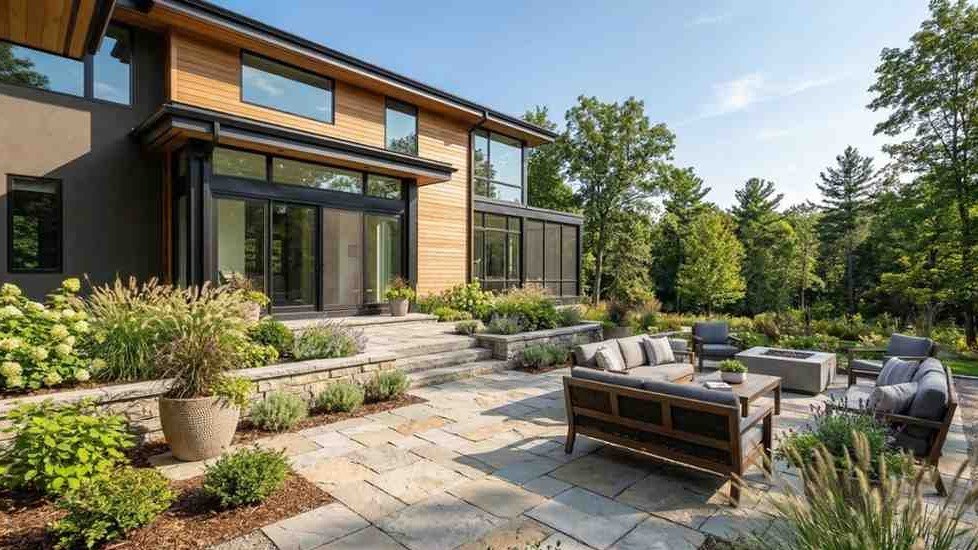
An outdoor patio area must complement the architecture of the main building to hold its value. A rustic stone look clashes with a sleek modern house, while ultra-modern tiles look strange next to a historic cottage. Color palettes should harmonize with the siding and trim for a cohesive look.
When the backyard feels like an afterthought, it detracts from the total curb appeal. Consistent design choices show a high level of care and attention to detail. Prospective owners value a seamless flow between the interior and exterior living spaces.
Invest in high-quality masonry to protect your financial interests. Swap cracked concrete for durable granite or slate to impress visitors instantly. Solid construction prevents expensive drainage failures and safety risks.
Homeowners who prioritize premium materials see a significant return during a sale. Contact a local expert to replace a crumbling surface today. Durable patios remain valuable landscape investments. Quality stonework turns a dull backyard into a premium feature that secures a higher final offer from buyers.