By 2026, property value will no longer be determined by constructed structures alone, but rather, landscape intelligence will play a larger role. Outdoor environments that promote aesthetic appeal, ecological balance, and long-term sustainability are getting the top priorities by buyers, investors, and developers. The management of strategic trees and biodiversity landscapes is nowadays a critical tool in improving the short-term aesthetic of the surroundings and long-term returns on assets.
Such change is particularly applicable in areas where vegetation cover, climate changeability, and urban growth overlap. The property owners who are proactive towards lopping trees and landscape design that is environmentally conscious are in a better position to optimize the value, minimize the risks, and be in tandem with the current environmental demands.
Impact of Professional Tree Management on Value
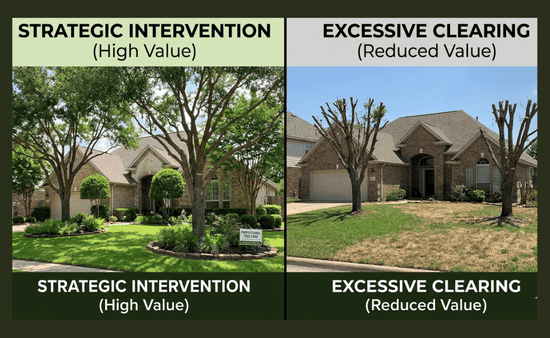
Landscapes that are well kept have the ability to add value to a property by up to 15-20%; however, this can only happen when there is a strategic intervention rather than excessive clearing. The professional services, such as tree lopping brisbane southside are important towards creating safe, attractive, and growth-enhanced outdoor environments.
Properly done, tree lopping improves:
- Structural safety through eliminating weak or dangerous branches.
- Penetrating sunlight enhances the health of plants and lawns.
- Symmetry, enhancing street appeal.
However, ineffective or violent lopping can have several negative effects on the health of the trees and the aesthetics of the property. Therefore, current strategies focus on selective pruning, canopy management, and long-term planning, and not short-term solutions.
Strategic Asset Management Through Tree Lopping
By 2026, tree trimming will no longer be a reactive service; it will be a strategic asset management tool. Property owners get extra fact-driven when it comes to knowing when, where, and how to intervene.
Core Objectives for Strategic Tree Lopping
- Risk reduction: Storm damage and falling branches. Prevention.
- Growth control: Regulating tree size in relation to property buildings.
- Aesthetic alignment: Improving landscape design unity.
Best Practices for Optimal Results
- Carry out seasonal evaluation to determine growth trends.
- Hire qualified arborists to have proper pruning.
- Excessive lopping may cause stress and destabilization of trees.
The owners can manage the trees to improve the valuation and safety by making sure that the landscaping has a positive effect on the property and the property’s objectives.
Bio-Diverse Landscaping as the Future Standard
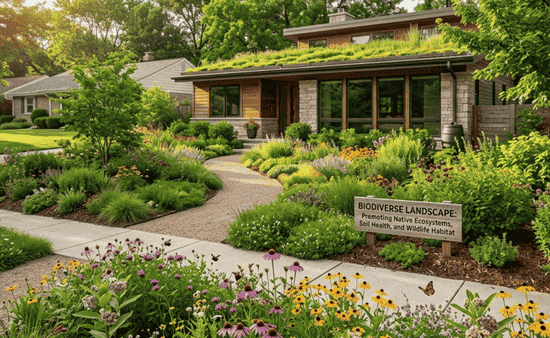
The concept of biodiversity is emerging as a characteristic in contemporary landscape design. The owners of property are investing in ecosystems that promote native plants and animals instead of monoculture lawns and ornamental plants.
Advantages of Creating Bio-Diverse Landscapes
- Improved soil health and water retention
- Greater resistance to pests and climatic stress.
- Improved appearance using different textures and colors.
Key Components for Modern Integration
- Native species of plants that are adapted to the climate.
- Bee and butterfly-friendly gardens.
- Stratified vegetation cover (soil cover, shrubs, tree canopy)
This method not only increases property value, but also conforms to the increasing environmental regulations and consumer preferences on sustainable lifestyles.
Integrating Professional Tree Care With Design
It is also one of the most neglected approaches to incorporate tree lopping into a larger design landscape plan. Instead of considering it as a task in isolation, it is to be used to complement the aesthetics and functionality of the property as a whole.
Strategies to consider in terms of key integration are:
- Carving a canopy of trees to form architectural elements.
- Designing shaded areas to serve as outdoor living areas.
- Visual harmony of open and green spaces.
This harmony makes sure each tree adds to the story of the design of the property and not subtracts.
Environmental Compliance and Urban Planning Rules
Regulatory requirements in tree management and landscaping are expected to become increasingly stringent in 2026. Rules will be set by neighborhood councils and environmental companies to protect untouched areas and biodiversity in urban areas.
Essential Compliance Factors for Owners
- The permits to remove or heavily prune some species of trees.
- Limits to the changing of native vegetation.
- Requirements for replacement planting in some cases
Risks of Non-Compliance With Regulations
- Monetary fines and legal problems.
- Reduced property marketability
- slow progress or refurbishment of structures.
Real estate owners should be aware of the local rules and collaborate with experts that are familiar with compliance standards, as they can make expensive errors.
Analyzing ROI in Strategic Landscape Investments
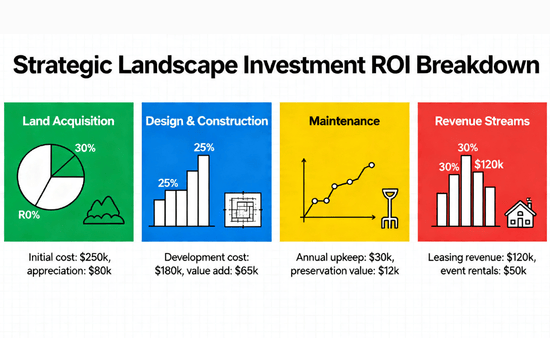
There is no need to invest in tree trimming and biological landscaping because it is not just a cost, it is a revenue generation strategy. When executed appropriately, ROI statements can have a high return.
Where Asset Value Is Successfully Created
- Increased property appraisal value
- Faster sales due to enhanced curb appeal
- Less maintenance expenses in the long-run.
Financial Factors Impacting Total Costs
- Acreage and amount of trees to be managed.
- Complexity of landscape investment
- Continuous maintenance and control.
Strategic landscape management tends to yield better returns than most interior improvements, when considered on the long run.
Technology and Innovation in Landscape Management
The manner in which property owners handle tree and landscape management is being transformed by technology. Innovation is helping to make decisions more accurate and efficient, whether it is drone-based assessment or AI-based growth analysis.
Emerging tools include:
- Health diagnostics of trees with remote sensing.
- Visualization and planning landscape designing software.
- Water efficiency water irrigation systems.
Such developments are especially useful when it comes to maximizing the sustainable use of landscapes, making all interventions effective and environmentally friendly.
The whole process to achieve property value maximization in 2026 is to employ a holistic approach that combines strategic tree lopping and biodiverse landscape management. These practices are vital in the development of the modern real estate value, whether it is through improving the curb appeal or ensuring that the environment is up to standards.
The ability to unlock long-term value, mitigate risks, and generate outdoor spaces that are both future ready and functional can be achieved by taking advantage of professional services like tree lopping brisbane southside and adopting sustainable and design-driven approaches to landscaping.