
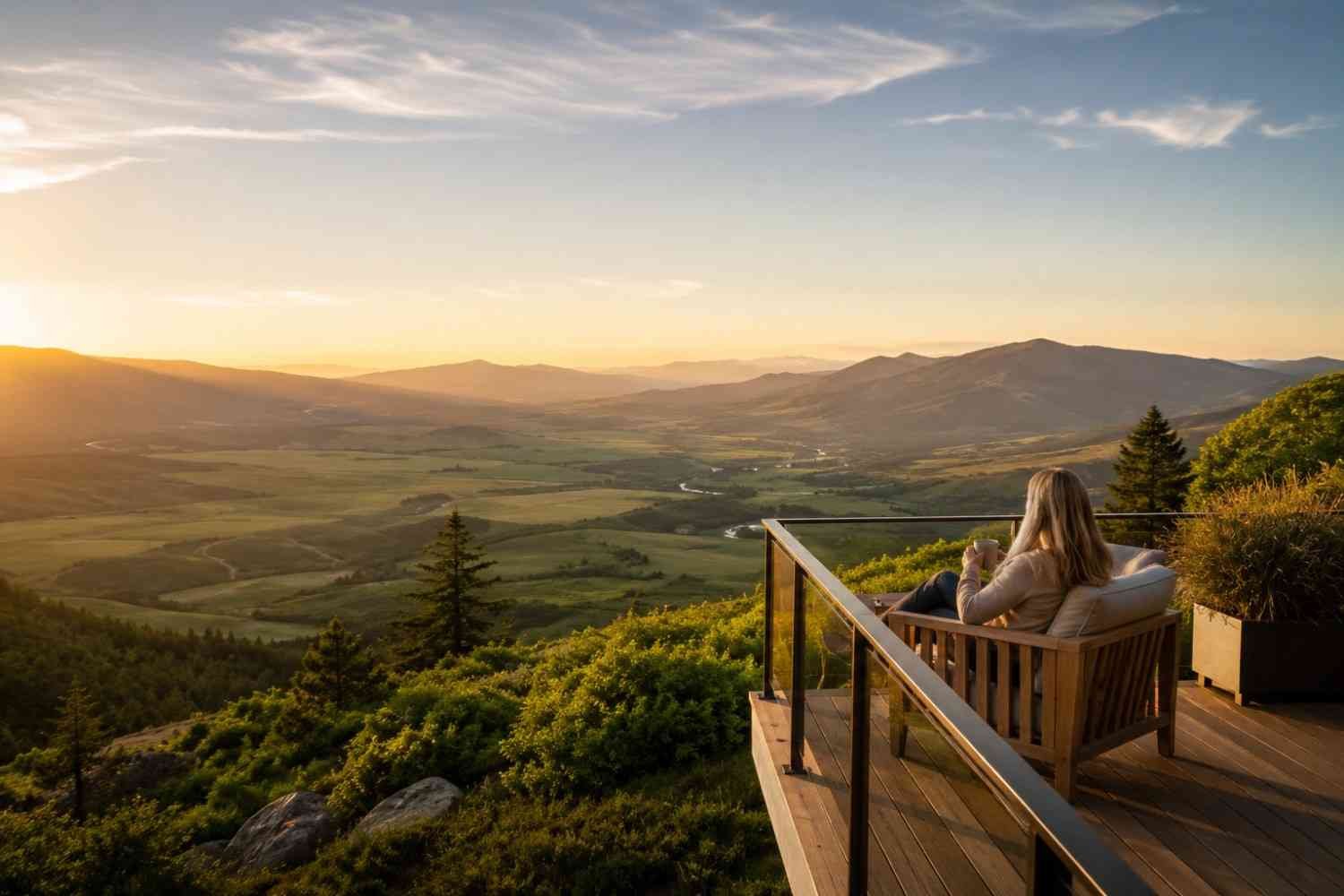
Modern urban existence is defined by structural containment. The vast majority of our daily routines unfold within enclosed spaces: offices, apartment complexes, transit vehicles, and digital interfaces. This constant proximity to physical boundaries and high-density environments exacts a subtle but continuous psychological toll. It is a reality that makes stepping into an expansive, wide-open landscape feel so immediately transformative.
The profound sensation of relief that accompanies a panoramic mountain view, a rolling meadow, or a vast desert horizon is more than just a passing mood. It is a deeply hardwired neurobiological response. For centuries, environmental psychologists and evolutionary biologists have studied the profound relationship between spatial geometry and human well-being, confirming that open landscapes possess a unique capability to restore, ground, and heal the human mind.
1. Evolutionary Biophilia and the Prospect-Refuge Theory
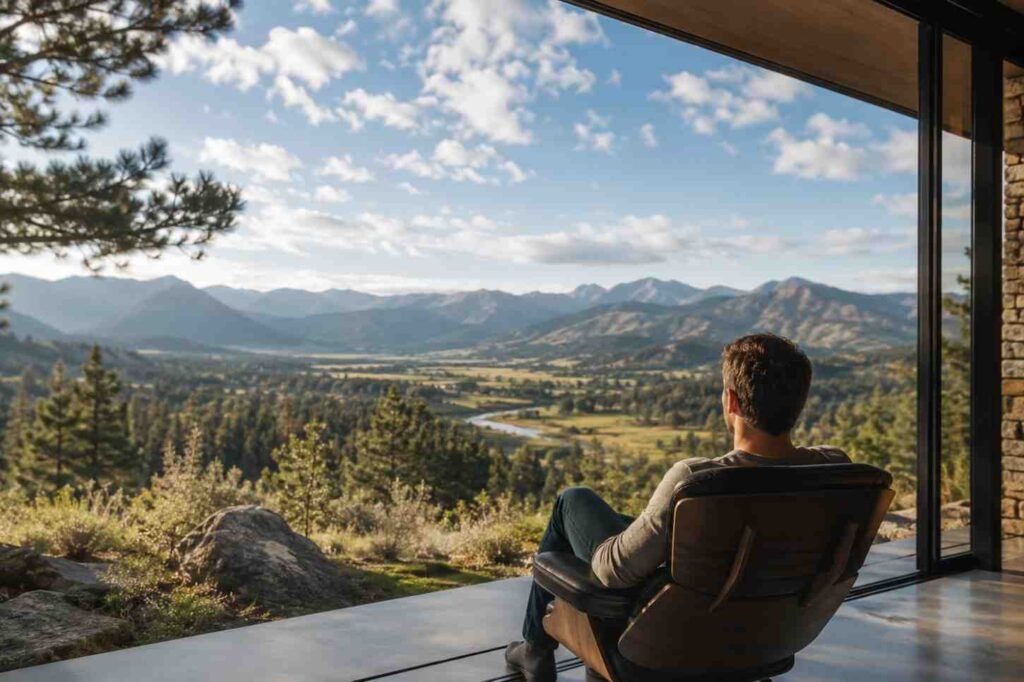
To understand why wide horizons soothe the nervous system, we must look to our evolutionary history. For millions of years, early humans navigated natural biomes where survival depended entirely on environmental awareness. This historical reality forms the foundation of Prospect-Refuge Theory, a psychological framework developed to explain human environmental preferences.
According to this theory, humans feel an innate sense of safety and satisfaction in landscapes that offer both “prospect”—a clear, unobstructed view of the surrounding terrain—and “refuge”—places of safety and shelter. An open landscape provides an unparalleled sense of prospect. When the eye can travel miles into the distance without hitting a concrete wall or a congested cityscape, the brain subconsciously recognizes that there are no immediate hidden threats. This structural clarity instantly signals the amygdala, the brain’s threat-detection center, to lower its defense mechanisms, shifting the body out of a low-grade fight-or-flight state and into a restorative parasympathetic mode.
2. Attention Restoration Theory and Mental Fatigue
In contemporary society, our minds are subject to a continuous barrage of stimuli that demand “directed attention.” Navigating traffic, answering urgent emails, and ignoring notifications require a high degree of conscious mental effort. Over time, this intense focus leads to directed attention fatigue, leaving people irritable, distracted, and cognitively drained.
Open landscapes offer the ultimate antidote to this exhaustion through a concept known as Attention Restoration Theory (ART). Wide-open spaces engage what psychologists call “soft fascination.” The gentle sway of tall grasses, the shifting shadows of clouds moving across a valley, or the distant silhouette of mountains do not demand analytical processing or intense focus. Instead, they capture the eye effortlessly. This effortless engagement allows the prefrontal cortex—the area of the brain responsible for problem-solving and emotional regulation—to go offline and recover, renewing our capacity for focus, creativity, and emotional resilience.
3. The Visual Dynamics of Spatial Horizon Lines
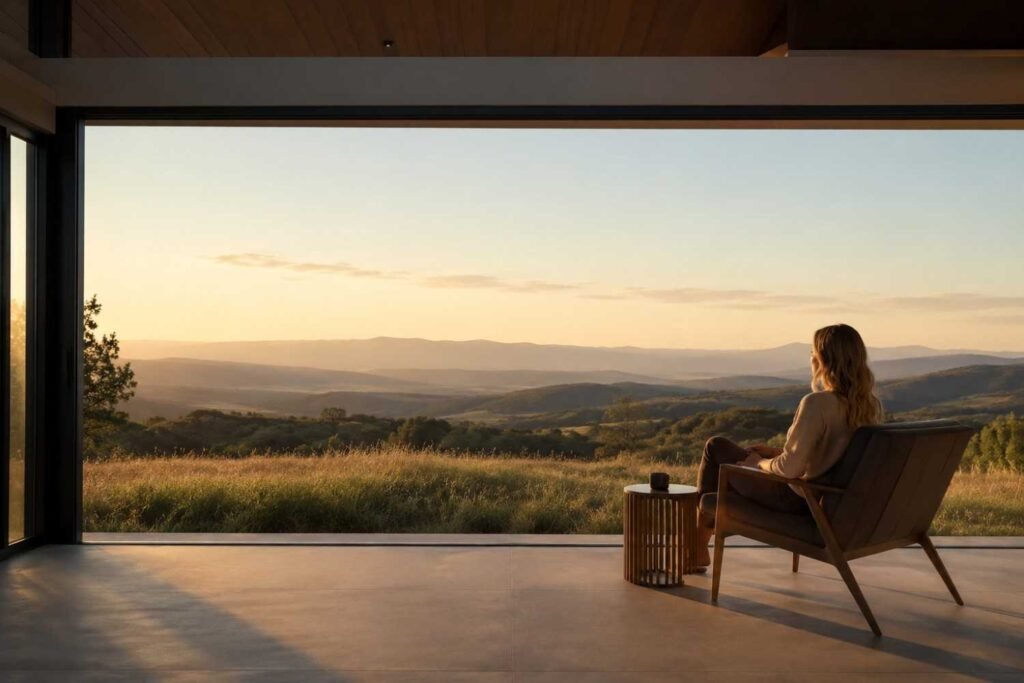
The physical structure of our vision is intimately tied to our emotional state. When we work on computers or look at phones, our eyes engage in close-up, foveal vision, which is structurally linked to high-focus, high-stress neurological pathways. Looking at distant horizons, however, triggers peripheral vision, which naturally encourages systemic relaxation throughout the body.
Furthermore, panoramic environments possess inherent spatial acoustics. In enclosed spaces, sound reverberates off hard surfaces, creating a background hum of ambient noise that heightens sensory overload. In contrast, wide landscapes absorb and disperse sound waves naturally. The quietude of an open field combined with a long, unobstructed horizon line physically slows the heart rate and reduces cortisol levels. It is this distinct architectural and sensory freedom that makes spacious natural settings highly sought after for milestone occasions. Individuals intentionally select these settings for retreats, family gatherings, and celebrations because they foster genuine emotional presence. When exploring premier outdoor wedding venues in Utah, for example, hosts are drawn to the dramatic visual depth of valley floors framed by massive mountain ranges. These locations offer a therapeutic escape from everyday stress, ensuring that guests feel a profound sense of mental clarity, calm, and focus during the occasion.
4. Breaking the Cycle of Mental Rumination
When human beings are confined to small, repetitive spaces, their thoughts often mimic their surroundings. Psychological studies have shown that high-density urban environments frequently amplify “rumination”—the harmful habit of repeatedly turning over negative, circular thoughts or worries.
Stepping into an open natural vista breaks this cognitive feedback loop by introducing awe. Awe is an emotional response to environments that are so vast they challenge our current mental frameworks. Experiencing a massive, uncontained landscape alters our self-perception, rendering our immediate personal anxieties small and manageable by comparison. This shift in scale pulls individuals out of internal anxieties and grounds them firmly in the present moment, fostering a renewed sense of interconnectedness and clarity. It may also explain why many people instinctively seek out design tips for roomier home interiors, as spacious environments often evoke the same feelings of openness, comfort, and mental ease on a smaller scale.
Conclusion
The urge to seek out wide horizons is not a superficial desire for beautiful scenery; it is a vital biological necessity. Our minds and bodies are fundamentally designed to interact with the expansive geometry of the natural world. By carving out time to step away from the physical restrictions of urban confinement and immersing ourselves in open landscapes, we honor an ancient evolutionary design, allowing our attention to restore, our nervous systems to settle, and our minds to rediscover a state of natural equilibrium.