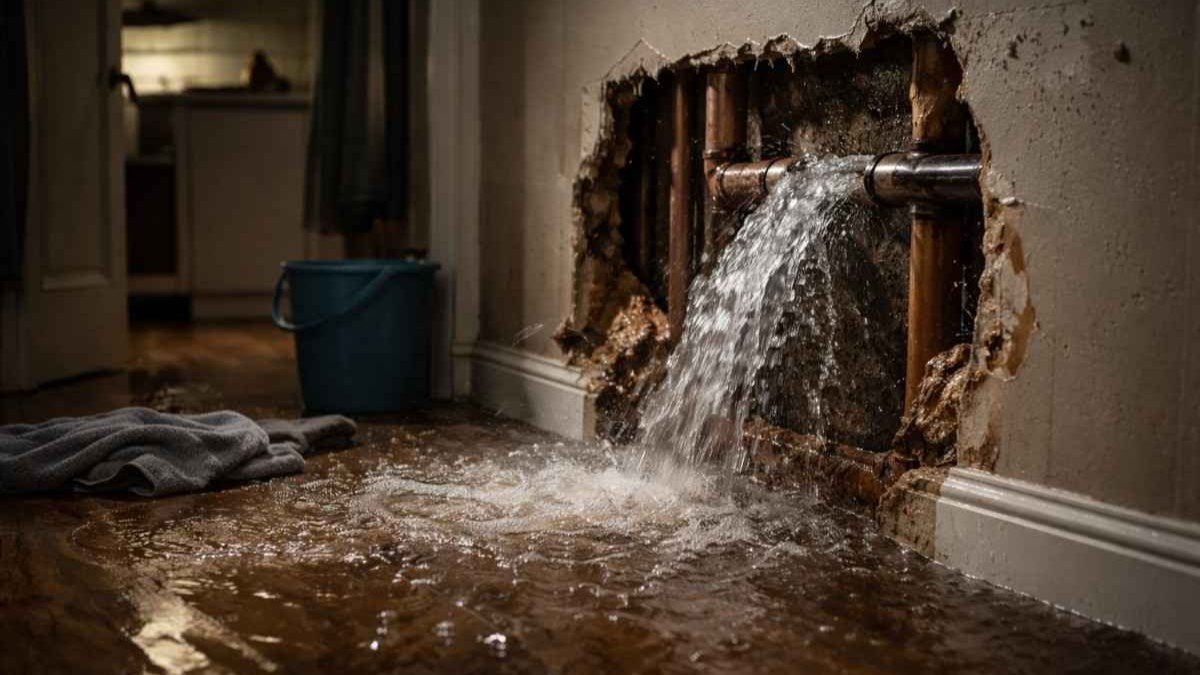
A plumbing issue can happen at any time. It may be 2:00 AM, or you could have people over for dinner. When a pipe breaks, that sound is not easy to miss. You might hear a roar behind the wall or a ceiling fall and hit the ground with a loud noise.
In the first few minutes, you need to stay calm. Do not let fear take over. A professional will be there soon. The next fifteen minutes are very important to stop things from getting worse.
Forget the mop for now. If water keeps coming, you can’t win this fight. Here is some clear and simple advice from an emergency plumber on what to do if you have a big plumbing problem before help shows up.
1. Stop the Source Immediately
The most important thing to do is to stop the water. If the leak is only at one thing—like a toilet that keeps running or a sink with a broken hose—find the small, shiny “angle stop” valve behind it. Turn the valve to the right until it will not turn anymore.
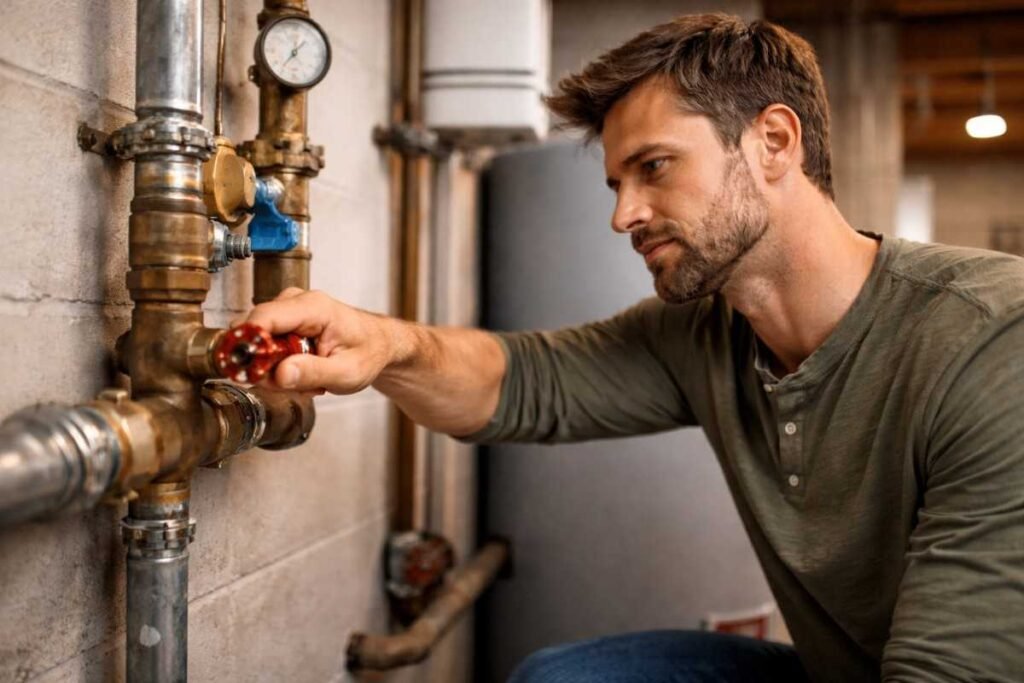
If you see water coming from a wall or from the ceiling, or if you do not know where it is coming from, don’t try to deal with the little things first. Go right to the Main Water Shut-off Valve. You can usually find it in the garage, in a corner of the basement, or close to the water heater.
- Pro Tip: If the valve handle is rusty or it does not move when you push it with your hand, do not use a wrench or try harder. Breaking the main valve handle can make things much worse. If it will not move, let a professional handle it and go to the next step.
2. Kill the Power in Wet Zones
Water and electricity can be very dangerous together. If water starts to move toward floor outlets, baseboard heaters, or big items like the dishwasher, it is not safe to stay there.
Go to where you control the power and turn it off for the rooms that have a problem. If you need to stand in water to reach it, stay back. Don’t put yourself at risk for things like a rug or some furniture. Your safety is worth more than the wall.
3. Drain the Remaining Pressure
Even when you turn the main valve stop, there is still a lot of water under pressure in the pipes. If you do not let this water flow somewhere else, it will keep pipes leaking from the broken spot.
Go to the lowest faucet in your house. This is often a laundry sink or an outdoor water tap. Turn it all the way on. Next, open a faucet on the highest floor. This will let air in. Doing this “bleeds” the system, so the rest of the water will flow down the drain and not get into your floorboards.
4. Prep the Scene for the Technician
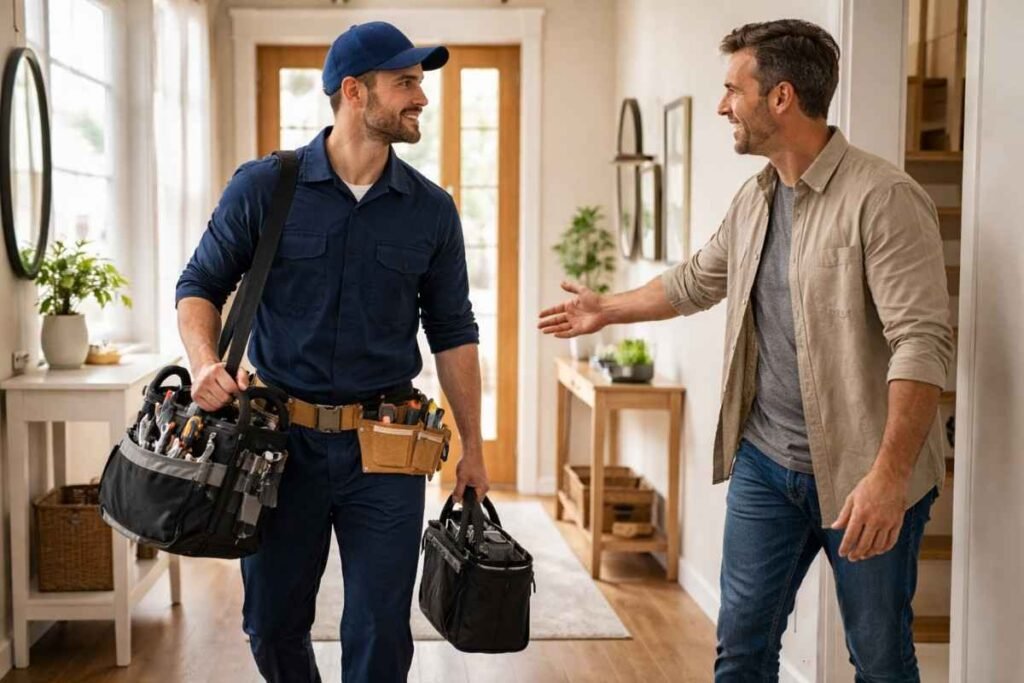
When the plumber comes, every second you save can help you keep more money. Make sure you have this information with you:
- The Starting Point: This is the spot where you first saw the water.
- The Sound Check: Did you hear a loud “bang” or was it more of a steady “hiss”?
- The Stage: Were you using the washing machine or taking a shower just before the water showed up?
Mention any recent high energy bills to the technician. Move any furniture or clutter that is in the way of the leak. This will help clear a path. If the technician can get to the pipes fast, the water can be turned back on more quickly.
The main thing to remember: An emergency plumber is all about beating time and water. If the water is not running and the power is safe, you have gotten past the hardest part. Stay calm. Make sure the buckets do not fill up. Then, let the plumber take care of the rest.