
In the world of industrial manufacturing and electrical engineering, there is no room for error. When dealing with high-voltage systems, intricate control panels, or automated machinery, the difference between a successful deployment and a catastrophic failure often comes down to one thing: adherence to industry standards. These standards are not merely bureaucratic hurdles; they are the codified wisdom of decades of engineering, designed to ensure safety, reliability, and interoperability.
Navigating the web of regulations—from the National Electrical Code (NEC) to ISO certifications—can be daunting for project managers and engineers alike. However, treating compliance as a foundational element of the design process rather than an afterthought is crucial for long-term success. This guide explores the essential components of meeting industry standards in complex electrical builds, offering practical insights into how top-tier manufacturers ensure their systems stand up to scrutiny and stress.
1. Deep Dive into Regulatory Requirements (NEC, UL, and ISO)
The first step in any complex build is understanding which specific standards apply to the project. This varies significantly based on geography and application. In the United States, the National Electrical Code (NEC/NFPA 70) is the benchmark for safe electrical design, installation, and inspection to protect people and property from electrical hazards.
Beyond the NEC, specific components often require Underwriters Laboratories (UL) listing. For industrial control panels, for example, the UL 508A standard is the gold standard. Adhering to these requires a granular understanding of short-circuit current ratings (SCCR) and proper component spacing. Furthermore, facilities often operate under ISO 9001 quality management systems, which mandate consistent processes. Failing to identify the governing bodies early in the design phase can lead to costly re-engineering later.
2. Component Selection and Traceability

A complex electrical system is only as robust as its weakest link. Meeting industry standards requires a rigorous procurement process that prioritizes component quality over cost savings. This involves verifying that every relay, wire, and terminal block carries the necessary certifications (CE, UL, CSA, etc.) for its intended environment.
This is particularly vital when dealing with connectivity. Whether you are integrating a simple wire harness or a complex, multi-conductor cable assembly, the specifications must align perfectly with the electrical load and environmental stressors of the application. Traceability is also a key standard; in the event of a component failure, engineers must be able to trace a part back to its batch and manufacturer to prevent widespread systemic issues.
3. Adherence to Wiring and Assembly Standards (IPC/WHMA-A-620)
How components are connected is just as important as the components themselves. The IPC/WHMA-A-620 standard is the most widely used acceptance code for cable and wire harness assemblies. It defines what constitutes an acceptable connection, covering stripping, crimping, and soldering.
In complex builds, “good enough” is not acceptable. Crimp height, pull force, and solder wetting must be precise. For example, a crimp that is too tight can fracture the wire strands, creating a high-resistance point that generates heat, while a loose crimp can result in intermittent signal failure. Adhering to Class 3 of the IPC standard—which applies to high-performance electronic products where downtime is not tolerable—ensures that the physical assembly matches the engineering intent.
4. Thermal Management and Environmental Protection
Electrical standards also dictate how a system interacts with its physical environment. High-density electrical builds generate significant heat, and standards dictate that enclosures must be able to dissipate this heat effectively to prevent component degradation.
Engineers must calculate the thermal output of all devices within an enclosure and design active or passive cooling solutions accordingly. Additionally, NEMA (National Electrical Manufacturers Association) ratings delineate how well an enclosure protects against ingress from dust, water, and oil. A build destined for a wash-down food processing plant (NEMA 4X) has vastly different standard requirements than one sitting in a climate-controlled server room (NEMA 1).
5. Rigorous Testing and Validation Protocols

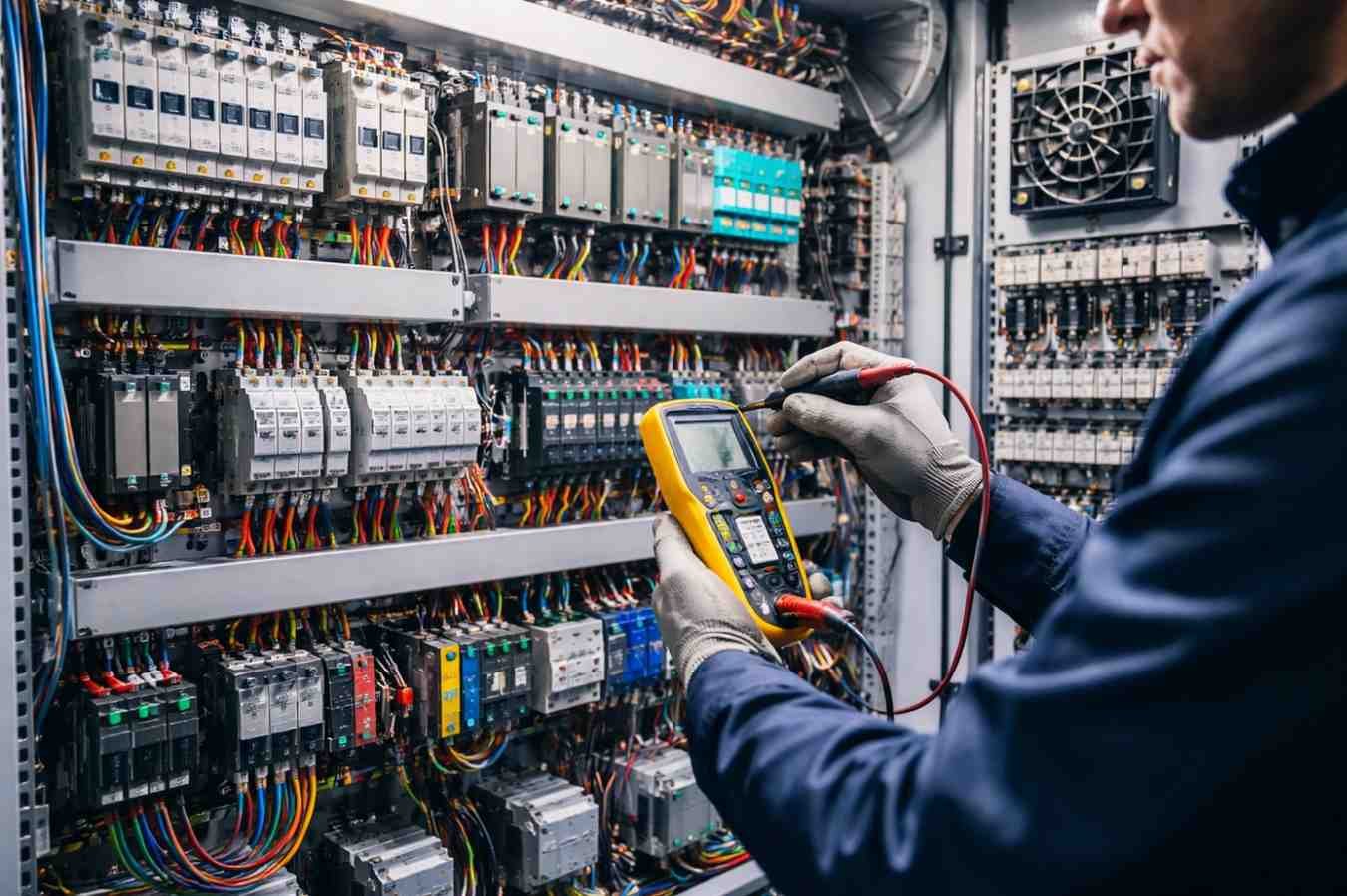
Compliance is verified through testing. Before a complex electrical build leaves the production floor, it must undergo a battery of tests to prove it meets safety standards. This includes continuity testing to ensure all connections are correct, as well as HiPot (High Potential) testing to verify that insulation is sufficient to protect against voltage spikes.
Automated testing equipment can now perform hundreds of checks in seconds, logging data for quality assurance reports. These reports are often a required deliverable for the client, serving as proof that the build meets all specified voltage, amperage, and resistance standards.
6. Comprehensive Documentation and Labeling
Finally, a build is not compliant if it is not documented. Industry standards place a heavy emphasis on clear, accurate labeling and schematics. Every wire should be labeled at both ends, corresponding to the electrical schematics.
Safety labels—warning of arc flash hazards, high voltage, or multiple power sources—must be prominent and adhere to ANSI Z535 standards for color and text size. Proper documentation ensures that future maintenance teams can service the equipment safely and effectively, maintaining the system’s compliance throughout its operational lifecycle.
Conclusion
Meeting industry standards in complex electrical builds is a multifaceted discipline that requires attention to detail at every stage, from initial design to final testing. By strictly adhering to regulatory codes, selecting certified components, and maintaining rigorous assembly protocols, engineers can deliver systems that are safe, efficient, and built to last.