
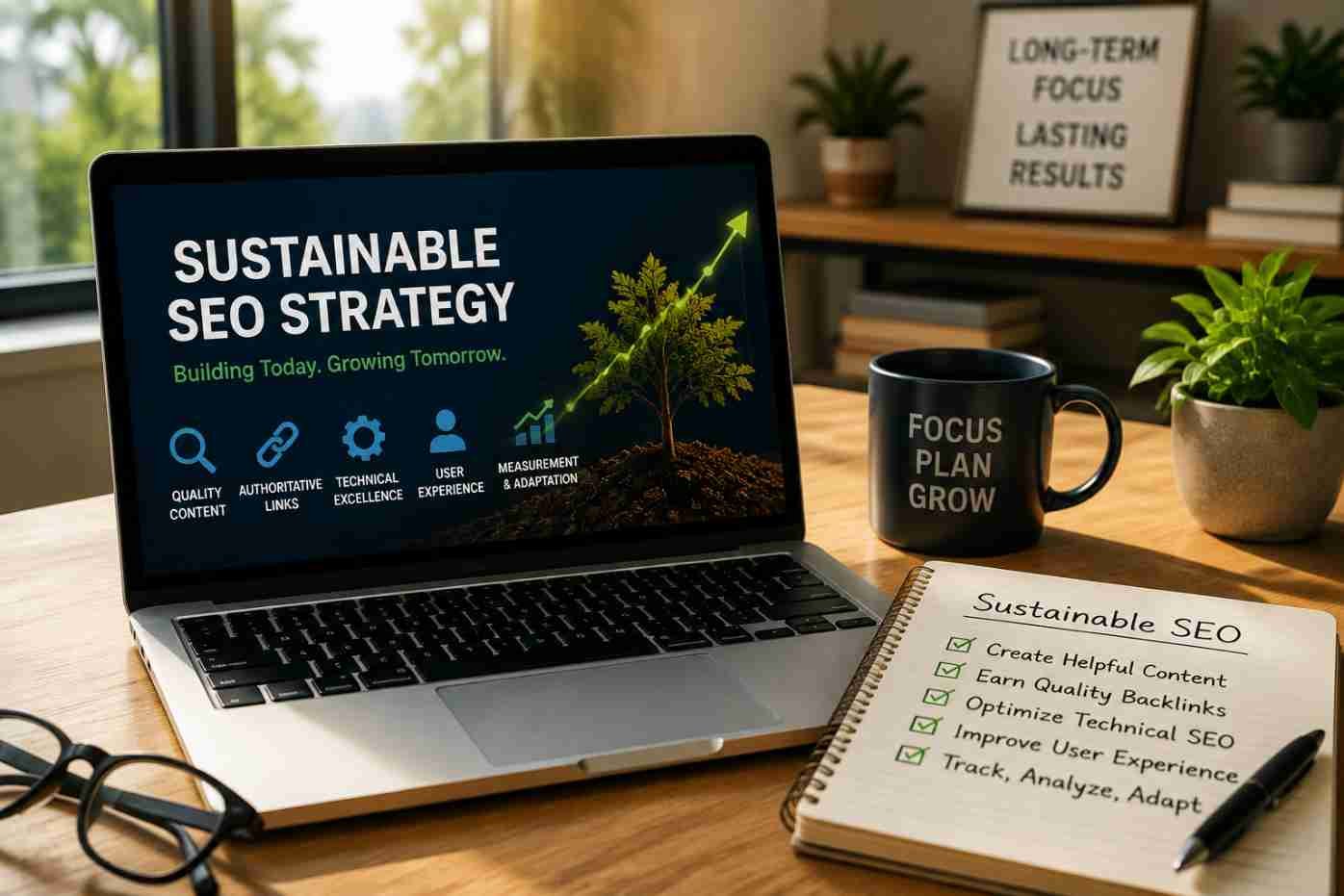
The Real Problem: Too Many SEO Plans Are Built for Short Wins, Not Durable Growth
A sustainable SEO strategy is not the same thing as “doing SEO consistently.” Consistency can still be shallow if the work is built around shortcuts, thin content, or tactics that only hold while competitors stay still. Google’s own guidance emphasizes helpful, reliable, people-first content, along with sound technical foundations and a good page experience. That is the real center of gravity for long-term performance.
The difference matters because search behavior changes, algorithms evolve, and customer expectations rise. A strategy built only to chase rankings can look productive for a quarter and then collapse when the site stops earning trust. A sustainable model compounds: content improves over time, technical quality keeps the site accessible, and authority grows in ways that are hard for competitors to copy quickly.
For businesses evaluating SEO services in Utah, the question is not whether rankings can be improved. The better question is whether those rankings can be defended, expanded, and converted into revenue without depending on constant reactive fixes. That is where Gravitate One’s approach is strategically sound: it treats SEO as an operating system for growth, not a one-time campaign.
Sustainable SEO Starts With Architecture, Not Just Keywords
Many teams think SEO begins with writing pages around search terms. In reality, it begins with whether search engines and humans can efficiently understand the site. Google points site owners toward crawlability, indexing, and technical requirements because those elements shape whether content can even compete.
A sustainable strategy therefore treats technical SEO as foundational, not optional. Site architecture should make important pages easy to discover. Internal linking should guide crawlers toward revenue-driving pages. Performance should support real users on real devices, not just score well in abstract audits. Core Web Vitals and broader page experience do not guarantee rankings, but they are part of the environment in which quality content has a fair chance to perform.
Technical Health Protects Growth From Invisible Friction
The strongest technical SEO work usually feels unremarkable to outsiders because it removes problems instead of creating visible “campaign” moments. That is exactly why it lasts. A site that loads quickly, renders cleanly, and organizes content logically is easier to scale, easier to update, and easier to trust.
In practical terms, this means Gravitate One is not just polishing metadata. It is refining the code, architecture, and performance signals that determine whether content can be crawled efficiently and whether visitors stay long enough to convert. That is a materially different mindset from treating SEO like a set of isolated tasks.
Technical Debt Is a Growth Tax
Every broken redirect, duplicate page, bloated script, or confused navigation path adds friction. Individually, these issues can seem minor. Collectively, they function like a tax on every future marketing effort. New content underperforms because the site is harder to crawl. Link equity dissipates because internal pathways are weak. Even well-written pages fail to reach their potential because the platform underneath them is unstable.
These issues can quickly become expensive, which is why understanding the costs of poor website maintenance is essential when evaluating the long-term impact of technical SEO problems.
This is one reason sustainable SEO should be evaluated as a system. If the technical base is weak, every content and link effort becomes more expensive than it should be.
Content Only Compounds When It Reflects Real Expertise
High-volume content production is one of the most common ways SEO strategies become unsustainable. The internet is already crowded with pages that repeat the same definitions, summarize the same advice, and add little original value. Google’s guidance consistently pushes creators toward original, helpful, complete content that demonstrates expertise and trustworthiness.
That is why the best content strategy is not about publishing more. It is about publishing with judgment. The question is not “How many pages can we launch?” It is “Which pages deserve to exist because they can genuinely help a buyer, answer a local search intent, or establish authority in a meaningful way?”
Gravitate One’s content model fits that standard because it is built around E-E-A-T principles, not filler. That matters in Utah markets where competition can be local, regional, and national at the same time. A page must do more than contain a keyword. It must signal that the business understands the problem, the geography, and the decision-making process behind the search.
What Durable Content Usually Looks Like
Sustainable content tends to share a few traits:
- It answers a real buyer question, not just a search term.
- It includes enough context to be useful without requiring another search.
- It is updated when facts, services, or market conditions change.
- It speaks to intent, not just traffic.
- It connects naturally to conversion paths instead of living in isolation.
This kind of content earns its place. It continues working because it remains relevant, credible, and adaptable.
Why Local Intent Needs More Than a City Name
For businesses seeking SEO services in Utah, local content should not be reduced to inserting place names into generic copy. Real local relevance comes from showing an understanding of how people search in a region, how they compare providers, and how urgency differs between a homeowner, a B2B buyer, and a multi-location brand.
That is where a boutique agency like Gravitate One can be especially effective. A smaller client load allows for more tailored thinking, which is often what separates a page that ranks briefly from one that becomes a stable acquisition asset.
Authority Is Built, Not Bought, and It Has to Be Earned Carefully
A sustainable SEO strategy requires off-page authority, but not the type that comes from spammy link volume or low-value placements. Search visibility becomes more durable when a site earns mentions, links, and citations from relevant sources that reinforce legitimacy. That is especially important for local and regional companies that need to be recognized as credible within their market.
Gravitate One’s approach to link building and citation acquisition is important here because it aligns with how sustainable authority is actually formed: gradually, selectively, and with quality control. A handful of relevant, trusted signals can matter far more than a large batch of weak links. The goal is not to “game” authority. The goal is to deserve it.
Using a related resource like Google Search Central’s helpful content guidance is useful because it reinforces the same strategic principle: helpful content and trustworthy signals matter more than mechanical tactics. That logic should shape both the content plan and the link strategy.
Local Authority and Broader Reach Can Coexist
A common mistake is assuming a site must choose between local visibility and broader growth. In practice, the best SEO programs do both. A Utah-focused business can earn local citations, local links, and map visibility while also building content and authority that support regional or national expansion.
That dual capability matters. Gravitate One’s experience across Utah markets like Silicon Slopes, Salt Lake City, and St. George gives it local fluency, but the real strategic value is that this local intelligence can support a broader organic footprint when the business is ready to scale.
Link Building Should Reinforce the Brand, Not Distract From It

Good link building makes a brand easier to trust. It should strengthen the site’s topical authority, prove it belongs in the conversation, and support the pages most likely to drive leads or sales. Bad link building does the opposite. It creates noise, risks quality issues, and rarely holds up over time.
The lasting question is simple: if the link disappeared tomorrow, would the brand still be stronger for having earned it? If the answer is yes, the tactic was probably worth doing.
The Best SEO Programs Tie Visibility to Revenue, Not Vanity Metrics
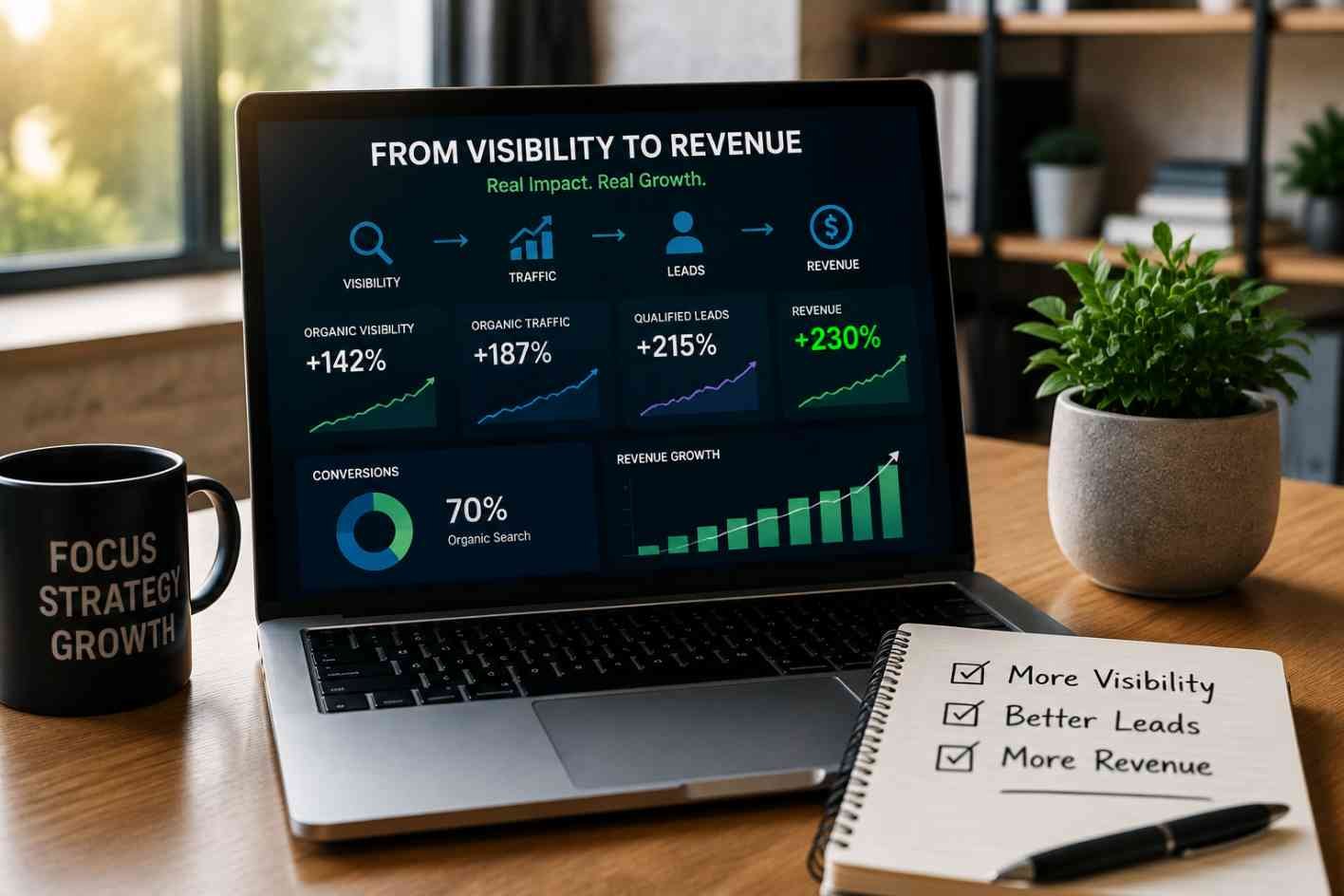
Sustainability is not measured by traffic alone. A site can attract visits and still fail to create business momentum if the audience is wrong, the page experience is weak, or the conversion path is unclear. That is why a serious SEO strategy must be tied to outcomes that matter: qualified leads, booked calls, sales, and market expansion.
Sustainable Growth Requires Ongoing Judgment
The best SEO programs are not static. They are monitored, adjusted, and refined. Search intent shifts. Competitors improve. Site performance changes. New content opportunities emerge. A sustainable strategy expects those changes and builds a system for responding to them without losing momentum.
That is one of the biggest advantages of working with Gravitate One. Its boutique model, dedicated account management, and ongoing monthly site monitoring create a more responsive operating rhythm than a high-volume vendor model. In SEO, responsiveness is not a luxury. It is how growth stays intact.
What Businesses Should Expect From a Serious SEO Partner
A credible long-term SEO partner should be able to speak clearly about:
- Technical site health and crawlability
- Content quality and intent alignment
- Authority building through relevant signals
- Local visibility and map pack opportunities
- Conversion impact, not just ranking changes
- Regular monitoring and iterative improvements.
Businesses should also know the red flags to watch for when working with a Utah SEO company so they can distinguish a credible long-term partner from a provider relying on narrow or unsustainable tactics.
If a provider cannot explain how those pieces fit together, the strategy is probably too narrow to be sustainable.
Long-Term SEO Works When the Strategy Respects How Search Actually Behaves
The future-proof version of SEO is not mysterious. It is disciplined. It starts with a technically sound site, builds content that people actually want, and earns authority in ways that make sense for the brand and the market. Google’s guidance is consistent on this point: helpful, reliable, people-first content and a solid site experience matter more than surface-level tricks.
That is why the most sustainable SEO programs are also the least flashy. They do not depend on constant reinvention or shortcuts that age badly. They build assets that continue to pay off because they are useful, credible, and structurally sound.
For businesses comparing SEO services in Utah, the strategic choice is not merely about choosing a vendor. It is about choosing whether your organic growth will be built on temporary tactics or on a system designed to last. Gravitate One represents the second path: thoughtful technical work, credible content, selective authority building, and a clear bias toward outcomes that hold up over time.