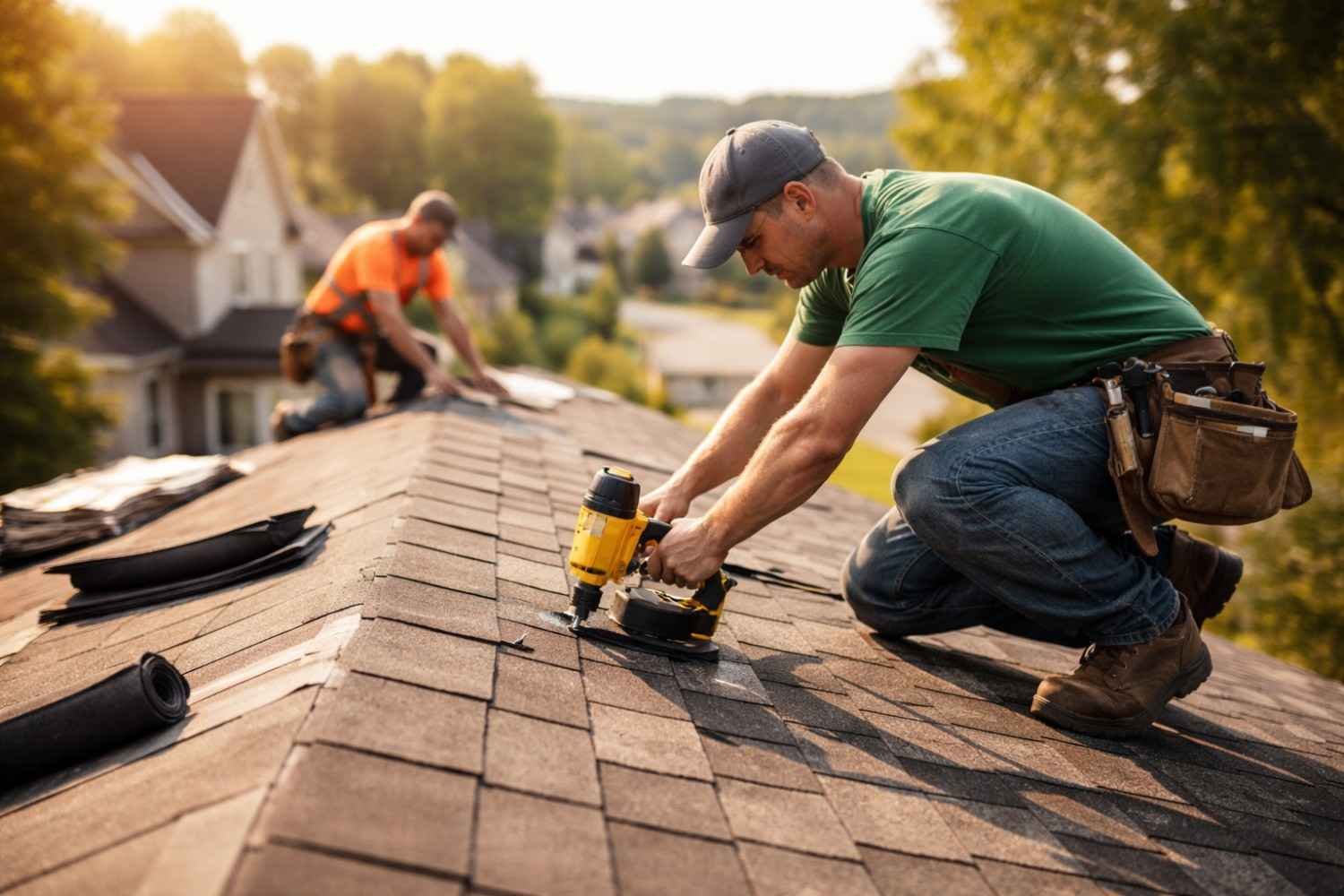
Asphalt roofing systems are widely used on commercial buildings across Minneapolis because they offer solid protection in tough climates. Over time, these roofs face stress from snow loads, freezing air, and repeated temperature shifts. Winter conditions can place pressure on roofing materials and reveal problems that stay hidden during warmer seasons. Paying attention during cold months can help property owners act before small issues grow larger.
Winter weather in Minneapolis creates natural stress tests for asphalt roofing surfaces. Snow buildup, ice formation, and deep freezes can expose weak points, drainage concerns, and surface wear. When these signals point to long-term damage, a commercial asphalt roof replacement in Minneapolis becomes the most reliable solution to restore protection and performance. This article explains how winter conditions expose roof concerns, which signs deserve attention, and how early decisions protect your property.
Why Winter is Ideal for Spotting Roof Problems
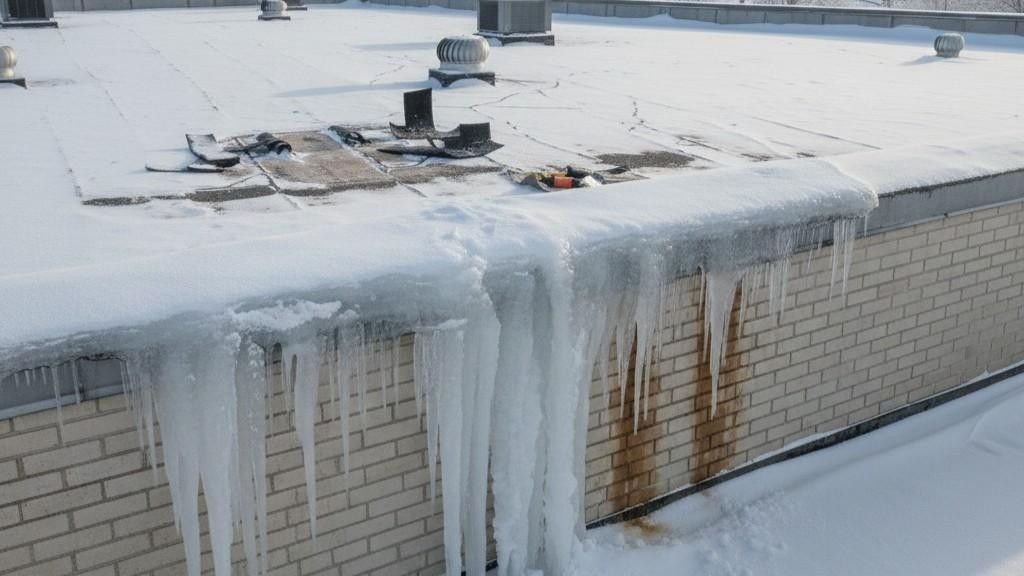
Winter weather helps expose roof issues that stay hidden during warmer seasons. Freezing temperatures, snow, and ice place stress on roofing materials and highlight weak areas. Ice buildup along roof edges often signals poor drainage, which can allow water to slip beneath shingles. This moisture may lead to leaks and interior damage.
Cold conditions also cause roofing surfaces to expand and contract. This movement can reveal cracks, loose sections, or missing shingles more clearly. When these warning signs appear in winter, they signal the need for quick attention. Early action helps protect the structure and limits further damage.
Key Signs of Failing Asphalt Roofing Systems
Cold weather places heavy demands on asphalt roofing systems, making certain warning signs easier to notice. These indicators often appear after snowstorms or long freeze cycles and should not be ignored.
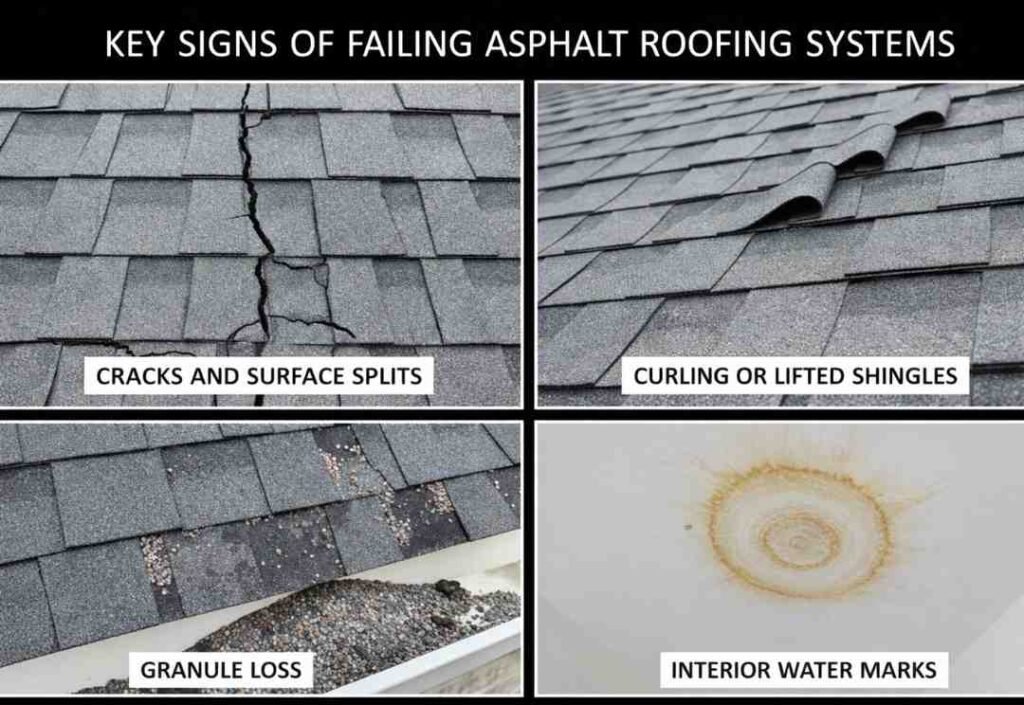
- Cracks and Surface Splits: Low temperatures cause roofing materials to tighten. This movement can open small fractures that allow moisture to enter the structure.
- Curling or Lifted Shingles: When shingles lose flexibility, edges may lift or bend. This reduces surface protection and increases exposure to wind and water.
- Granule Loss: Asphalt shingles rely on granules for durability. If granules collect in gutters or near drains, the surface layer may be wearing thin.
- Interior Water Marks: Discoloration on ceilings or walls after snow melt often points to compromised roofing areas that need attention.
Spotting these signs early helps prevent structural damage and costly disruptions.
What to Do If You Notice Problems
If you see signs of damage on your commercial asphalt roof during the winter months, it’s essential to take action immediately. Waiting too long could result in further damage, which could lead to costly repairs or even the need for a full roof replacement.
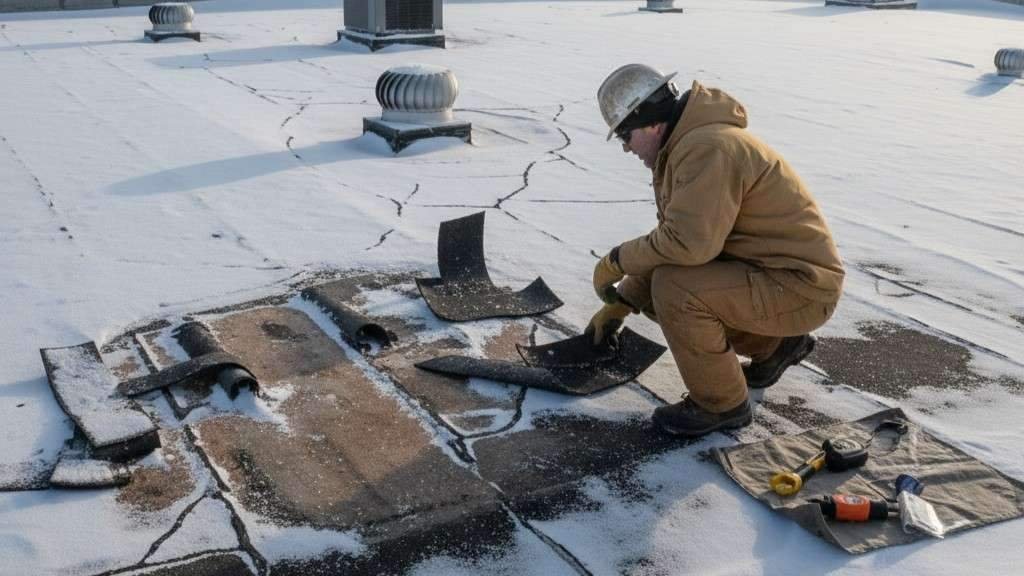
Here’s what you can do:
- Call a Roofing Professional: A trained expert can perform a detailed inspection of your roof and determine the extent of the damage. A roofing contractor can identify problems that may not be immediately obvious and recommend the best course of action.
- Schedule Roof Replacement in Minneapolis: If your roof is beyond repair, a commercial asphalt roof replacement in Minneapolis can give you peace of mind. A new roof will not only improve the appearance of your building but also provide better protection against the elements.
Winter weather in Minneapolis can actually help you identify failing asphalt roofing systems. The cold temperatures, snow, and ice can expose weak spots and signs of wear that might go unnoticed during warmer months. Paying attention to these signs and addressing them early can save you money and hassle in the long run. If you notice any issues with your roof, don’t hesitate to contact a professional. Opting for a roof replacement can ensure that your roof is strong and ready to face the next season.