You hit the gym five days a week. You track your protein. Your sleep is locked in. And yet you’re still dealing with a stubborn lower back, squat depth that won’t improve, and shoulders that feel like they’re perpetually set three inches forward.
The gym isn’t the problem. The other eight hours are.
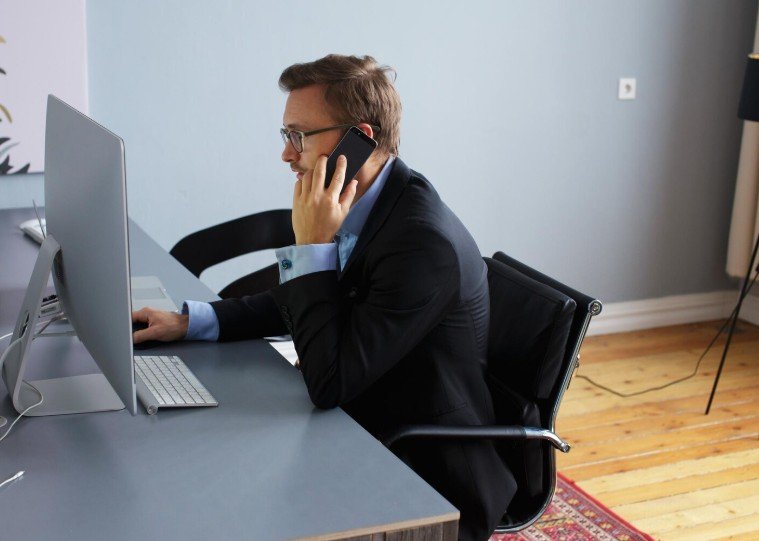
Most people treat their workout as a separate event, something that happens in a box, isolated from the rest of the day. But your body doesn’t think in blocks of time. It responds to cumulative load, and right now, for a lot of people, that load is six to ten hours of uninterrupted sitting.
That time isn’t neutral. It’s actively working against you.
The Real Problem Isn’t That You’re Sedentary
Here’s what trips people up: they assume that exercising cancels out sitting. It doesn’t.
A 2025 systematic review in the Journal of Occupational Rehabilitation found that resistance training in sedentary office workers produced measurable improvements in strength and reduced discomfort, which tells you the damage from sitting is real enough to show up in controlled research and specific enough that general fitness doesn’t automatically undo it. (Source: Men’s Fitness, 2026)
You can have a serious training program and still be losing ground for the other sixteen hours. The gym puts deposits in the bank. Desk time makes withdrawals. If the withdrawals are large enough and consistent enough, the math doesn’t work in your favor.
What Eight Hours of Sitting Actually Does to Your Body
Sitting isn’t passive rest. Your body adapts to whatever position you hold most often. Put it in a chair long enough and it starts treating that position as the new default.
Three things go wrong, and they compound each other.
Your Glutes Forget They Exist
Sitting reduces the engagement requirements of the muscles most critical for stability and movement: your glutes and core. (Source: Whole Strength Physical Therapy) Over time, chronically underused glutes don’t just get weak, they get neurologically quiet. The brain stops firing them reliably because it doesn’t need to.
The result shows up in your deadlift as a hinge that turns into a squat. It shows up in your sprints as hamstrings that feel like they’re doing everything alone. It shows up in your lower back, which compensates like crazy for the glutes that aren’t showing up.
Your Hip Flexors Shorten and Mess Up Your Lifts
The more time you spend sitting, the more your hip flexors will adaptively shorten to that position. When a muscle becomes extremely tight, it doesn’t lengthen or shorten well. (Source: MovementX)
And that’s a problem specifically when you squat or deadlift, movements that demand full hip extension. A 2024 study in the International Journal of Strength and Conditioning found that resistance-trained individuals with hip flexor tightness showed significantly different muscle activation patterns during the front squat, with the rectus femoris and biceps femoris working harder and glute activation dropping relative to the hamstrings. (Source: Martinez-Sepanski et al., 2024)
Translation: tighter hip flexors from sitting don’t just feel uncomfortable. They actually change which muscles do the work during your lifts, and usually not for the better.
Your Upper Back Loses the War
The forward head position that comes from staring at a monitor for hours weakens the mid-back muscles responsible for keeping your scapulae in place. Rows strengthen the mid-back and postural muscles, which are often weak due to slouched sitting, and help correct rounded shoulders by improving scapular control. (Source: Whole Strength Physical Therapy) But no amount of rowing fixes rounded shoulders if you’re reloading that position for eight hours every day right after.
The 20-8-2 Rule: A Dead-Simple Way to Break the Damage
The 20-8-2 breakdown is this: 20 minutes sitting, 8 minutes standing, 2 minutes moving every hour. It treats your desk position the same way you’d treat a training variable, something to cycle, not something to lock in. (Source: Men’s Fitness, 2026)
Most people’s reaction to this is that it sounds impractical. But look at what it actually requires: standing up from your chair for ten minutes out of every thirty. That’s it. You’re not doing burpees. You’re not blocking out half your calendar. You’re just not staying glued to one position long enough for your body to lock into it.
Set a timer. Treat the two movement minutes as non-negotiable. Walk to the kitchen, do a few hip circles, roll your shoulders back three times. The specific activity matters less than the interruption.
Breaking up long periods of sitting is a strong starting point, but staying active also depends on how you structure the rest of your workday. Small adjustments to your workspace, daily steps, desk exercises, nutrition, and workout schedule can make a noticeable difference. These practical strategies for how to stay fit with a desk job can help you build a routine that supports both your health and your performance in the gym.
The Four Moves That Undo Desk Damage Fast
These don’t replace your training. They address the specific deficits that desk work creates, so your training actually works.
-
Hip Flexor Lunge Stretch with Reach
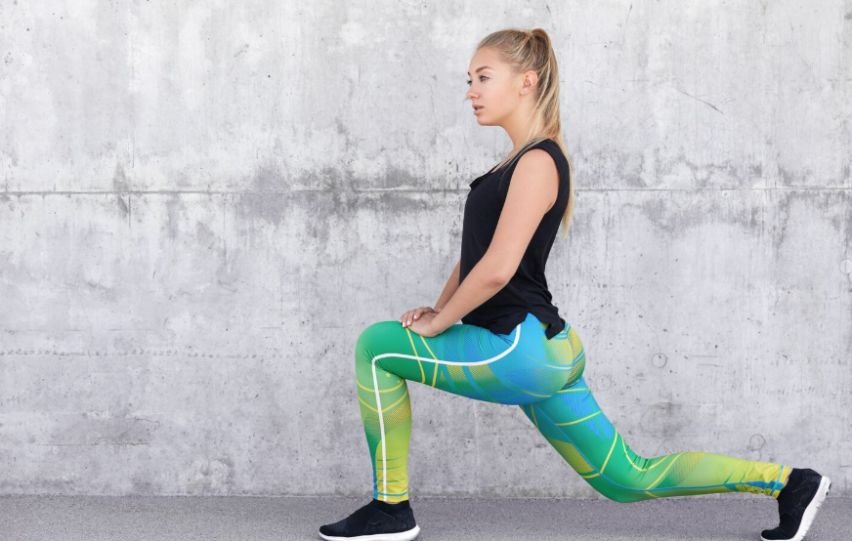
Kneel on one knee, shift your hips forward until you feel a pull in the front of the rear leg. Add an overhead reach on the same side as the kneeling knee to get the psoas involved. Hold 60 to 90 seconds per side, daily, including rest days. Consistent hip flexor work done over four to six weeks can meaningfully improve squat depth while the underlying mobility catches up. (Source: Cast Iron Lift)
-
Glute Bridge
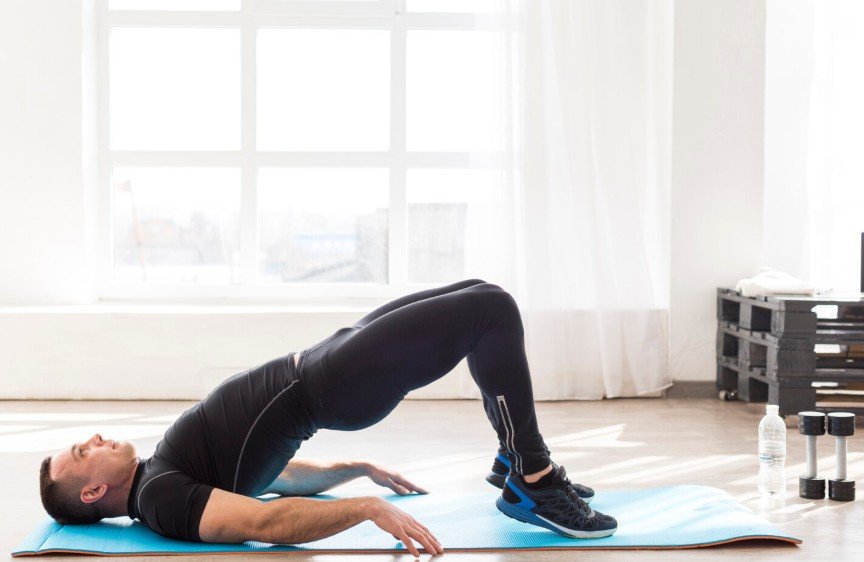
The glute bridge is a simple but powerful movement that reactivates the glutes and opens up the hips. It can be done anywhere and scaled up with resistance bands or weights as strength improves. (Source: Whole Strength Physical Therapy) Do these before your lower body sessions and on non-training days as a warm-up for your hips. Pause and squeeze at the top for a full second.
-
Wall Angel
Stand with your back against a wall, arms bent at 90 degrees, elbows and wrists touching the wall. Slide your arms overhead while keeping contact. This is humbling for most people who sit a lot. It directly targets the mid-back weakness and the pec tightness that forward-head posture creates.
-
Dead Bug
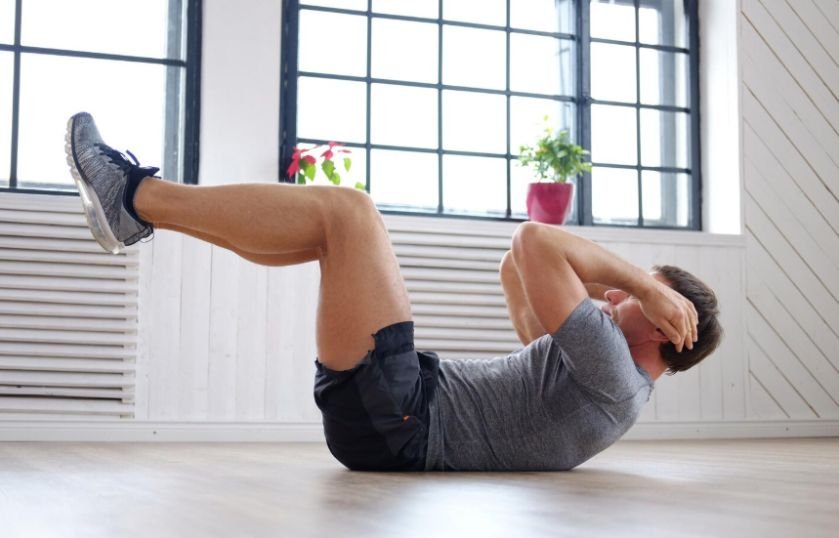
Lie on your back, arms pointing to the ceiling, knees bent at 90 degrees. Lower one arm and the opposite leg toward the floor while keeping your lower back pressed flat. The lower back lifting off the floor is the failure point, and it’s exactly what you’re training to prevent. This exercise targets the stabilizer muscles of the core, particularly the transverse abdominus, and forces correct pelvic positioning. (Source: Nefelinine)
| Move | Target | When to Do It |
| Hip flexor lunge stretch | Hip mobility, psoas | Daily, including rest days |
| Glute bridge | Glute activation, hip extension | Pre-workout + off days |
| Wall angel | Scapular control, mid-back | Morning or pre-upper body session |
| Dead bug | Core stability, pelvic control | Before any compound lift day |
When Movement Isn’t Enough: The Case for Hands-On Work
The stretches and activation drills above handle a lot. But chronic tension patterns, the kind that build over months or years of sitting, sometimes need direct soft tissue work to release before the movement work can actually take hold.
A study on office workers who received regular massage therapy found significant improvements in neck and shoulder posture, as well as reductions in pain and discomfort associated with prolonged computer use. (Source: Elements Massage)
Separate research with 59 office workers found that an eight-minute roller massage intervention following a 4.5-hour seated session produced significant increases in pain threshold, with the biggest pain reduction occurring in the trapezius and supraspinous muscles. (Source: AMTA Massage Therapy Journal)
The practical point: if you’re doing the movement work consistently and still finding your squat is stuck, your thoracic spine won’t extend, or your hips feel perpetually jammed, that’s often a sign the soft tissue itself needs attention, not just activation cues and stretching.
For people in Utah looking for this kind of work, massage therapy in salt lake city, utah that focuses on structural alignment goes further than general relaxation massage. The goal isn’t relaxation for its own sake. It’s restoring the tissue’s ability to move through full range so that your strength training can actually express itself.
Massage therapy works best when combined with ergonomic adjustments, stretching, and movement breaks, which is exactly the framework this article is building toward: don’t pick one lane, stack them. (Source: The Winchester Institute)
What This Looks Like as a Routine
You don’t need to overhaul your day. The compounding effect comes from small consistent inputs.
For gym owners and coaches, helping members maintain these habits also requires organized scheduling, athlete tracking, and a training environment built around consistency. Understanding how to optimize high-intensity functional training facilities can make daily operations smoother while allowing athletes to focus more fully on movement quality, preparation, and long-term performance.
During the Workday:
- Set a 30-minute timer and stand for 8 minutes when it goes off
- Use two of those minutes to do something: walk, shoulder rolls, a quick hip circle
- Adjust your monitor so your eyes land on the top third of the screen, not the bottom
Pre-Workout (10 Minutes Before Lifting):
- 90 seconds per side of hip flexor stretch
- 10 glute bridges with a 2-second hold at the top
- 5 wall angels, slow and controlled
- 5 dead bugs per side
Weekly:
- At least one session of intentional soft tissue work, whether that’s a foam roller, a lacrosse ball on your thoracic spine, or a session with a therapist if the patterns are chronic
The goal isn’t perfection. It’s consistency applied to the right inputs. Your workouts can only give you back what your body is actually able to access. Sitting all day shrinks that access. The work above buys it back.
What’s one thing you’d change first, the movement breaks during the day or the pre-workout prep? Drop it in the comments.