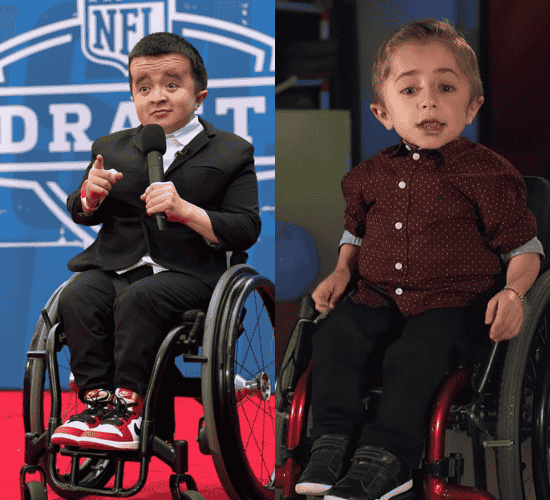
Alec Cabacungan and Kaleb-Wolf De Melo Torres embody strength and determination that go far beyond the screen. They’re absolutely real people with their life stories that stay with you.
Both of them were born with Osteogenesis Imperfecta or Brittle Bone disease, a rare condition that makes bones snap easily. Still, multiple surgeries, medicines, and limited mobility could not stop these two boys from achieving the better side of life. Alec is an optimistic boy who loves to play basketball, knowing that he has to carry the disease for the rest of his life.
Kaleb is an adorable face of Shriners Children’s Hospital who loves to play card games and read books. People often wonder, “Do Alec and Kaleb get paid for commercials?” They earn a lot more. Together, their stories through hospital commercials and numerous interviews have touched millions of hearts. They showed the real meaning of ‘if there is a will, there is a way’.
Alec’s Story
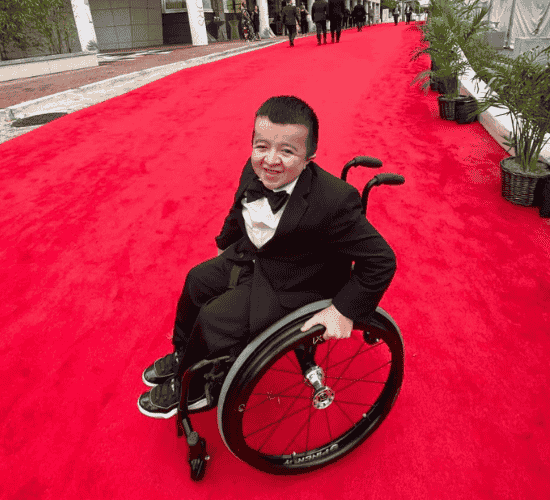
Image Credit : Instagram
Alec Cabacungan was born in Illinois in 2002, and the doctors told his parents something no one ever wants to hear: his bones could break from almost anything. The medical term they used is Osteogenesis Imperfecta, a disease that is also known as Brittle Bone Disease.
Since the day he was born, his life has been associated with frequent hospital visits, multiple surgeries, pain, medications, and anxiety. By the time he was a teenager, he’d undergone sixty fractures and multiple surgeries.
When Alec was only two months old, his parents took him to Shriners Children’s Chicago, hoping for answers. What they found was more than medicine.
The place felt warm, kind of like a big family that refused to give up on him. Surgeries came one after another, but so did progress.
Physical therapy was hard; sometimes it hurt more than the fractures themselves. Still, Alec pushed through.
Somewhere in all those long hospital days, he found something that changed him: wheelchair basketball. At first, it was part of therapy, but soon he loved it. He started laughing more, talking faster, and seeing life in a better way.
Now he’s in college, studying sports broadcasting, and has completed his degree in Journalism from Northwestern University. He shared his dreams about talking about sports on TV, maybe even covering the Paralympics someday.
When people ask how he keeps such a bright outlook, he just says Shriners helped him “find purpose beyond pain.” Alec’s got that easy grin, quick jokes, and a way of making everyone around him feel lighter.
Kaleb’s Story
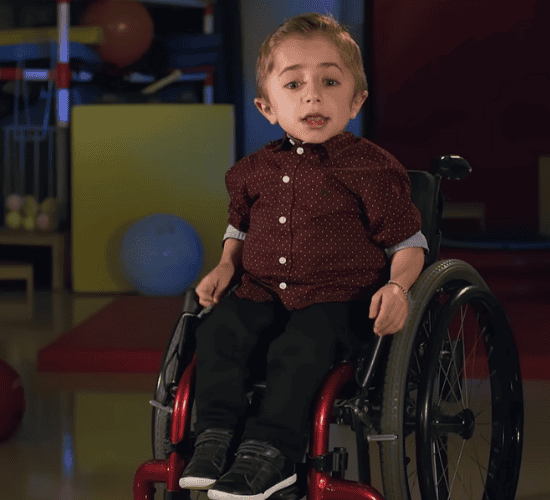
Image Credit : You Tube
Kaleb-Wolf De Melo Torres, born in 2009 in Canada, was diagnosed with Osteogenesis Imperfecta Type III. According to the doctors, this was one of the deadliest forms of the disease. Before he even reached his teenage years, he faced 200 fractures and 11 surgeries, which need no words to explain the pain.
His treatment in Shriners Hospitals for Children Canada began when he was only 7 days old. He mentioned the hospital staff as his family and clinical visits as reunions, in an interview aired on social media platforms.
He has undergone procedures where special rods were inserted into his legs for support. His fragile bones and short stature make it necessary for him to use a wheelchair to move from one place to another. Also, due to the condition, his bones grow very slowly, which eventually leads to mobility issues.
In his interview “7 Questions with Emmy,” he mentioned that he goes to the hospital every four months for special physiotherapy sessions.
Today, Kaleb can walk short distances, ride a bike, and attend public events with confidence. Through his words, he imparts his optimism and confidence to people.
His keen interest in communication, media, the art field, and philosophy reflects how deeply he thinks about life and its different facets.
His natural charm, prompt answers to questions, and a heart-touching smile made him one of the most recognized ambassadors of Shriners.
Finding Their Cause: Working With Shriners
Why the Hospital Became Central
Shriners Children’s Hospitals is the place that showed light to these two boys and their families in their tough times. ‘Shriners have been a big part of life, they’ve been with me since day seven,’ said Kaleb in an interview. The staff and the medical team have become a family to them.
The journey of these two kids showed what proper care and support can make people do. Intensive treatments, orthopaedic care, lifelong guidance, assistive equipment, along with comprehensive emotional support, helped them cope with all life’s odds.
For Alec, the support he got from the hospital strengthened his backbone. Going through his words, ‘If Shriners Hospitals for Children wasn’t a good hospital, then nobody would know who I was’. He also added that the mentors from the hospital helped him nurture his dream of becoming a broadcaster.
When asked about doing hospital commercials, both expressed a genuine wish to share their stories and make others’ lives better. So, the deep connection with the hospital made it natural for both of them to become public ambassadors, sharing their stories in social-media campaigns.
Their Actual Target of Doing the Commercials
They Spread Awareness
Through commercials, podcasts, and interviews, both Alec and Kaleb have become the symbols of courage, positivity, and strength. Multiple fractures, limited mobility, endless treatments, intravenous injections, and painful physiotherapy sessions are enough to test anyone’s will to live.
But the story altered for Alec and Kaleb. Their open discussion about brittle bone disease helps other people with any disability find a way to live a better life. Basically, they make their stories visible, relatable, and inspiring.
They Drive Support and Donation
Commercials that feature Alec and Kaleb easily collect donations. Their honest words move people to stand straight against physical and mental barriers. It’s not at all about pity or sympathy, but admiration and empathy do the magic.
Many even wonder, “Do Alec and Kaleb get paid for commercials?” Through their voices, Shriners Hospital for Children has been able to expand programs, collect funds for expensive surgeries, and offer therapies to children worldwide. As per their words, the hospital treats children regardless of their financial abilities. Viewers see real faces, real struggles, and real winners.
Conclusion
Alec Cabacungan and Kaleb-Wolf De Melo Torres aren’t just campaign faces; they’re living proof of courage and life-changing positivity. From breakable bones to unbreakable zeal, their story is not only for attracting funds but for igniting lives. Also, from their podcasts, people get to know about other children’s struggles, which inspires millions of young minds.
FAQs
1. How did Alec and Kaleb’s friendship begin?
Their bond grew from shared hospital visits and years of being part of the same Shriners family. Both understand each other’s struggles better than anyone else.
2. What inspires them to keep sharing their stories?
They’ve seen firsthand how hope spreads. Each time someone donates or gets inspired by their story, it reminds them why they do it.
3. How do they balance hospital life and personal goals?
It’s not easy, between therapy, travel, and studies, they rely on routines and strong family support. Also, they get emotional support from hospital staff.
4. What lessons do Alec and Kaleb try to teach young viewers?
They remind kids that asking for help isn’t a weakness and that success can be achieved quietly. Sometimes it’s just showing up again after a hard day.
5. How do they see their future beyond Shriners commercials?
Alec hopes to share stories through sports media, while Kaleb wants to help kids with disabilities to make their dreams come true.
Featured Image Credit : Instagram and YouTube
Disclaimer :
All content on this website is provided for informational purposes only. We make no guarantees regarding the accuracy, completeness, or reliability of the information. Any actions taken based on this content are at your own risk.
Some images or media may be sourced from publicly available or social media platforms and are used strictly for informational or illustrative purposes. All rights belong to their respective owners. If you believe any content infringes your rights, please contact us for prompt removal.