
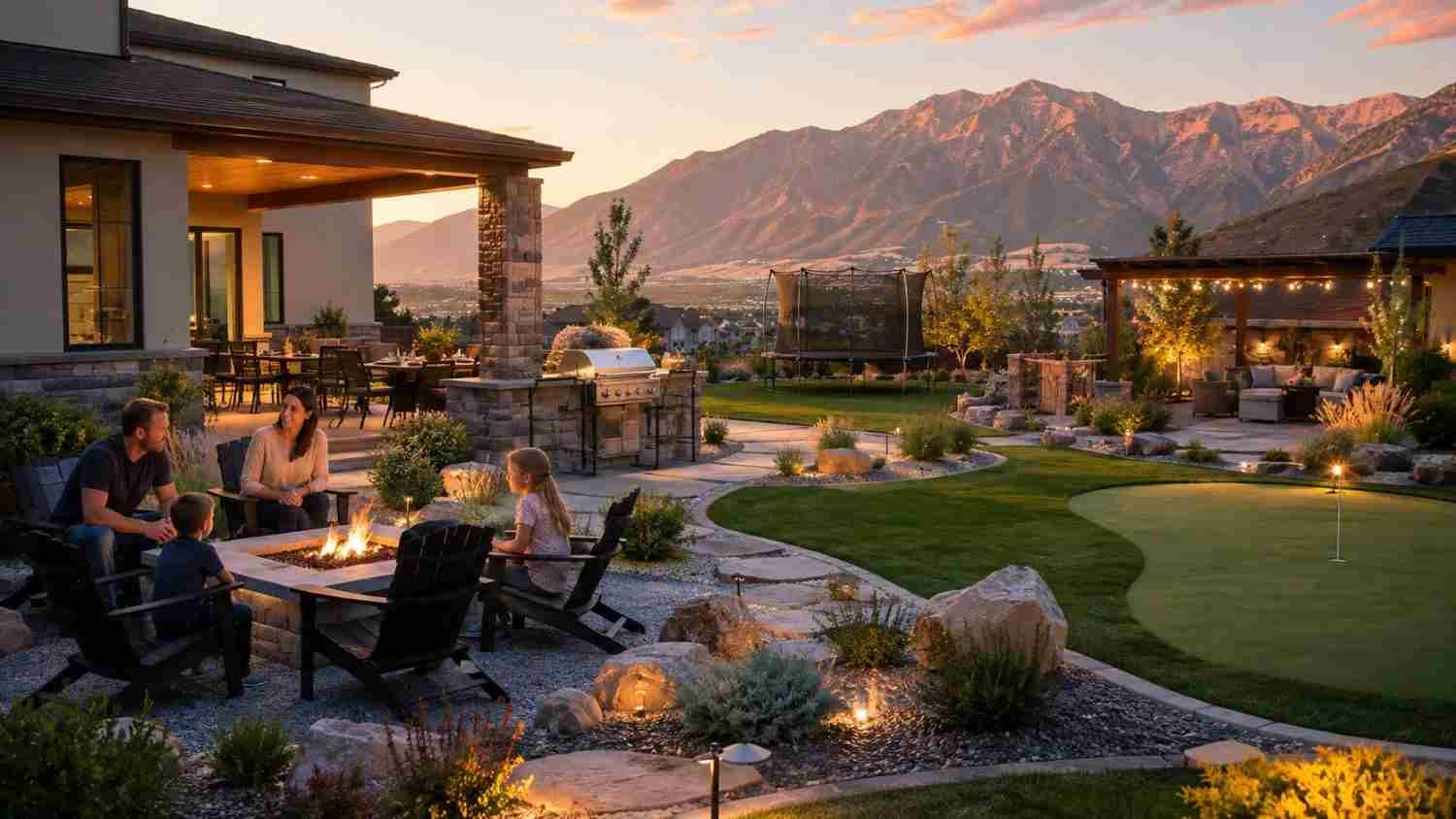
A yard can look complete on paper and still fail in daily life. That happens when design starts with appearance instead of behavior. The better question is not, “What should this landscape look like?” It is, “How do we actually live here?”
That shift matters even more in Utah, where climate, seasonality, elevation, and terrain all affect how an outdoor space performs. A yard that works for a family dinner in June may need to function very differently in October, in winter, or during a dry summer week when irrigation efficiency matters. Cottonwood Landscapes approaches that challenge with the kind of planning that turns a yard from decorative space into usable space.
Start with behavior, not aesthetics
The strongest landscape designs begin by mapping real routines. Who uses the yard? When do they use it? What do they want to do outside that they cannot do comfortably now? These questions are more valuable than choosing stone colors or plant palettes first.
A yard built around use typically reveals patterns that a purely visual plan would miss. For example, a family that entertains often may need a hard surface for movement, a covered area for shade, and lighting that extends the evening. A homeowner who wants quiet mornings may care more about privacy screening, a small seating area, and sound control than a large open lawn.
Cottonwood Landscapes works best when the design reflects those behaviors early, because later changes are more expensive and more limited. A patio can be resized. A circulation path can be moved. But if the core layout ignores how the space functions, every feature tends to work against the others.
Ask the right questions before drawing the plan
Before committing to a design, it helps to identify the real job of the yard. The most useful questions are practical:
- Do you host large groups or small gatherings?
- Do you want one main outdoor room or several zones?
- Is the yard used mostly in the evening, on weekends, or year-round?
- Do children, pets, or guests need open play space?
- Do you want more cooking, lounging, gardening, or visual impact?
- Which part of the yard feels underused, awkward, or too exposed?
These answers shape everything from hardscape size to planting density. They also keep the project honest. A large lawn may look generous, but if no one uses it, it becomes maintenance without value.
Build functional zones that match real life
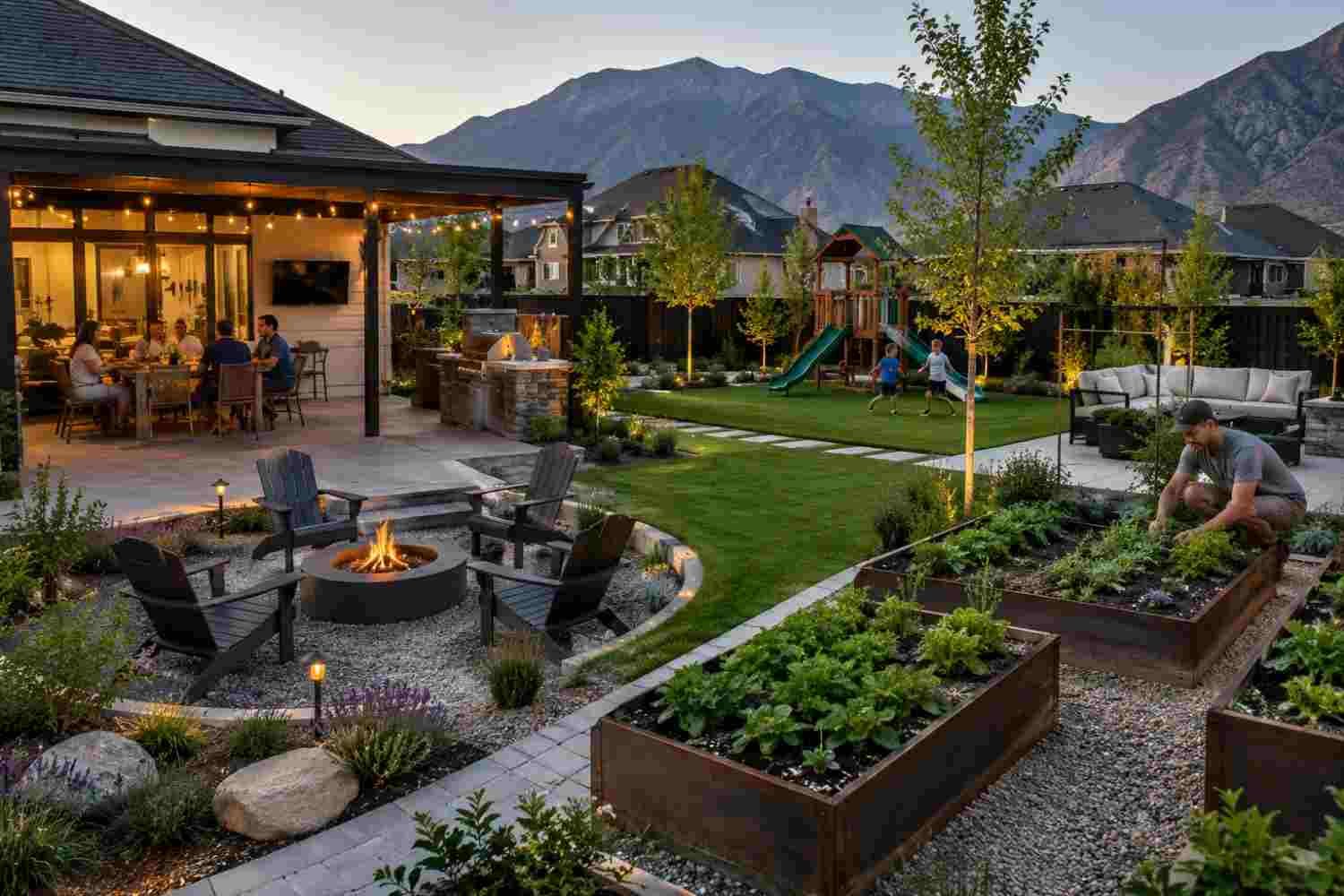
Once the actual uses are clear, the next step is zoning. Good landscape design does not make every square foot do everything. It gives each part of the yard a job. That may include dining, gathering, cooking, relaxing, movement, storage, or quiet retreat. The best layouts make those jobs feel connected instead of crowded.
This is where structure matters as much as style. A fire pit tucked too close to a dining area can feel cramped. A kitchen without prep space becomes a novelty instead of a tool. A seating area without shade may look finished and still go unused most afternoons. Strong design solves for flow, comfort, and access first.
Cottonwood Landscapes brings over 35 years of professional experience to that kind of planning, which matters because functional zoning is not just spatial—it is technical. Grades, drainage, retaining needs, and surface transitions all influence whether the zones work together.
Outdoor rooms should feel intentional, not improvised
A useful yard often performs like a home with distinct rooms. A cooking zone should support food prep and cleanup. A gathering zone should let people sit and talk without blocking circulation. A transition zone should move people naturally from house to yard or from one feature to another.
When those spaces are defined well, the yard feels larger. When they are not, even a generous property can feel disjointed. The goal is not to add more features. The goal is to arrange them so each feature makes the next one easier to use.
Design for Utah’s climate before you design for a catalog
In Utah, the best outdoor spaces are not built around generic templates. They are engineered around local conditions. Freeze-thaw cycles, semi-arid weather, high-altitude planting realities, and water use all affect how long a landscape lasts and how much attention it requires.
That is why durable hardscaping and climate-fit planting are not separate concerns. They are part of the same decision. A beautiful surface that shifts with seasonal movement becomes a problem. A plant palette that ignores heat and water demand becomes a maintenance burden. A design that respects climate gives the homeowner more reliability and less repair.
Cottonwood Landscapes is positioned around that reality. Its approach to xeriscaping and high-altitude planting is not about stripping a yard down to nothing. It is about choosing plants and materials that can hold their form and value in a region where conditions can be demanding.
Hardscaping and planting should work as one system
A common mistake is treating stone, walls, and planting as separate layers. In practice, they work together. Hardscape shapes drainage and circulation. Planting softens edges, filters views, and frames the space. If one is designed without the other, the yard can feel either too rigid or too loose.
A strong combined plan might use retaining walls to solve grade changes, low-water planting to reduce maintenance, and lighting to extend usability after sunset. That is not simply aesthetic coordination. It is operational design. It makes the yard easier to live with over time.
Make the yard useful across seasons, not just in peak weather
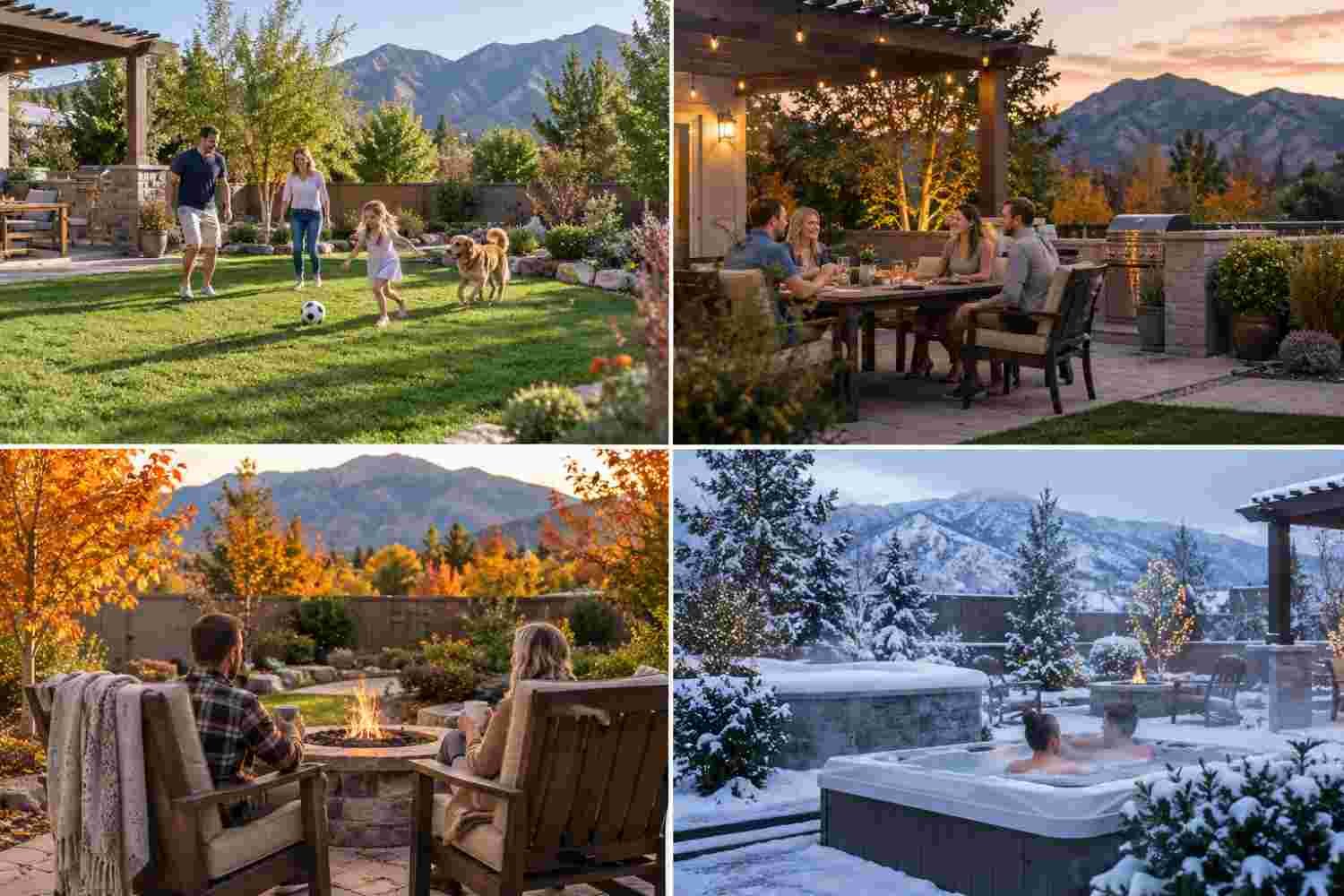
A backyard that only works on perfect days is not a complete outdoor space. Real value comes from extending usability across more months and more moments. In practice, that means thinking beyond summer afternoons and taking steps to prepare your garden for every season.
Covered areas, outdoor lighting, fire features, and sheltered seating all change how a yard behaves. A pergola can make midday shade possible. A fire pit can make a fall evening comfortable. Low-voltage lighting can make a path or patio usable after dark. A well-placed outdoor kitchen can make hosting simpler and reduce trips in and out of the house.
This is where strategic design pays off. When the yard supports more than one season, homeowners use it more often and more naturally. That does not necessarily mean adding more square footage. It means making existing square footage do more useful work.
A strong process prevents expensive design regret
A landscape project can go wrong even when the materials are excellent. The failure usually happens in the process: unclear goals, rushed decisions, weak refinement, or construction that does not stay aligned with the original intent. A disciplined design-to-build process reduces that risk.
Cottonwood Landscapes uses a five-step workflow—Consult, Design, Refine, Build, and Maintain—which reflects how serious outdoor projects should be handled. That structure matters because a yard is not a single product. It is a system of surfaces, structures, plants, and long-term performance factors.
The value of that process is not only efficiency. It is clarity. Homeowners can see how the project moves from concept to execution without losing sight of how the space will actually be used.
Here is what a sound process protects against:
- Oversized features that crowd circulation
- Plant selections that look good initially but perform poorly later
- Drainage or grading issues hidden behind finished surfaces
- Lighting plans that do not support real evening use
- Hardscape layouts that ignore the way people move through the yard
- Maintenance demands that become frustrating after installation
This is where professional judgment matters. A design can be beautiful and still be wrong for the home. A good process keeps those two goals aligned.
The best landscape is the one that earns its place in daily life
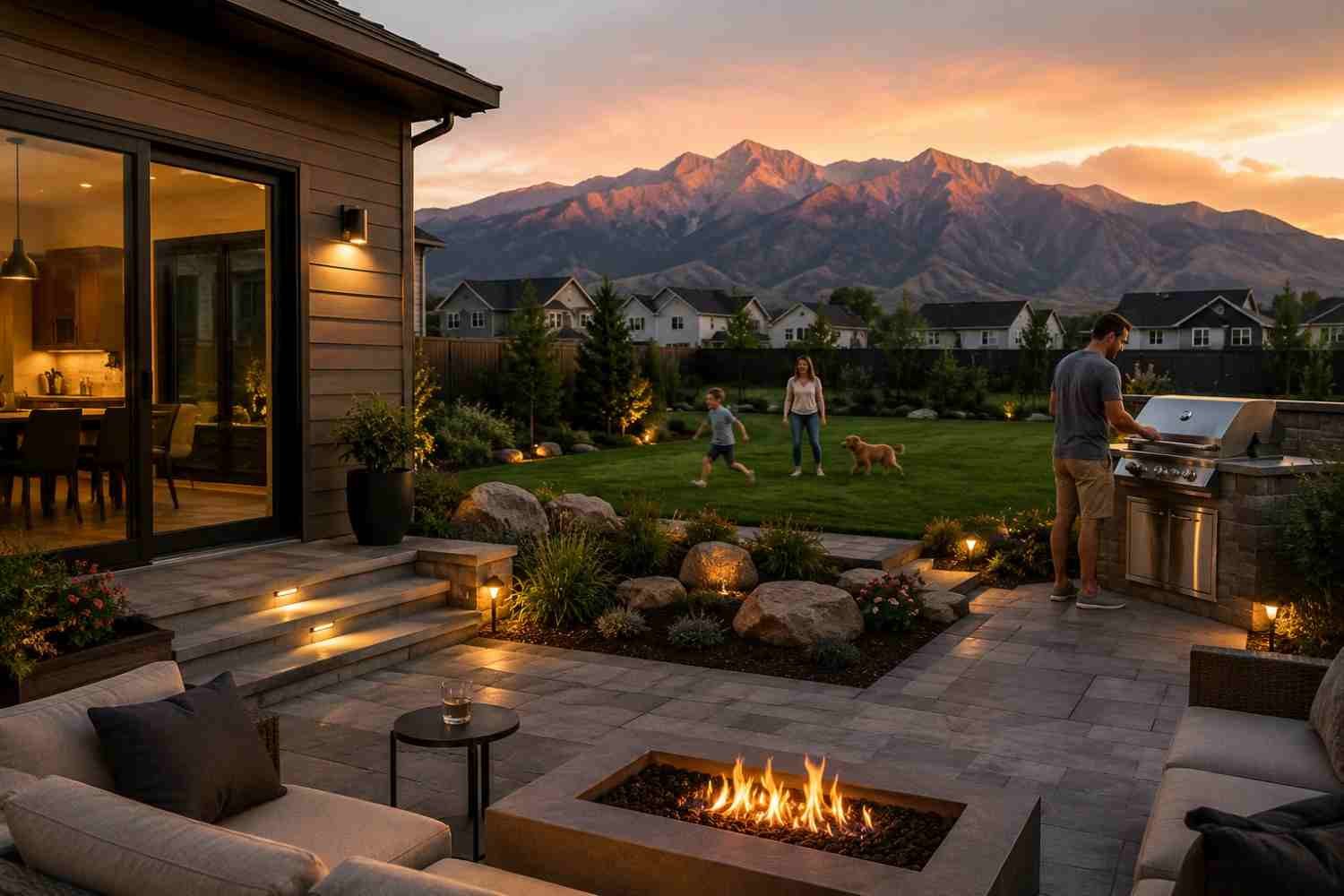
A premium landscape is not defined by how much it contains. It is defined by how well it serves the people who live there. The most effective yards are clear about purpose, disciplined about layout, and honest about climate. They are built to support meals, conversation, rest, movement, and seasonal change without forcing the homeowner to work around the design.
That is the real standard for landscaping in Utah: not just visual quality, but functional fit. Cottonwood Landscapes understands that distinction and builds around it with the kind of craftsmanship and process that make outdoor spaces more usable, more durable, and more worth the investment.
When a landscape is designed around the way people actually live, the result feels less like a finished project and more like a better version of home.