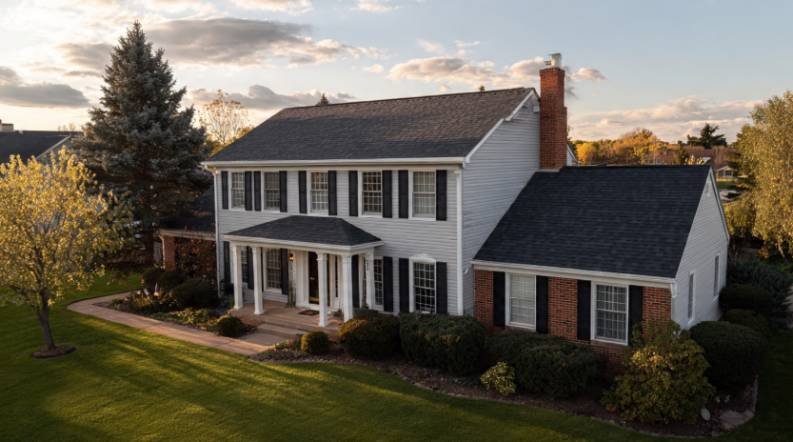

For most of the twentieth century, the default plan for aging was a fairly linear one: manage the family home as long as possible, then move to something more manageable, and eventually transition into assisted or skilled care if needed.
That path still makes sense for some families. But more and more, it isn’t the only one on the table, and a growing number of older adults are choosing to stay in the homes they love rather than moving through a series of increasingly unfamiliar places.
Why the Default Plan Has Started to Shift

The desire to age in place, to remain in a home surrounded by familiar spaces, relationships, and community, isn’t new. What’s changed is how achievable it’s become. Modifications that once would have required significant compromise in how a home looked and functioned have evolved.
A residential lift, for example, once implied a bulky, institutional installation that announced its presence in every room it touched. Modern systems are quieter, more compact, and designed to integrate naturally into a home’s aesthetic rather than override it.
At the same time, the alternatives have shifted in their own way. The cost of assisted living has climbed substantially in recent years, and the emotional reality of leaving a home where decades of life have accumulated is something that more families are examining honestly before they commit to it.
What Multi-Level Homes Offer That Simpler Properties Don’t
There’s an assumption that the logical response to aging in a multi-level home is to find something single-story and eliminate the stair problem entirely. For many people, that logic has a flaw in it: the multi-level home they’re in often isn’t just a practical arrangement.
It’s where their children grew up, where their memories live, where their neighbors know their name, where their garden is.
Giving all of that up to avoid the stairs is a trade that looks clean on paper and feels more complicated in practice.
For families where the home itself is a significant part of what they value about their life, finding a way to make the home work rather than finding a different home becomes the more appealing solution.
The Role of Vertical Access in Keeping Families Together
Multi-level homes also play a specific role in multigenerational living arrangements that’s worth naming. A home with distinct floor levels can accommodate multiple generations in ways that a flat, single-story property often can’t.
When an aging parent moves in with an adult child’s family, having a separate floor provides a degree of privacy and autonomy that changes the quality of the arrangement for everyone involved.
A lift in that context isn’t just about mobility. It’s about making independent access to every part of the home possible without depending on another family member for every transition between floors.
That independence, even in a shared living situation, has a real impact on how sustainable and positive the arrangement feels over time. It also reduces the invisible burden that can accumulate when a parent feels they’re constantly relying on others for things they used to do on their own without thinking.
What the Transition Actually Looks Like
For homeowners who decide to adapt their home rather than leave it, the process of adding a lift doesn’t have to be disruptive.
Modern installations are designed to minimize the impact on daily life during the work itself, and the timeline for most projects is measured in days rather than weeks for systems that don’t require significant structural modification.
Families may also review heating and ventilation habits to maintain consistent comfort across every floor. Understanding common misconceptions about keeping a furnace fan running can help homeowners make better decisions about airflow, energy use, and indoor comfort in a multi-level property.
Once installed, the shift in daily experience can be immediate. A floor that was effectively off-limits, whether a bedroom on an upper level or a finished basement, becomes fully accessible again. The practical range of the home expands back to its full footprint.
Things that were quietly being avoided, trips upstairs to retrieve something, navigating stairs in the dark at night, using an upper-level bathroom, become routine again.
The home stops requiring workarounds and starts feeling like itself again, which is often more significant to the people living in it than any single practical improvement could be on its own.
Why This Matters for Long-Term Planning

Choosing to stay in a home and actually being able to live in all of it are different things, and families sometimes conflate them. A person determined to age in place who has quietly stopped using two floors of their home isn’t really aging in place in the fullest sense. The home has contracted around them.
Long-term planning should also account for hidden hazards in old flooring and ceilings, as uneven surfaces, deteriorating materials, and concealed structural problems can affect safety and accessibility throughout an older multi-level property.
A lift reverses that contraction. It restores the home to something that can actually be lived in, not just occupied, which is what makes it a genuine long-term solution rather than a short-term workaround.
For families in the area researching residential elevators in Boise, ID, the conversation usually starts with a single floor access challenge and expands quickly into a broader discussion about what the home needs to remain a real home through the next decade rather than just the next year.
That longer view is what drives most of the decisions that end up making real differences in people’s lives.
Conclusion
Aging in place is less about avoiding change and more about making the changes that allow everything else to stay the same. A home that’s genuinely accessible on every level is a home that can continue to be a real part of someone’s life, not just a place they manage to sleep in while the important parts slip out of reach.