
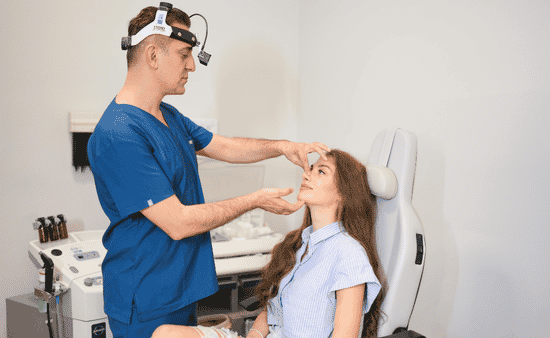
Why Candidate Selection Matters More Than Technique Alone
Closed rhinoplasty is often discussed as if it were simply a “less invasive” version of nose surgery. That framing is incomplete. The better question is not whether closed surgery sounds appealing, but whether it matches the patient’s anatomy, goals, and the level of refinement needed.
For the right person, closed nasal surgery can be an elegant solution. For the wrong person, it can limit the surgeon’s ability to shape the nose predictably. That is why the most important decision happens before the first incision: choosing the right surgical approach after a careful evaluation with a rhinoplasty surgeon Utah patients trust for judgment, not just technical skill.
At Barr Aesthetics, that evaluation is designed to be educational and realistic. The goal is not to push one technique over another. It is to determine whether closed rhinoplasty can accomplish the patient’s goals safely, naturally, and with enough control over the final result.
What Closed Rhinoplasty Can Realistically Accomplish
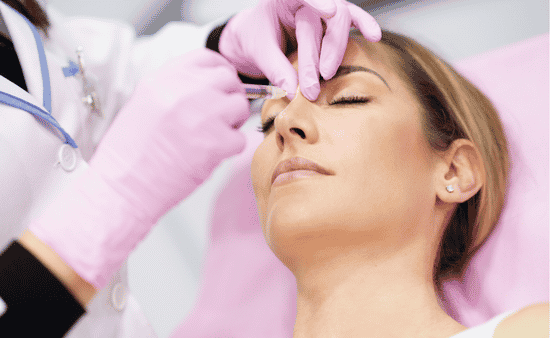
Closed rhinoplasty, sometimes called closed nasal surgery, is performed entirely through internal incisions inside the nostrils. Because there is no external incision on the columella, it does not leave visible scarring on the outside of the nose. That detail is appealing to many patients, but scar avoidance should never be the only reason to choose the procedure.
The real value of closed rhinoplasty is that it can be well-suited to more focused cosmetic nose reshaping. It is often used when the surgeon needs to make measured adjustments rather than reconstruct the nose extensively.
Common goals that may fit a closed approach
Closed rhinoplasty may be worth discussing when a patient wants one or more of the following:
- Subtle tip refinement
- Mild bridge adjustment
- Reduction in overall nasal size
- Narrowing of the nostrils
- Balanced cosmetic changes with no external scar
These are examples, not guarantees. The best surgical approach depends on the nasal framework itself, skin thickness, symmetry, prior surgery, and whether the goal is cosmetic improvement, functional improvement, or both.
Barr Aesthetics emphasizes that closed rhinoplasty is not a shortcut. It is a specialized technique that requires precision and preoperative planning. In the right hands, it can be highly effective. In the wrong case selection, it can become unnecessarily restrictive.
Who May Be a Good Candidate for Closed Nasal Surgery
The best candidates are usually patients whose goals are relatively targeted and whose nasal structure does not require extensive reconstruction. That does not mean the concern is “small.” It means the correction is specific enough that internal access may be sufficient.
A patient may be a candidate if they:
- Want conservative, natural-looking refinement rather than dramatic alteration
- Have no major structural collapse or severe asymmetry
- Are seeking cosmetic changes more than complex reconstruction
- Prefer to avoid a visible external scar
- Understand that swelling and healing still take time, even without an external incision
Patients often arrive thinking they need the “least invasive” option. A better mindset is to ask, “Which approach gives the surgeon the clearest path to the result I want?” Sometimes that is closed surgery. Sometimes it is open surgery. A thoughtful rhinoplasty surgeon Utah residents consult should explain why.
When anatomy matters more than preference
A patient may love the idea of closed rhinoplasty, but if the tip needs major structural support or the nose has already been operated on, an open approach may offer better control. That is not a failure of the closed technique. It is simply the reality of nasal surgery.
Barr Aesthetics is especially attentive to this distinction. Dr. Lucy Barr, a dual board-certified facial plastic surgeon and the first board-certified female facial plastic surgeon in Utah, evaluates the full picture rather than forcing a one-size-fits-all plan. That level of judgment is what patients should expect from a specialist.
When Closed Rhinoplasty Is Probably Not the Best Fit
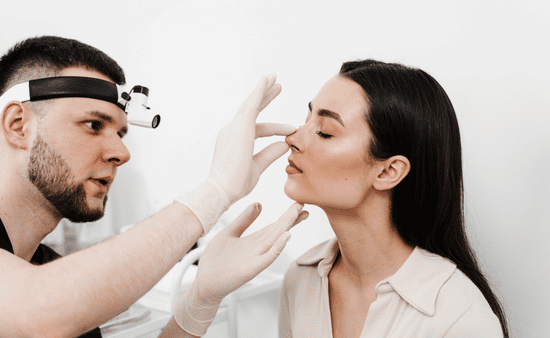
Not every nose should be approached through internal incisions alone. More extensive reshaping often demands greater exposure so the surgeon can see and support the underlying structure directly.
Closed rhinoplasty may be less suitable when a patient needs:
- Significant tip reconstruction
- Correction of major asymmetry
- Revision surgery after a previous rhinoplasty
- Complex structural grafting
- Substantial correction of breathing-related deformity
These cases are not “too advanced” in a general sense. They simply require a different operative strategy. In many of them, open nasal surgery provides the surgeon with more visibility and control.
Why the Surgeon’s Experience Shapes the Outcome
Closed rhinoplasty is less forgiving of inexperience than many patients realize. Because the procedure is performed through limited internal access, the surgeon must make accurate decisions before and during surgery with less direct exposure than in an open case. That requires technical fluency, aesthetic judgment, and a deep understanding of nasal anatomy.
This is where choosing the right practice matters as much as choosing the right technique. A rhinoplasty surgeon Utah patients consult should be able to explain not only what can be done, but what should be done and why.
Barr Aesthetics stands out because the practice is led by a dual board-certified facial plastic surgeon with specialized experience in both open and closed nasal surgery. That matters for two reasons. First, it means the recommendation is based on range, not limitation. Second, it means the patient can hear a balanced comparison rather than a sales pitch for one method.
A consultation should leave the patient with clarity on several points:
- Whether the desired change is subtle, moderate, or structural
- Whether the nose can be refined through internal incisions alone
- Whether open access would improve precision
- What tradeoffs come with each choice
- How the surgical plan supports natural-looking results
That kind of consultation is a strategic advantage, not a luxury.
What a Smart Consultation Should Clarify Before Surgery
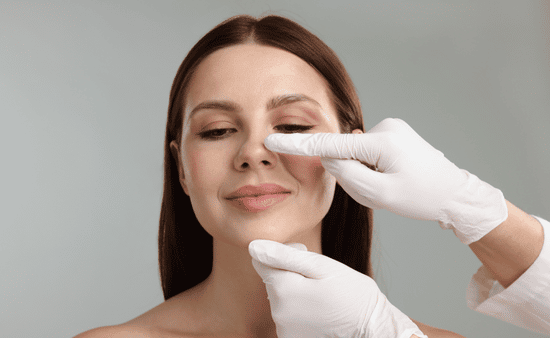
A high-quality consultation is where many poor surgical decisions are prevented. It should not feel rushed or overly promotional. It should feel diagnostic, educational, and specific.
At Barr Aesthetics, the conversation is built around helping the patient understand both the opportunity and the limitations of closed rhinoplasty. That includes a discussion of anatomy, goals, and the likely surgical pathway.
A consultation should clarify the following:
- The exact concern the patient wants to change
- Whether the change is mostly cosmetic, functional, or both
- Whether the skin and cartilage support a closed technique
- Whether the patient is a first-time rhinoplasty patient or a revision case
- Whether open nasal surgery may offer a more reliable result
That process is especially important for patients who are drawn to the promise of no visible scar. Scarless exterior healing is one benefit, but it should never outweigh the need for the correct structural plan. Barr Aesthetics treats that as a core principle, not an afterthought.
The Practical Takeaway for Utah Patients
Closed rhinoplasty can be an excellent option for the right candidate, especially when the patient wants subtle refinement and the nose does not require major reconstruction. It is a highly specialized form of cosmetic nose reshaping, and its success depends on thoughtful case selection.
The most important decision is not whether closed surgery sounds preferable in theory. It is whether the anatomy, goals, and desired level of change make it the right tool for the job. That is why meeting with an experienced rhinoplasty surgeon in Utah is so important.
For patients who want natural-looking results, minimal visible scarring, and a plan tailored to their anatomy, the right consultation can make the difference between a good idea and a truly appropriate surgical decision.