
Only 6% of Gen Z workers say reaching a leadership position is their main career goal.
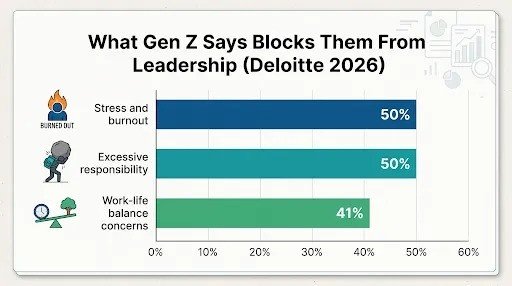
That number comes from Deloitte’s 2026 Global Gen Z and Millennial Survey, which polled more than 22,500 people across 44 countries, so you can’t wave it off as one weird sample. Half of Gen Z named stress and burnout as their top barrier to leadership. Another 41% pointed at work-life balance concerns. And yet 76% still say they want a senior role someday, which tells you the ambition never left. They didn’t lose it. They repriced it, and evenings, health, and sanity now sit in the cost column.
Whatever your age, that repricing produced habits you can borrow. Some will look familiar from your own quieter attempts at balance. A couple might annoy you. All of them work better said out loud than done in secret, which turns out to be most of the trick.
The Numbers Behind the Shift
Before you copy anything, look at how consistent the data is. “Gen Z wants balance” sounds like a vibe until you watch it repeat across surveys that have nothing to do with each other.
|
Finding |
Stat | Source and Year |
|---|---|---|
|
Gen Z who say work-life balance is their top career goal |
20% (the #1 answer) |
Deloitte, 2026 |
| Gen Z citing stress and burnout as a barrier to leadership | 50% |
Deloitte, 2026 |
|
Gen Z prioritizing work-life balance over salary |
76% | Randstad, 2025 |
| US Gen Z workers planning or considering a job change in 2026 | 57% |
Resume.org, Dec 2025 |
|
Workers who report “thriving” in their lives overall |
50%, a record low since 2009 |
Gallup, via Fortune |
That Gallup row deserves a second look. Thriving at a record low since polling began, and Gen Z walked into the workforce right as the slide started. So when you hear that a 26-year-old asked about sabbatical policy in a job interview, remember what they watched happen to their parents and their first managers. The caution is earned.
Six Habits Gen Z Uses to Protect Their Time
1. Hard Stops, Said Out Loud
Your parents’ generation set boundaries quietly and felt guilty about them. Gen Z states them in the interview.
The difference that matters is visibility. Say your hard stop is 5:30 for the gym. Declining meetings silently protects your Tuesday, but saying it once in the team channel resets what normal looks like for everyone, including the manager who books 5pm calls out of habit. The boundary also carries real weight because it comes with a credible exit: 57% of US Gen Z workers told Resume.org they plan to explore new jobs in 2026, and employers can do that math as well as you can.
2. Rest by Stealth: The Quiet Vacation
In the 12 months before a Harris Poll covered by HR Dive, 36% of Gen Z and millennial workers took a “quiet vacation,” meaning time away they never formally logged. Gen X came in at 27%.
You don’t have to love the sneaky version to hear the signal underneath it. Where visible rest gets punished, people take invisible rest. My own take: companies should make PTO genuinely usable and collect the loyalty that follows, because that loyalty comes cheap and the alternative is your best people answering Slack from a beach while pretending to be at their desk.
3. Micro-Retirement: Smart Move or Career Risk?
Both, honestly.
The idea is a planned unpaid break mid-career, a few months to travel, recover, or reset, rather than grinding to 65 and hoping your knees hold. Fast Company reports that 10% of workers are considering one and 75% think employers should offer policies like unpaid sabbaticals. Researchers writing in The Conversation push back a little: the concept is mostly a rebranded sabbatical, and the savings gap plus lost career momentum are real, especially if you take the break with no plan for re-entry. Fair criticism. Still, rest you schedule on purpose beats rest a breakdown forces on you, and if you’re going to take six months off at some point in your life anyway, taking it while your body can enjoy it has a certain logic. Even shorter breaks can have a similar effect when you plan fun things to do on a weekend getaway that help you disconnect and return feeling refreshed.
4. The Busywork Goes to AI

Deloitte’s 2026 survey found 74% of Gen Z and millennial workers now use AI daily at work, up from 57% a year earlier. For your calendar, the math is simple: every hour of formatting, summarizing, and first-drafting that software absorbs is an hour that stops leaking into your evening.
Watch the trap, though. Saved time refills with more work unless you defend it. The Gen Z workers doing this well treat the reclaimed hours like a raise they spend on their own life, and you can decide the same thing today without telling anyone at work.
5. Health Gets Booked Like a Meeting
For a clean-eating audience this is the habit worth studying closest, and it’s quieter than the trend pieces make it sound.
Gen Z puts health on the calendar the way you’d book a client call. Sunday meal prep. Lifting sessions blocked out where colleagues can see them. Sleep treated as a performance input instead of whatever’s left after the scrolling ends.
They also outsource structure instead of white-knuckling it. Telehealth made that practical: therapy over video, dietitian check-ins by app, structured options like an online weight loss program if you want clinical guidance without bolting another commute onto an already full week. The pattern matters more than any one service: health stops being the first line item cut whenever work expands.
There’s also compounding upside you’ll feel within weeks. Balance runs on energy as much as hours. Fed, rested, and moving, you’ll get more from a focused eight-hour day than an exhausted version of you gets from eleven. Guarding your body might be the cheapest productivity strategy available, and Gen Z seems to have noticed before the rest of us did.
6. They Interview the Employer Back
Ping-pong tables stopped working as bait. Before signing, Gen Z candidates ask when the manager’s last email went out, whether people on the team actually take their leave, and what happened to the last person who used the sabbatical policy. With Randstad finding 76% of them prioritizing balance over salary, those questions are due diligence, and a company holding a slide about “wellness culture” instead of a real answer loses the candidate.
Steal the questions for your own next interview. They cost you nothing and the answers tell you everything the offer letter won’t.
The 168-Hour Audit: Copy the Playbook This Week
Every week hands you 168 hours. Most people have never once seen theirs on paper, which is exactly how work wins by default. Here’s the audit, borrowed from how the most deliberate Gen Z workers already operate:
- Log one normal week honestly. Work, commute, sleep, screens, food prep, movement, actual leisure. Numbers, no judgment.
- Mark each block E or D. Energizing or draining. A job can contain both. So can a hobby, if you’re honest about it.
- Find your leak. Almost everyone finds 8 to 15 weekly hours of D-time serving no one: doom-scrolling, meetings with no decisions, “quick” work checks after dinner.
- Reassign half the leak to your body. Sleep, cooking, training, a walk without a podcast.
- Say one boundary out loud. Pick the change most likely to survive contact with your workplace and announce it, Gen Z style, instead of hoping people notice.
Run it again in a month and compare the two weeks.
What the Rest of Us Should Steal
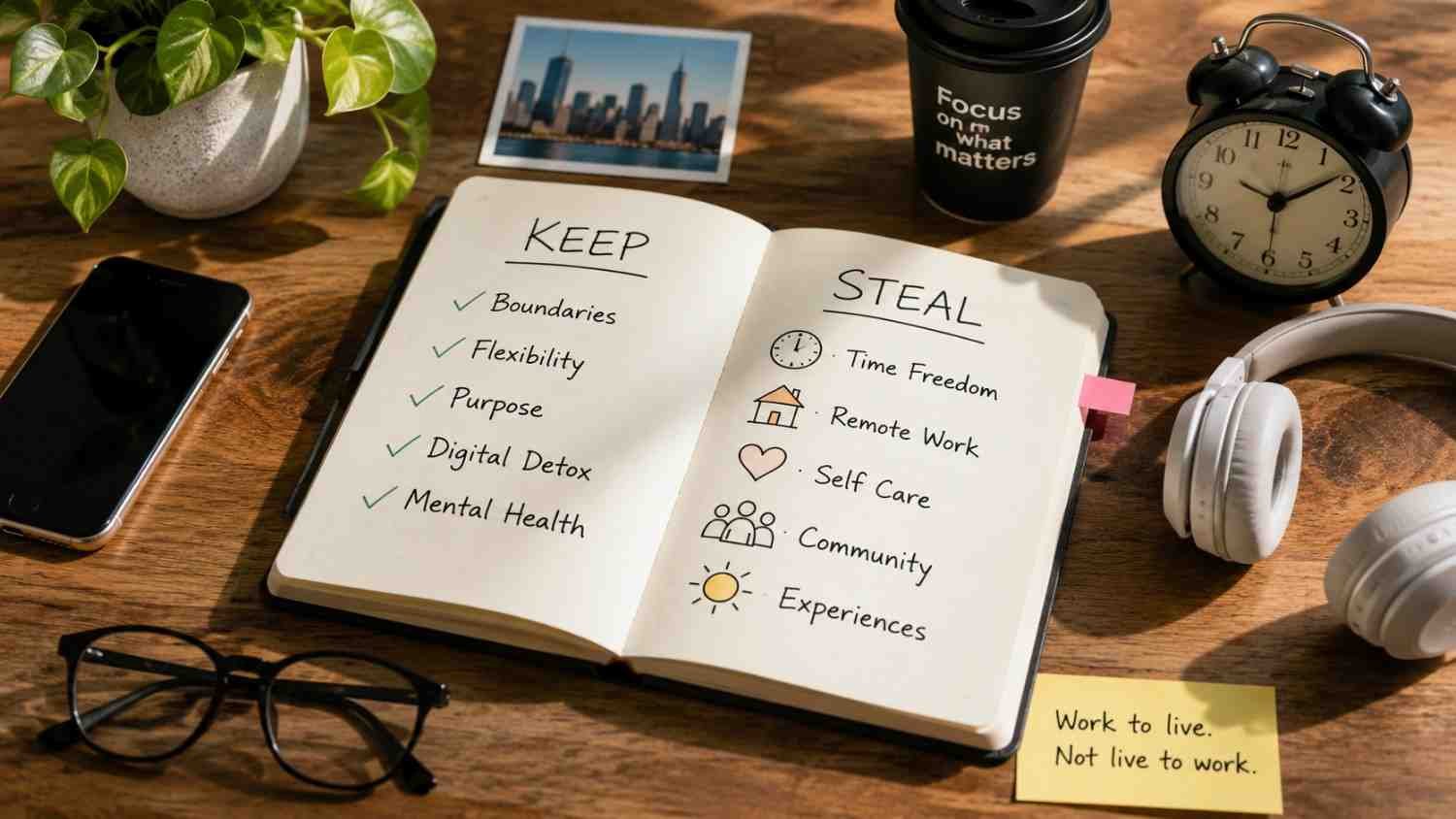
Gen Z didn’t invent rest or meal prep. What changed is the posture: for them, balance is a condition of doing the work, where older generations treated it as a reward for surviving the work. The visibility is stealable. The scheduled health blocks are stealable. So is the honest math on what a promotion actually costs you, and so is asking for structured help, whether that means a sabbatical policy or a guided health program, without treating the ask as failure.
The generation with the least workplace power just renegotiated the deal for everyone. You might as well take the terms.
What’s the one boundary you’ve been meaning to say out loud at work? Drop it in the comments.