
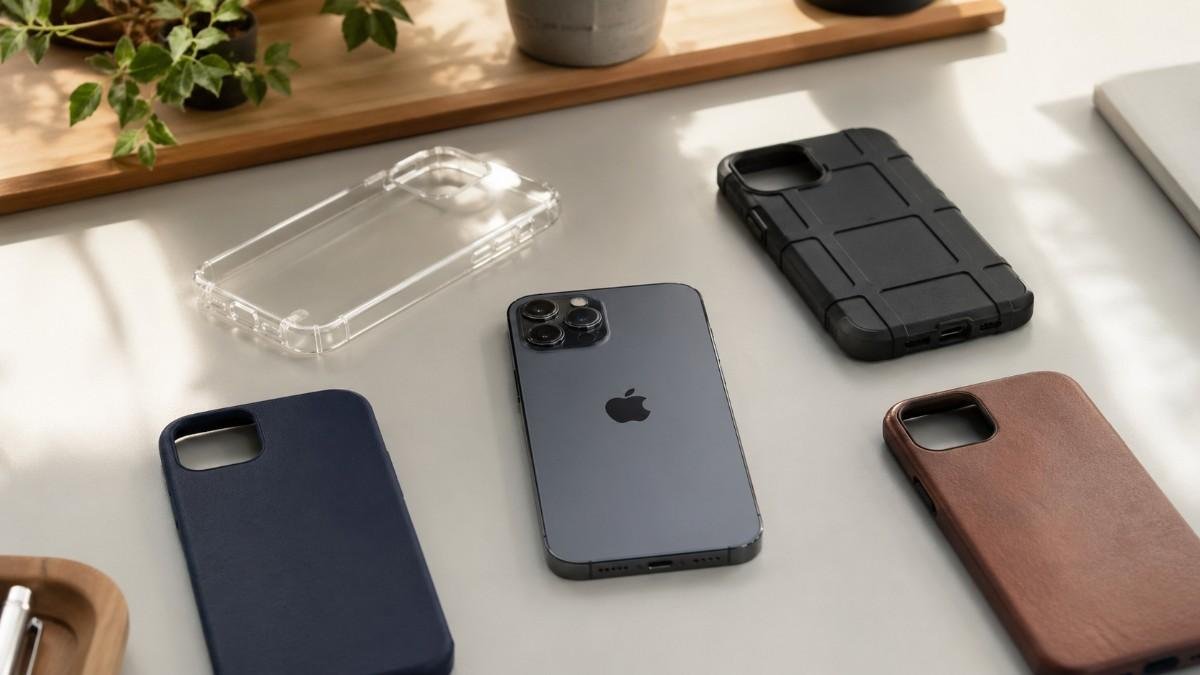
The modern iPhone is a wonder of industrial design; a smooth blend of operating-room grade stainless steel and ceramic shield glass. But, despite all its structural integrity, it is subject to the laws of physics.
The selection of a case is no longer a matter of picking a color but a calculated one to balance aesthetics and a high drop-test rating. Your case is your first line of defense against a screen repair costing hundreds of dollars, in a time when one repair can be as costly as that. This guide dissects the technical and stylistic variables that you need to take into consideration in order to get your ideal match.
1. Comparing Polycarbonate and Thermoplastic Polyurethane Materials
Any good case is based on the material to absorb and deflect energy. The majority of high-end solutions are based on a combination of Polycarbonate (PC) to offer structural strength, and Thermoplastic Polyurethane (TPU) to provide impact resistance.
To see how such high-performance materials are made into thin but rough shapes, one can visit a specialist store such as CaseFace to make a survey of their high-performance materials. TPU is especially useful in that it serves as a shock absorber and the kinetic energy of a fall is distributed over the surface area of the case, instead of passing through the internal logic board of the iPhone, which is very sensitive.
2. Understanding Mil-Spec and Drop Protection Standards
A manufacturer associating a case with the term military-grade is likely referring to the MIL-STD-810G 516.6 standard. This involves the device being able to endure 26 drops of 4 feet of concrete and plywood. Nevertheless, to be truly protected, you must find cases that are above these minimum protection requirements.
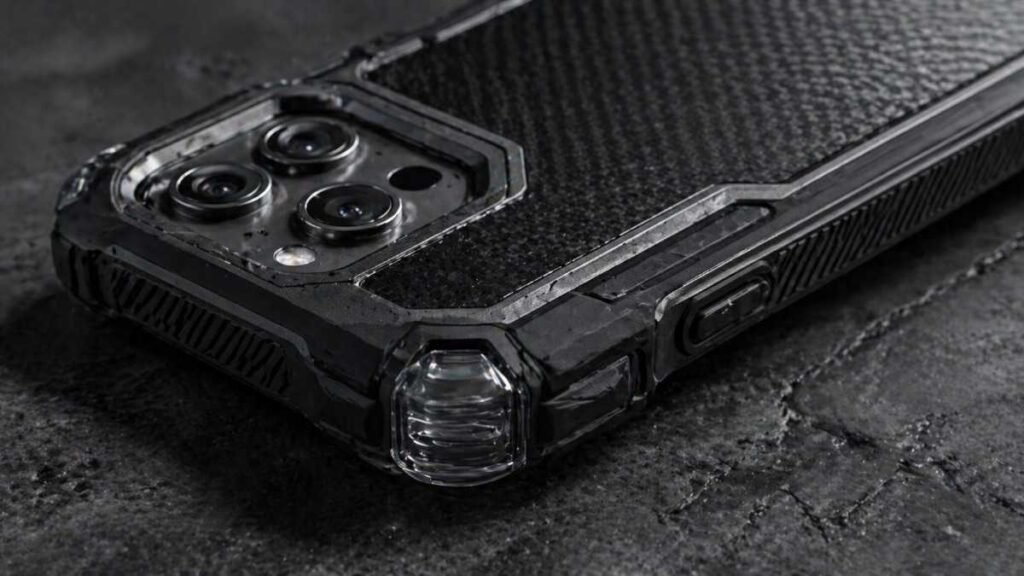
- Raised Bezel Height: The case should have a minimum 1.2mm lip around the screen and 2.0mm around the camera island to avoid direct contact with the surface.
- Air-Cushion Technology: Seek reinforced corners with small air bubbles; these are crumple zones on a car.
- Internal Ribbing: To further reduce vibrations, the internal structure of high-end cases may include a honeycomb or ribbed internal structure.
3. The Value of Modern MagSafe Compatibility
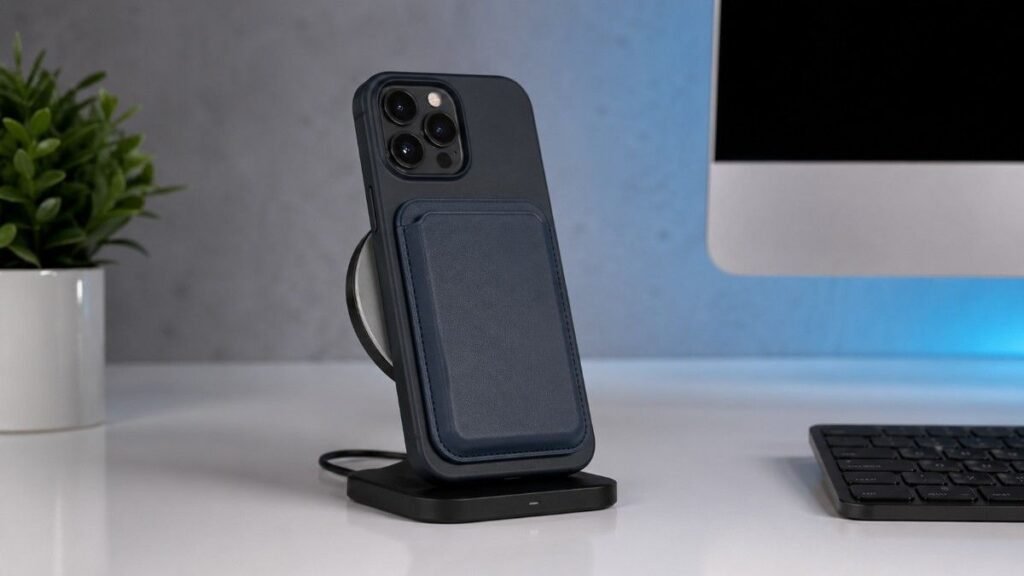
Since the introduction of the iPhone 12, MagSafe has evolved from a charging platform into a whole ecosystem. A case that does not have built-in magnets will greatly undermine the connection between your phone and accessories such as wallets, car mounts, and battery packs.
An excellent MagSafe case must have an N52 magnet array that perfectly fits the interior coils of the iPhone. This not only gives you maximized 15W wireless charging speeds and a safe hold on magnetic accessories, but it does so even when using the thickness of the case.
4. Aesthetic Archetypes: Discovering Your Personal Style
Your phone is a continuation of your wardrobe, iPhone. Regardless of whether you are a business executive or a freelance designer, the visual language and hand-feel of your case.
- Minimalist Clear: Uses the original color designed by Apple (such as Natural Titanium) but needs premium quality anti-yellowing (UV-resistant) finishes.
- Rugged Tactical: Can include carbon fiber inserts or aramid fiber inserts and is an indication of a high performance, outdoor-ready lifestyle.
- Eco-Conscious Leather: Traditional top-grain leather or newer bio-materials such as FineWoven are eco-conscious with a sophisticated tactile grip that builds a particular patina over time.
5. Prioritizing Ergonomics and Tactile Button Feedback
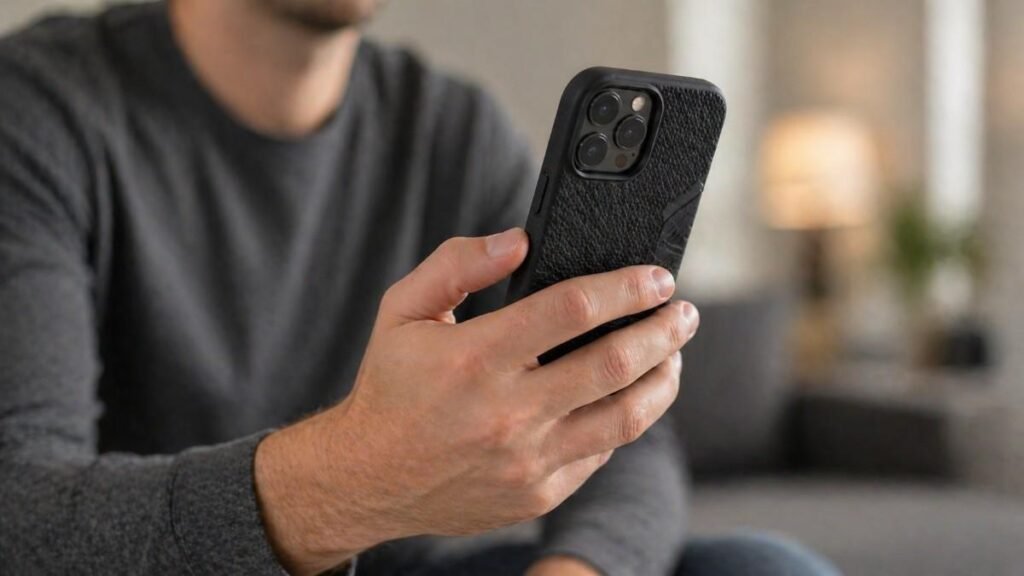
An overly bulky case will cause hand fatigue, and an overly slick case will cause drop-outs. The finest cases provide some sort of a dry-grip texture–a material that is smooth to the hand, but offers friction when firmly grasped.
Take care of the button covers. You want tactile click buttons that hold onto the sharp, mechanical touch of the original switches on the iPhone. Should one of the cases cause the buttons to be mushy or demand too much force to press, it will thus adversely affect your daily experiences of using it.
6. Maintaining Case Appearance and Long-Term Durability
The best cases wear out. Polycarbonate scratches and silicone may get sticky because it gets pocket lint. To keep your case in the best condition, find alternatives that have an oleophobic covering that prevents fingerprints and skin oils.
In the easy ones, it is important to ensure that the manufacturer applies a Blue Resin technology or UV-Shield technology to ensure that the substance does not change to brown or yellow when subjected to sunlight.
A microfiber cloth and 70% isopropyl alcohol solution will clean the case and the phone it holds, making them look like they were made yesterday.
7. Balancing Initial Cost and Resale Value Retention
Although it is easy to purchase a cheap case of $5 in a generic market, the cost may end up being more expensive in the long run. Not only does a premium case protect against a broken screen, but micro-abrasions and minor scratches on the frame that reduce the value of your phone at the time of trade-in are also avoided.
Consider a good case to be an investment in the resale value of the device. The extra cost of an established brand will guarantee a more appropriate fitment, durable materials, and a warranty that is actually valid in case of failure of the product.
Conclusion: Finalizing Your iPhone Case Selection
The balance of priorities is the search for the perfect case. When you are on a construction site, you will have very different needs compared to those of someone in a design studio. Nevertheless, you can reduce the thousands of choices to the few that are actually beneficial to your lifestyle by narrowing down on material quality,
MagSafe integration, and approved drop protection. Finally, be it a sleek design or a rough armor plate, you can find what fits best at CaseFace so that your iPhone can be a pristine piece of technology in its lifecycle, with the style and the security of a high-performance case.