
Azure AI solutions demand a mix of development knowledge and cloud service expertise. Many professionals seek to validate their skills through formal assessment.
Candidates must demonstrate proficiency with core Azure tools, service configuration, and solution architecture.
The AI 103 certification focuses on the practical implementation of artificial intelligence tools inside Azure. A candidate must understand how to build, deploy, and manage AI services at an enterprise level. This article outlines the essential technical skills needed for successful exam preparation.
Designing Cognitive Services and Natural Language Processing Models

Azure architecture fundamentals form the base of any AI solution on the platform. Cognitive Services provide pre-built models for vision, speech, language, and decision tasks. A candidate must understand semantic analysis to extract meaning from unstructured text.
Language understanding models map natural phrases to machine-readable intents and entities. Text analytics pulls key phrases, sentiment scores, and named entities from documents.
Custom language understanding requires deployment of tailored models for specific business domains. Developers train these models with example utterances that match real user requests. Enterprise AI applications use these services to automate ticket routing or customer support.
The skill lies in selecting the right pre-built or custom model for each problem. Each choice affects the cost, accuracy, and response time of the final application.
Implementing Computer Vision and Automated Image Processing Solutions
Computer vision services analyze visual data from photos, videos, and live camera feeds. Object detection systems locate and label multiple items within a single image frame. Facial recognition models verify identity or estimate age, gender, and emotion from faces.
Image classification sorts photos into custom categories defined by the developer. These tools operate through simple API calls that return structured JSON data.
The exam tests practical knowledge of these vision capabilities in real scenarios. Here are key tasks a candidate must perform:
- Train a custom vision model with labeled images to detect specific industrial parts
- Extract printed or handwritten text from scanned documents using optical character recognition
- Set up a spatial analysis to count people entering a store over four hours
- Build an image processing workflow that resizes and tags photos automatically in cloud storage
Developing Intelligent Conversational Bots and AI Agent Architectures

Both development frameworks allow creation of chat and voice interfaces for web or mobile apps. Dialog flow optimization arranges conversation paths that handle user questions without dead ends.
Intent recognition maps a user’s spoken or typed words to a specific action a bot should take. State management keeps track of where a user is inside a multi-step conversation.
Enterprise integrations connect bots to databases, ticketing systems, or payment processors. A professional with an Azure AI engineer certification knows how to design these agent architectures for scale.
Managing Security Protocols and Data Governance for Cloud Artificial Intelligence

Authentication standards control who can call an AI service from code or tools. Privacy controls protect user data that passes through language or vision models. Role-based access systems assign different permissions to developers, testers, and auditors.
Identity management ties service access to Active Directory users or groups. Governance frameworks set rules for where data can travel and how long it stays.
The AI-103 exam verifies a candidate’s grasp of these security fundamentals. Monitoring telemetry tracks API call volume, error rates, and response latency for AI services. Responsible AI practices include fairness checks, transparency logs, and explainability reports.
Key security tasks include:
- Assign the Cognitive Services User role to a developer who only needs to call existing models
- Lock down an AI service to accept requests only from a specific virtual network
- Enable diagnostic settings to send all logs to a workspace for audit review
- Apply a data retention policy that auto-deletes user inputs after 30 days
How an Authorized Cloud Training Provider Fast-Tracks Your Advanced Enterprise AI Skills
A real cloud sandbox environment gives hands-on practice without monthly bills. Professional certification courses break down each exam domain into small, teachable pieces.
The same structured approach used in virtual learning in K-12 education also applies to technical certification training, where guided lessons, practice tasks, and digital labs help learners build skills step by step.
Official practice tests mimic the question style and time pressure of the real assessment.
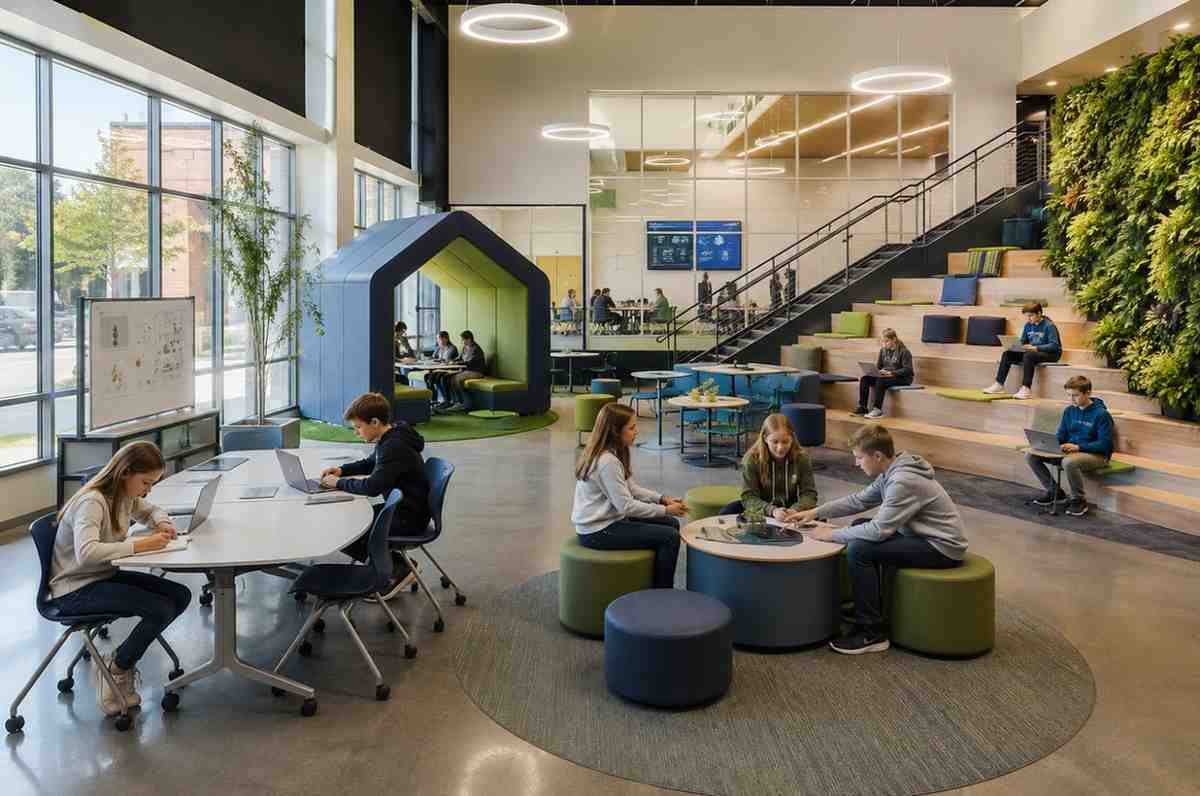
Guided lab exercises walk through each skill, from vision to bots to security. Just as smart school design ideas focus on creating better learning spaces, Azure AI certification training also benefits from structured environments where learners can practice, test, and improve technical skills with clarity.
Direct mentorship from certified cloud architects answers questions that books cannot.
An authorized cloud training provider delivers structured paths that self-study misses. Hands-on implementation experience with Azure AI services builds muscle memory for the exam tasks.
Enterprise AI skill development includes deployment, monitoring, and cost control alongside code.
Consistent practice in a sandbox turns theoretical knowledge into practical ability. This approach prepares a candidate to pass the test and perform well on the job.
Earning the AI 103 certification requires more than theoretical study – it demands verified, hands-on skills across Azure AI services, security governance, and enterprise solution architecture.
Candidates who invest in structured preparation build competencies that transfer directly into professional practice.
The most effective path forward combines deliberate study of each exam domain with repeated implementation in live Azure environments, where real configuration challenges reinforce the technical judgment that distinguishes skilled AI engineers.