
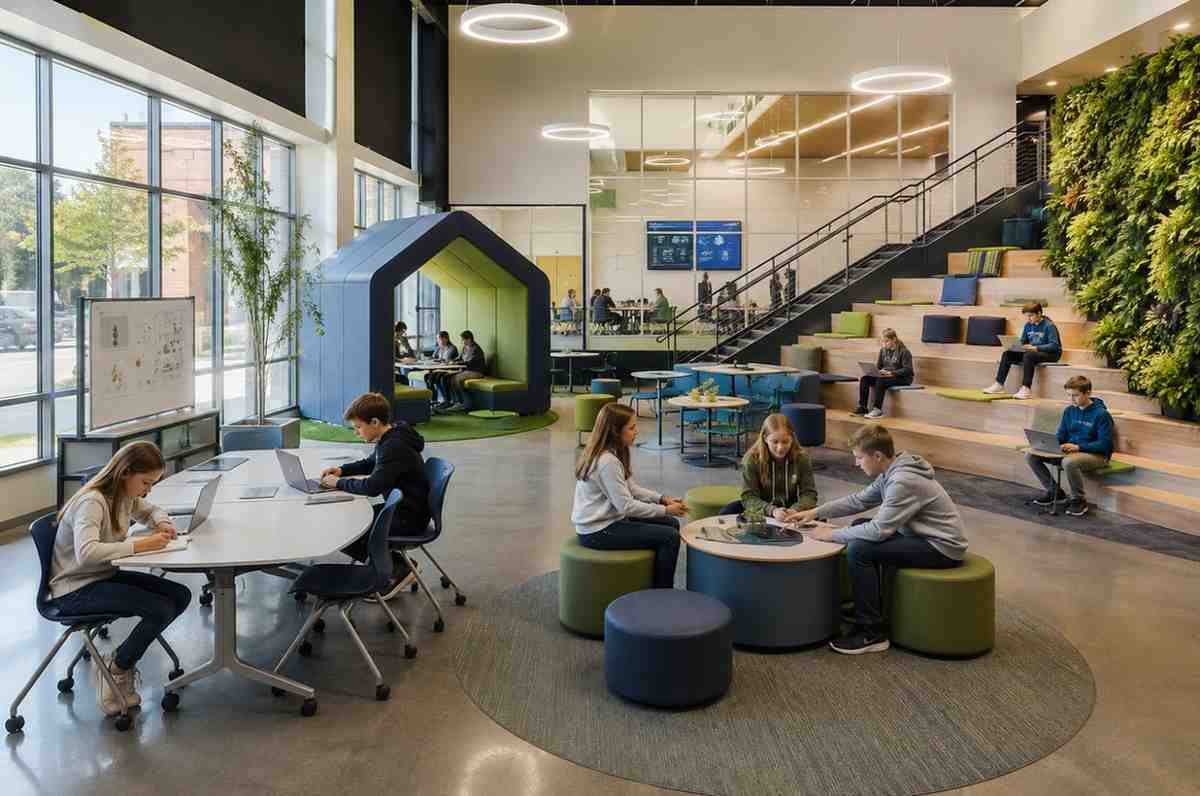
The traditional image of education—neat rows of wooden desks facing a chalkboard—is rapidly fading into history. Today, schools and colleges are evolving into dynamic hubs of innovation, where the physical environment is intentionally designed to foster creativity, collaboration, and technology-driven learning. A well-conceived school building does more than provide shelter; it serves as a foundation for student well-being and academic excellence.
Prioritizing Student-Centered Flexibility
At the core of modern school architecture is a shift toward student-centered design. This approach moves away from rigid, single-purpose structures in favor of adaptable environments that accommodate various learning styles.
- Flexible Classrooms: Modern learning spaces utilize movable furniture, modular layouts, and writable walls to allow teachers to adapt the room for group collaboration or independent study.
- Multi-Use Commons: Buildings often feature “learning commons” that integrate cafés, tech support, and quiet zones under one roof.
- Breakout Areas: Small meeting rooms or quiet nooks support peer-to-peer interaction and focused work.
Integrating Advanced Technology
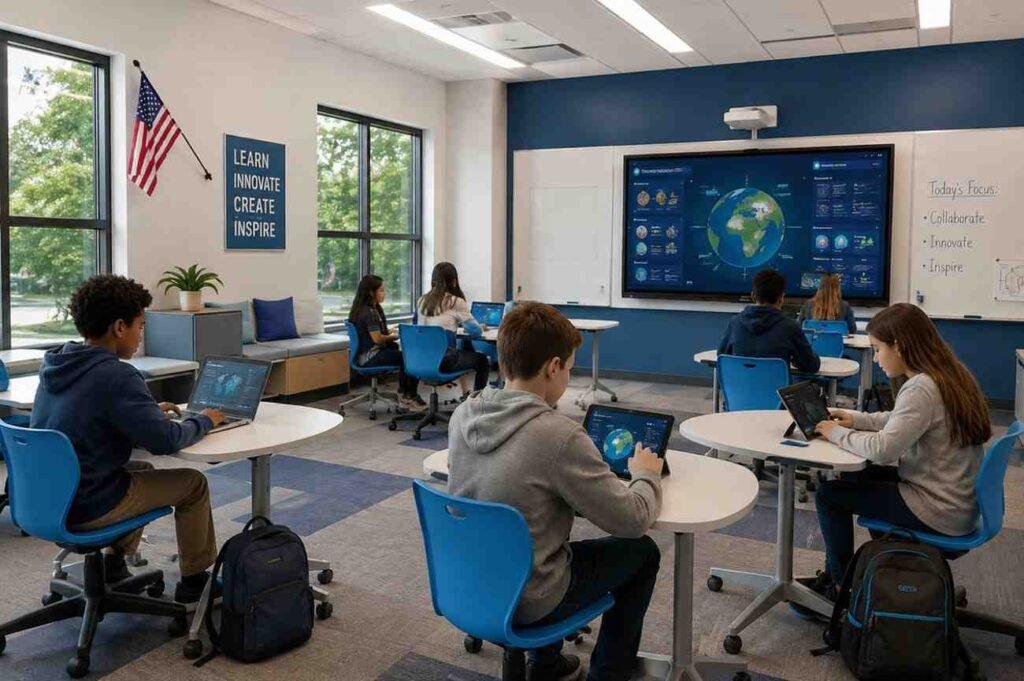
A robust technology infrastructure is no longer an optional upgrade; it is the backbone of the modern educational experience.
- Smart Infrastructure: The deployment of private, high-capacity dark fiber solutions ensures campuses can support rapid data transmission and future tech expansions without latency.
- Interactive Learning: Classrooms equipped with interactive whiteboards and digital displays facilitate real-time engagement and support hybrid learning models.
- Specialized Labs: Dedicated makerspaces for robotics, coding, and hands-on experiments encourage STEM curiosity and critical thinking.
Fostering Safety and Well-being
Creating a space where students feel safe and supported is essential for academic engagement. Modern design balances high-level security with a welcoming atmosphere.
- Physical Security: Controlled access points, visitor management systems, and emergency protocols protect the campus community.
- Mental Health Spaces: Dedicated wellness rooms and counseling offices provide students with quiet environments to regulate stress and seek help.
- Inclusivity and Accessibility: Thoughtful design incorporates ADA-compliant features, sensory-friendly spaces with adjustable lighting, and multilingual signage to ensure every student feels valued.
Embracing Sustainability
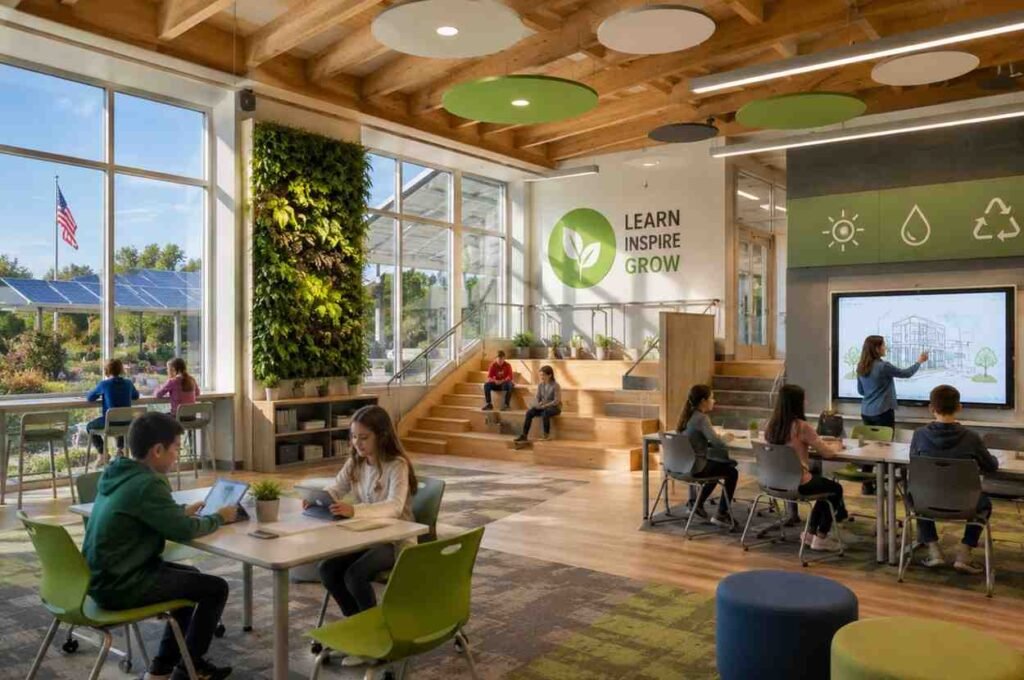
Sustainable practices in school design reduce environmental impact while modeling responsible citizenship for students.
- Energy Efficiency: The use of solar panels, LED lighting, and energy-efficient HVAC systems significantly lowers long-term operational costs.
- Biophilic Design: Maximizing natural light through large windows and skylights has been shown to improve student mood and concentration.
- Green Materials: Using recycled, non-toxic, and locally sourced materials minimizes waste and promotes a healthier indoor environment.
Enhancing Outdoor and Community Spaces
Modern education recognizes that learning happens both inside and outside the classroom. Extending the educational environment to the outdoors provides restorative breaks and hands-on science opportunities.
Outdoor learning areas, such as gardens and walking paths, encourage environmental stewardship. For comprehensive recreational planning, school administrators often coordinate with specialized vendors, including playground companies in Idaho, to ensure that physical activity zones are safe, durable, and inclusive. These facilities, ranging from athletic fields to sensory playgrounds, boost physical health and social development.
Furthermore, schools are increasingly designed as community hubs, offering shared libraries, gyms, and auditoriums for public use after hours. This integration strengthens the bond between the institution and the local neighborhood, fostering long-term institutional success. In many cases, it is the small changes that make big design impact, such as improved signage, flexible seating arrangements, or better utilization of shared spaces, that help create a more welcoming and functional environment for both students and community members.
In Conclusion
Building a modern learning environment requires a strategic blend of infrastructure, technology, and pedagogical insight. By prioritizing flexibility, safety, and sustainability, educational institutions can create spaces that not only keep up with the 21st century but set the standard for the future of learning. Whether renovating an existing facility or selecting a new site with future expansion in mind, thoughtful design ensures that students thrive academically, socially, and emotionally.