
Most people assume the hardest part of recovering from a tooth extraction is the pain. In reality, the first challenge often begins when they get home, open the refrigerator, and realize that nearly everything inside is too crunchy, chewy, or spicy to eat. If your Rolla, MO dentist has recommended following a soft food diet after your procedure, planning your meals ahead of time can make recovery much less stressful.
It’s easy to underestimate how many everyday foods suddenly become off-limits after oral surgery. Toast, granola, chips, raw vegetables, nuts, and even your favorite sandwich may all have to wait while your mouth heals. Without a plan, many people end up eating the same bowl of mashed potatoes for several meals or relying on ice cream simply because it’s convenient. While those foods may be tasty at first, your body also needs protein, vitamins, healthy fats, and hydration to support the healing process.
The good news is that a soft food diet doesn’t have to be bland or repetitive. With a little preparation, you can enjoy filling, flavorful meals that are gentle on your mouth while providing the nutrients your body needs to recover.
This guide includes a practical 7-day meal plan, a simple texture progression to help you know when to introduce different foods, five make-ahead recipes, and a 90-minute meal prep routine that can stock your refrigerator before your procedure. Whether you’re recovering from a simple tooth extraction, dental implant placement, or another oral surgery, always follow your dentist’s instructions first, as every procedure has its own recovery timeline.
What Your Mouth Is Actually Doing All Week
Tissue repair runs in overlapping phases, and each phase benefits from specific nutrients:
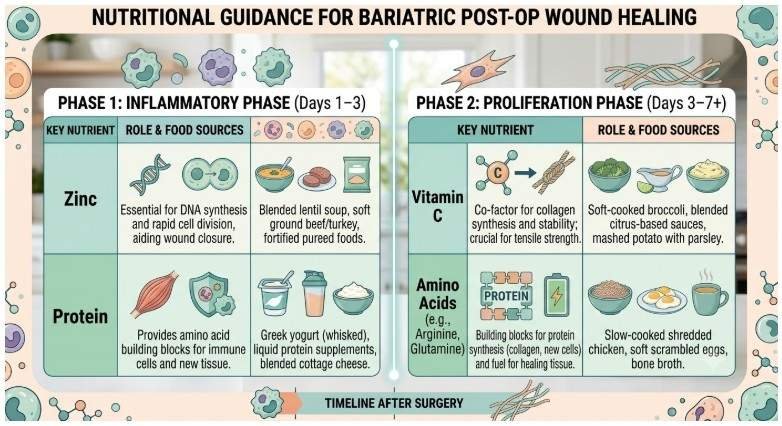
According to the American Dental Association, a patient needs to consume more dense food such as eggs, legumes, low-fat milk, soft meat, and steamed vegetables rather than starchy foods. The same recommendations have been provided by other health organizations such as the National Institutes of Health (NIH) and Cleveland Clinic, where it has been recommended that enough protein, vitamins, and hydration is needed in the post-surgery phase.
According to the USDA, most adults need about 5–6½ ounce-equivalents of protein foods each day, depending on age, sex, and activity level. One ounce-equivalent includes one egg, one tablespoon of peanut butter, one-quarter cup of cooked beans, or one ounce of cooked meat, poultry, or fish. Meeting your daily protein needs supports tissue repair during recovery. A week of white starchy foods and ice cream is not going to provide your mouth with the exact components required for effective healing.
The Fork Test
Forget long lists of allowed and forbidden foods. Use this single kitchen rule:
The Fork Test: Put the food in a bowl. Press the back of a fork into it using thumb pressure only. If it flattens effortlessly, it passes. If you have to lean your forearm into it, it belongs in a later stage.
The 3 Texture Stages
- Stage 1: Spoonable (Days 1–2)
- Rule: Zero chewing required.
- Examples: Greek yogurt, silky blended soups, smooth purees, thin oatmeal, silken tofu.
- Stage 2: Fork-Mashable (Days 3–5)
- Rule: Minimal pressure, tongue-and-palate or light side-mashing.
- Examples: Soft scrambled eggs, ricotta, well-cooked squash, flaked salmon, shredded chicken simmered in broth, overcooked small pasta.
- Stage 3: Gentle Chew (Days 6–7+)
- Rule: Soft chewing restricted strictly to the side away from surgical sites.
- Examples: Soft pasta, tender meatballs simmered in sauce, soft-cooked grains, polenta.
Note: Healing is non-linear. If you experience a flare-up in swelling or discomfort on Day 4, step down a stage for 24 hours without hesitation.
Three Non-Negotiable Recovery Rules
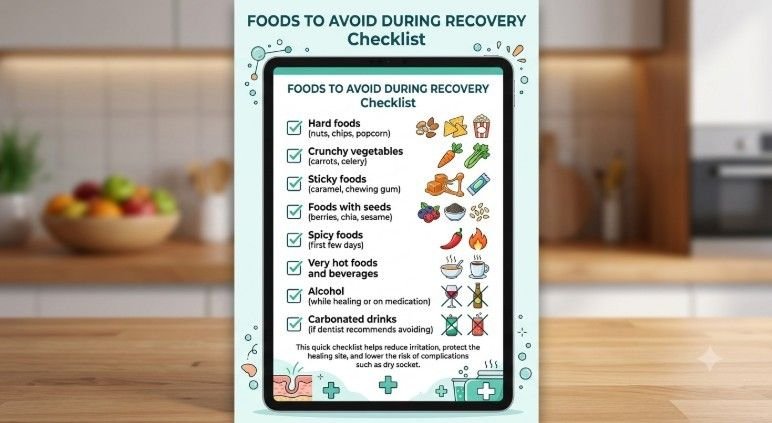
- Skip the Straw: This is because the negative pressure created by suction may remove the blood clot, causing pain due to a condition called dry socket. Eat directly from your wide-mouth mug or glass.
- Warm, Not Hot: Choose foods that are warm or at room temperature rather than piping hot. Very hot foods and drinks may increase sensitivity or disturb the healing site during the first day after surgery. If you’ve recently received local anesthesia, allow hot foods to cool for several minutes to avoid accidental burns while your mouth is still numb.
- No Seedy or Gritty Foods: Foods like chia seeds, raspberry seeds, quinoa, cracker crumbs, and granola are best avoided during the first few days. Small particles can become trapped around the surgical site, making the area harder to keep clean and potentially delaying comfortable healing.
Foods to Avoid During Recovery
The 7-Day Meal Plan
Shift days forward or backward depending on your procedure complexity and personal healing pace.
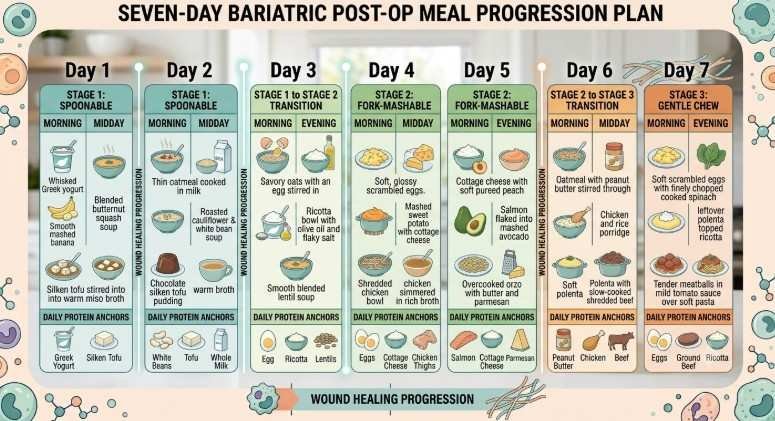
Hold highly acidic ingredients (citrus, vinegar, heavy tomato sauce) until Day 6 or 7. Acid stings raw mucosal tissue early in recovery.
Five Meals Worth Cooking Twice
- SAVORY EGG OATS
Cook ½ cup quick oats in warm bone broth instead of water. Off the heat, vigorously
whisk in 1 raw egg for 30 seconds so it thickens into a velvet texture without
scrambling. Season with butter, salt, and finely grated parmesan.
- ROASTED CAULIFLOWER & WHITE BEAN SOUP
Roast 1 head of cauliflower florets at 425°F (220°C) until deep gold (25 mins). Blend
with 1 can of drained cannellini beans, 2 cups broth, and 1 tbsp tahini until silky smooth.
Strain through a sieve for Stage 1.
- SILKEN TOFU CHOCOLATE PUDDING
Blend 1 block silken tofu, ⅓ cup cocoa powder, 3 tbsp maple syrup, and a pinch of
salt in a high-speed blender for 2 full minutes. High protein, rich texture, zero chewing.
- SAVORY & SWEET RICOTTA BOWLS
Savory: Whole milk ricotta + olive oil + sea salt + finely ground dried basil.
Sweet: Whole milk ricotta + honey + ripe mashed pear.
- SLOW-COOKED SHREDDED CHICKEN
Cook 2 lbs chicken thighs in 2 cups broth with 1 halved onion on LOW for 4 hours.
Shred extremely fine and keep submerged in broth. Use in soups, porridges, or pasta.
The 90-Minute Sunday Prep Block
Execute this meal prep the afternoon before your procedure so Day 1 requires zero cooking effort.
- 0:00 – 0:10: Start the slow-cooker chicken thighs on low.
- 0:10 – 0:35: Roast the cauliflower and sweet potatoes at 425°F (220°C).
- 0:35 – 0:50: Boil a pot of orzo 2 minutes past package instructions. Drain and toss with butter.
- 0:50 – 1:10: Blend the roasted cauliflower soup and silken tofu chocolate pudding; transfer into single-serve glass containers.
- 1:10 – 1:30: Portion chicken, let everything reach room temperature, and stock the fridge.
Solving the Real Problem: Flavor Exhaustion
People don’t abandon soft diets because food is soft; they abandon them because blended food tastes flat. Mashing or puréeing food dilutes its perceived seasoning. While it may be tempting to keep eating small portions throughout the day, remember that healthy snacking all day still causes cavities, especially if you’re unable to brush thoroughly around the healing area.
To fix this without using sharp spices or harsh acids:
- Season More Aggressively: Add slightly more salt than you normally would.
- Incorporate Healthy Fats: Butter, cold-pressed olive oil, tahini, and mashed avocado carry flavor across your palate.
- Use Umami Aromatics: Rely on white miso paste, roasted garlic puree, nutritional yeast, and smoked paprika for depth.
Questions to Ask Before Your Surgery
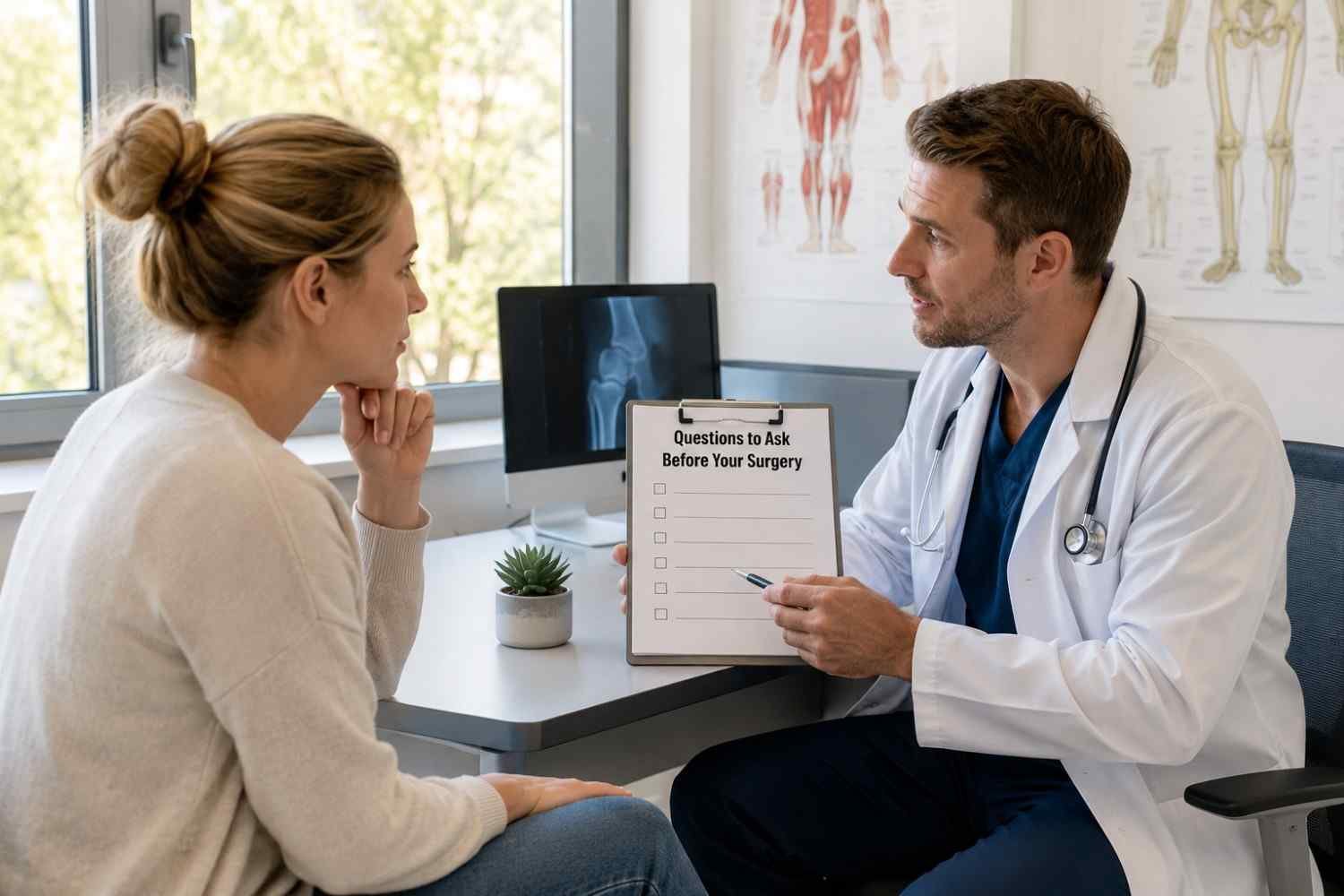
Most people find out their texture timeline after the procedure, standing in a kitchen with the wrong groceries. If you are scheduling a procedure with a Rolla, MO dentist, ask these two questions during your consultation to better plan your meals and recovery.
- “How many days at each texture stage should I plan for based on my specific procedure?”
- “Does my procedure require avoiding specific chewing zones or delaying certain protein textures?”
From simple tooth extractions to implants, checking with your Rolla, MO dentist in advance makes grocery shopping once rather than three times possible – and gets rid of post-surgery hassle.
Recovering from oral surgery is easier when your meals are planned before the procedure, not after it. Preparing soft, protein-rich foods ahead of time allows you to focus on healing instead of wondering what you can eat. Follow your dentist’s instructions, progress through textures at your own pace, and remember that nourishing your body is an important part of helping your mouth recover.
What is your approach to recovery preparation, or what soft meal trick helped you during your last procedure?