
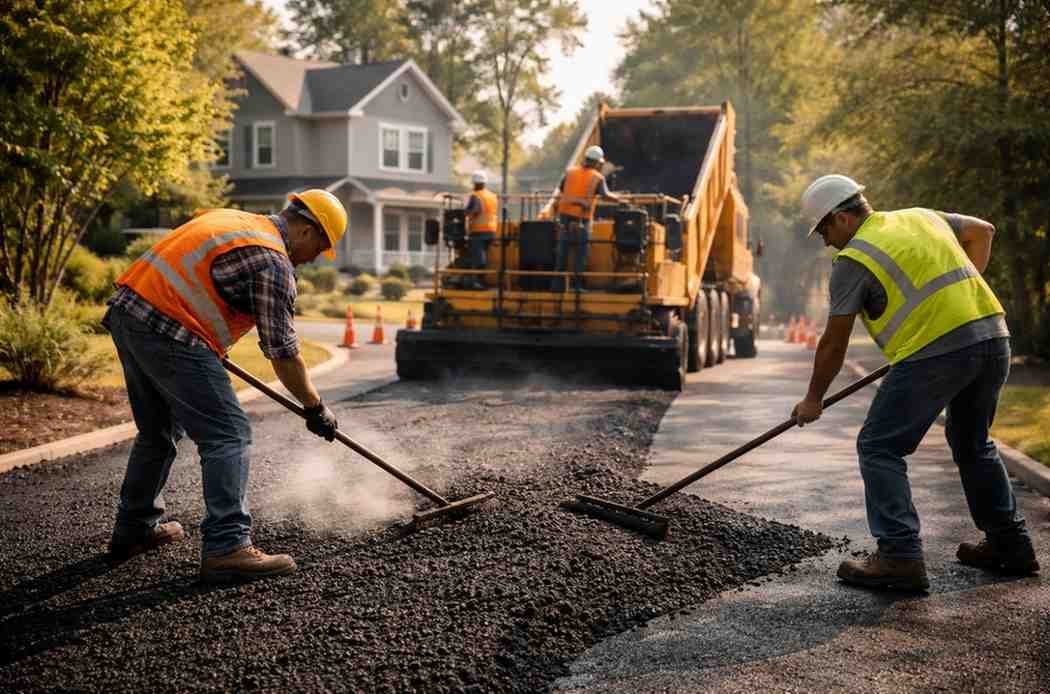
A well-paved road or driveway provides safe travel, prevents soil erosion, and increases property value. To ensure durability against weather and traffic, professional contractors must follow a technical process, as simply pouring asphalt or concrete over dirt will lead to cracking and crumbling.
Choosing the Right Paving Material
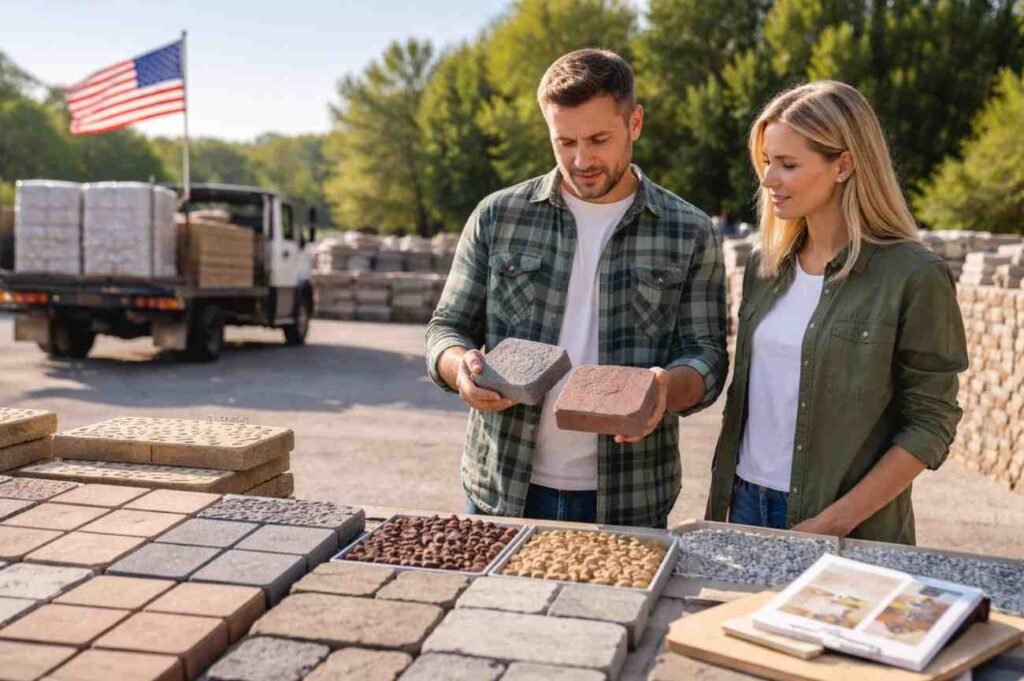
Before any digging begins, contractors and property owners must select the best material for the project. The choice depends on the local climate, budget constraints, and aesthetic preferences.
Asphalt
Asphalt is highly popular for both massive highway projects and residential driveways. It is cost-effective, quick to install, and provides a smooth, dark finish that helps melt snow quickly during winter months. Because it is flexible, asphalt can expand and contract with temperature changes, making it highly resistant to frost heaves.
Concrete
Concrete offers a rigid, incredibly durable surface that requires very little maintenance over its lifespan. It can handle extremely heavy loads, making it ideal for busy roadways and commercial driveways. Homeowners also appreciate concrete because it can be stamped or colored to create visually appealing patterns that mimic natural stone.
Interlocking Pavers
Pavers are individual units made from concrete, brick, or natural stone. Installers place them over a bed of sand to create a flexible, highly decorative surface. If a specific area becomes damaged, you can easily remove and replace the affected pavers without having to tear up the entire driveway.
Pre-Installation Preparation
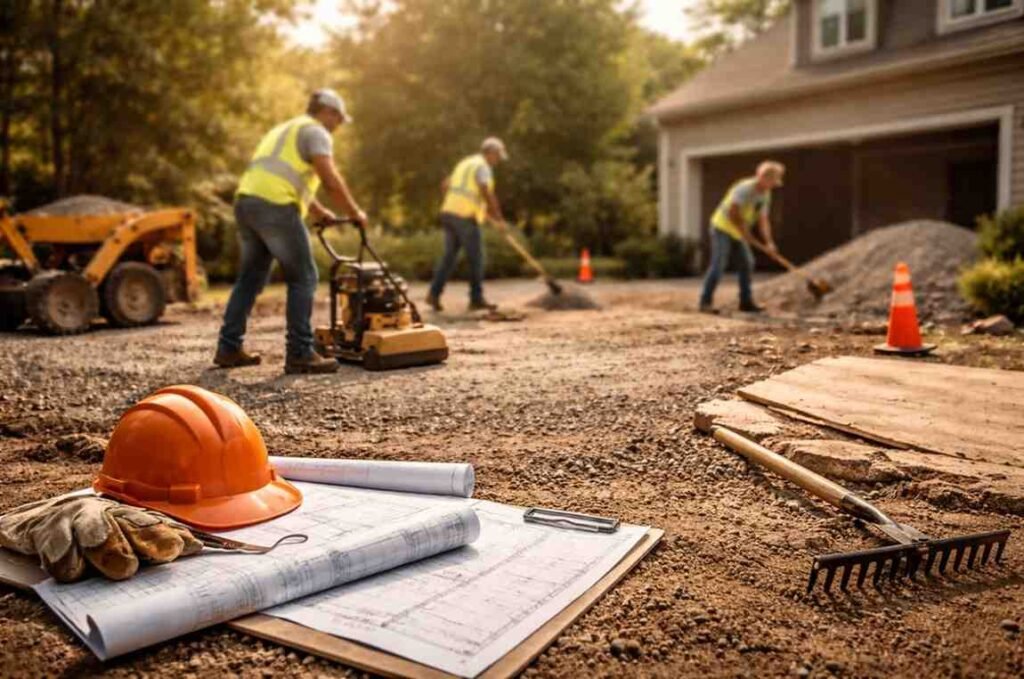
A successful paving project relies entirely on what happens before the surface material is poured. Avoid common mistakes, as proper preparation prevents future structural failures.
Site Assessment
Contractors start by evaluating the installation site. They map out the dimensions, locate underground utilities, and assess the existing soil conditions. This assessment helps the crew determine what type of heavy machinery will be needed and how much material to order.
Drainage Planning
Water is the biggest enemy of any paved surface. Standing water will eventually seep into the microscopic cracks of asphalt or concrete, expanding during freezing temperatures and causing the surface to shatter. Planners design slopes and install functional drainage systems into small changes, like French drains or catch basins, to direct water away from the newly paved area.
Soil Stabilization
The natural ground beneath a road or driveway must be strong enough to support heavy layers of rock and pavement. Crews test the soil for density and moisture content. If the soil is too soft or overly saturated, they will treat it with binding agents like lime or Portland cement to harden the earth and create a reliable foundation.
The Step-by-Step Installation Process
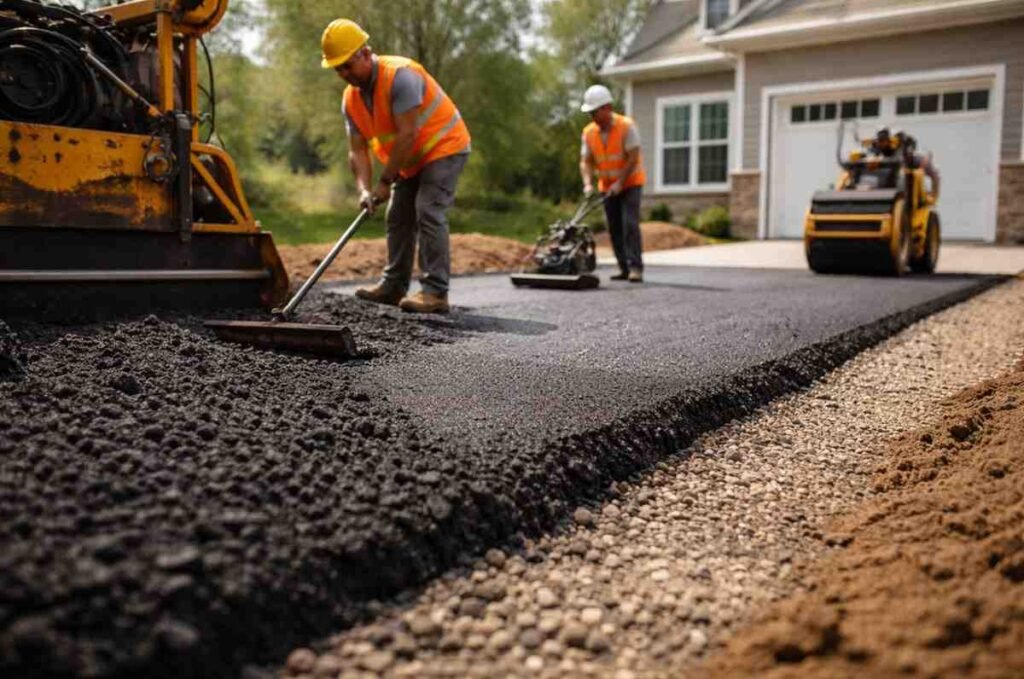
Once the site is thoroughly prepared and stabilized, the physical construction begins. This process requires heavy machinery and precise timing.
Excavation
Heavy excavators and bulldozers remove grass, topsoil, and any existing old pavement from the site. The crew digs down to a specific depth determined during the site assessment. All debris is hauled away in dump trucks, leaving a clean, bare dirt trench that outlines the future road or driveway.
Sub-Base Preparation
The sub-base is the true structural support system of the pavement. Workers lay down a thick layer of crushed gravel and rock. They use heavy vibrating rollers to compact this stone layer until it is incredibly dense and tightly packed. This compacted sub-base acts as a frost barrier and helps bear the weight of vehicles, ensuring the top layer does not buckle under pressure.
Surface Application
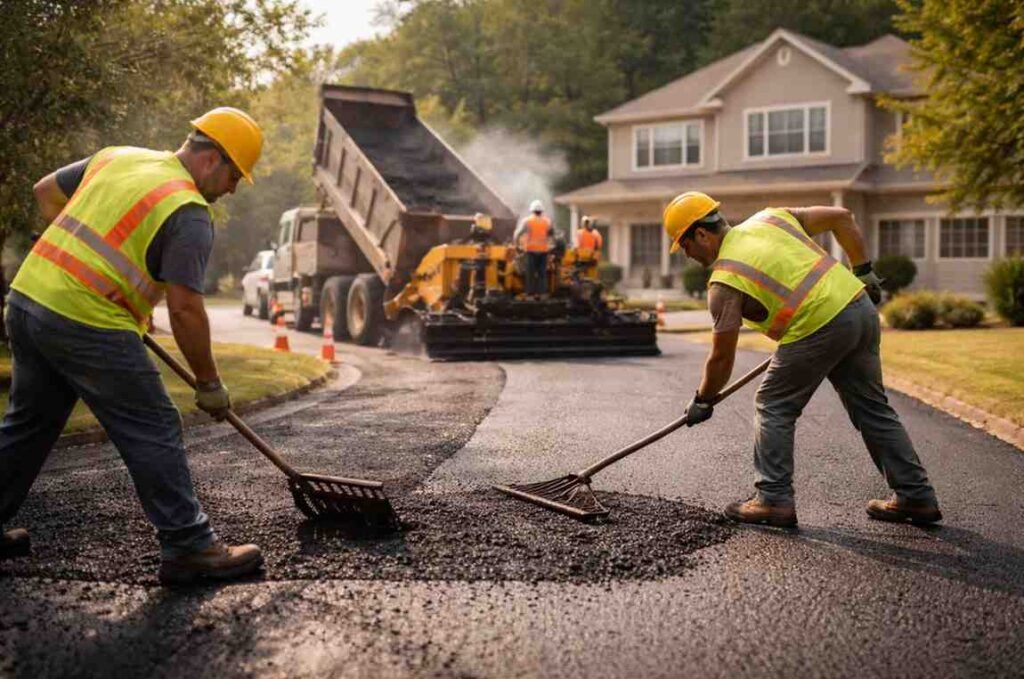
With the foundation set, the crew applies the final surface material. If pouring concrete, they set up wooden forms, lay down steel reinforcement grids, and carefully pour the wet mix, smoothing it out with long screed boards. For asphalt, specialized paving machines lay down hot, viscous asphalt uniformly across the sub-base. When hiring asphalt paving services in Ogden, UT, you will see contractors immediately follow the paver with heavy rollers to press the hot asphalt into a tight, smooth, and seamless finish before it cools.
Precision and Craftsmanship: Paving vs. Jewelry

At first glance, laying down tons of rock and hot tar might seem like a brute-force industrial job. However, the process requires a level of exactness similar to fine jewelry making.
Think about the intricate craftsmanship required to create unique engagement rings. A jeweler must carefully assess the raw gemstone, map out precise cuts to maximize light reflection, and set the stone in a perfectly measured metal foundation so it remains secure for a lifetime. If the setting is even a millimeter off, the diamond could fall out.
Similarly, a paving contractor must measure ground slopes down to the fraction of an inch to ensure proper water runoff. They must calibrate the exact temperature of the asphalt mix and roll it at the precise moment to achieve maximum density. Both disciplines rely entirely on a flawless foundation and meticulous attention to detail to create a beautiful, enduring final product.
Maintenance Tips for Longevity
Even the best-paved surfaces require regular upkeep to reach their maximum lifespan. Following a simple maintenance routine will save property owners from costly repairs.
- Sealcoating: Apply a liquid sealcoat to asphalt driveways every two to three years. This protects the binder from UV rays and prevents chemical spills, like motor oil, from eating away at the surface.
- Crack Filling: Inspect your driveway or road every spring. Fill any small cracks immediately with a rubberized crack filler to stop water from penetrating down to the sub-base.
- Regular Cleaning: Sweep away debris, leaves, and dirt. Organic matter left on the surface can trap moisture and eventually lead to surface degradation.
- Weight Management: Avoid parking excessively heavy equipment, like fully loaded dump trucks or massive storage containers, on residential driveways for extended periods.
The Value of Professional Paving Services
Building a reliable road or driveway requires extensive engineering knowledge, specialized heavy machinery, and years of hands-on experience. Attempting to cut corners during the excavation or sub-base phases will inevitably result in a surface that cracks, sinks, and holds water.
Investing in professional paving contractors ensures that every step is executed with precision. By trusting experts to assess the soil, plan the drainage, and apply the surface materials correctly, property owners gain a beautiful, durable surface that will safely serve their needs for decades.
Conclusion
Now that we have explored the benefits of hiring professional paving contractors, it is clear that they play a crucial role in ensuring successful and long-lasting paved surfaces. From proper planning and preparation to skilled execution, they provide unmatched expertise and quality results.