Understanding Our Ancestral Heritage Through Dental Evolution
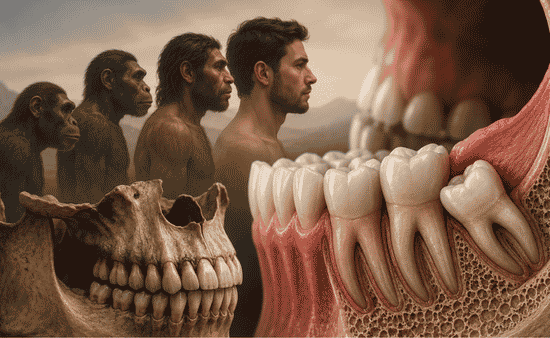
The human mouth tells a fascinating story of evolutionary adaptation, and nowhere is this more apparent than in the tale of wisdom teeth. These third molars, which typically emerge between the ages of 17 and 25, have become something of an evolutionary relic in modern humans.
Whilst our ancient ancestors relied heavily upon these additional grinding surfaces, contemporary humans often find themselves scheduling appointments with their dentist Thames Ditton residents trust, to have them extracted. The question remains: why did we develop these teeth in the first place, and what has changed in our evolutionary journey to render them problematic?
The story of wisdom teeth begins millions of years ago, when early humans consumed a dramatically different diet from the one we enjoy today. Our prehistoric ancestors subsisted on raw plants, tough roots, uncooked meat, and fibrous vegetation that required substantial chewing power.
This abrasive, coarse diet necessitated a robust set of molars, and the additional grinding surface provided by wisdom teeth proved invaluable for breaking down these challenging foodstuffs.
The Ancient Diet and Dental Requirements
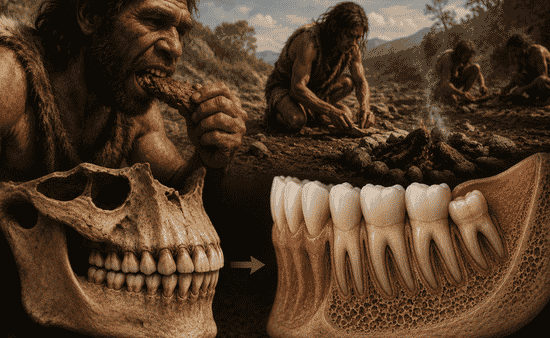
Early hominids possessed considerably larger jaws than modern humans, providing ample space for a full complement of 32 teeth, including the four wisdom teeth. The archaeological record demonstrates that our ancestors’ skulls featured pronounced jaw structures with greater surface area, allowing all teeth to erupt and function without complication.
This anatomical arrangement served a crucial purpose in an era when food processing was non-existent and survival depended upon the ability to extract maximum nutrition from available resources.
The wear and tear on ancient teeth was substantial, and it was not uncommon for individuals to lose teeth throughout their lifetime due to decay, trauma, or excessive grinding. In this context, wisdom teeth functioned as natural replacements, shifting forward to fill gaps left by lost molars.
This biological insurance policy ensured that individuals maintained adequate chewing capacity throughout their lives, which was essential for proper nutrition and survival.
The Agricultural Revolution and Changing Dietary Patterns
The advent of agriculture approximately 10,000 years ago marked a pivotal turning point in human dietary habits and, consequently, dental evolution. As humans transitioned from hunter-gatherer societies to agricultural communities, the nature of consumed foods began to shift dramatically.
Cultivated grains, cooked vegetables, and processed foods became staples, reducing the mechanical demands placed upon the jaw and teeth.
This dietary transformation initiated a gradual reduction in jaw size over successive generations. The biomechanical forces that once shaped robust mandibular structures diminished, and natural selection no longer favoured individuals with larger jaws. Research has demonstrated that human jaw evolution continues to progress, with modern populations displaying increasingly smaller jaw structures compared to their ancestors.
Modern Jaw Anatomy and Space Constraints

Contemporary humans possess jaws that are, on average, ten per cent smaller than those of our ancient forebears. This reduction in jaw size has created a spatial predicament: whilst the number of teeth has remained relatively constant, the available area within the mouth has diminished considerably.
When wisdom teeth attempt to erupt in modern jaws, they frequently encounter insufficient space, leading to impaction, misalignment, and various complications.
The phenomenon of impacted wisdom teeth has become remarkably common in developed nations, affecting approximately 65 per cent of young adults. These teeth may emerge at awkward angles, partially erupt, or remain entirely trapped beneath the gum line.
Such situations often necessitate professional intervention, as impacted wisdom teeth can cause pain, infection, damage to adjacent teeth, and the development of cysts or tumours in severe cases.
Genetic Variations and Future Predictions
Interestingly, scientific studies on dental agenesis reveal that an increasing number of individuals are being born without wisdom teeth altogether. This genetic variation represents ongoing evolutionary adaptation, suggesting that humans may eventually cease developing these third molars entirely.
Current estimates indicate that between 5 and 37 per cent of people are congenitally missing at least one wisdom tooth, with the percentage varying across different populations and ethnic groups.
The absence of wisdom teeth confers no disadvantage in modern society, where food processing and cooking have eliminated the need for extensive grinding capacity. This lack of selective pressure against wisdom tooth agenesis allows the trait to persist and potentially increase in frequency across future generations, demonstrating evolution in real-time.
Looking Forward: The Future of Human Dentition
Wisdom teeth stand as a remarkable testament to human evolutionary history, bridging our ancestral past with our modern present. As dietary habits continue to evolve and jaw sizes potentially decrease further, these once-essential molars may gradually disappear from the human genome.
For now, understanding why humans no longer need wisdom teeth helps contextualise this fascinating aspect of our biological heritage and the ongoing journey of human evolution.